CivicScience has the world’s largest proprietary database of real-time declared intent, allowing brands to activate high-performing advertising that drives up to 80% better performance. See how CivicScience partners achieve superior marketing outcomes here.
In seemingly a blink of an eye, the calendar now reads late August, which means a new slate of fall sports is soon to begin. While the NFL preseason is underway, regular season football in the college ranks kicks off next week. New consumer-declared data from CivicScience offer a glimpse into the likely 2026 NCAA college football audience and where opportunities for brands and advertisers lie to engage with them this year.
College Football Interest Trends Up Slightly
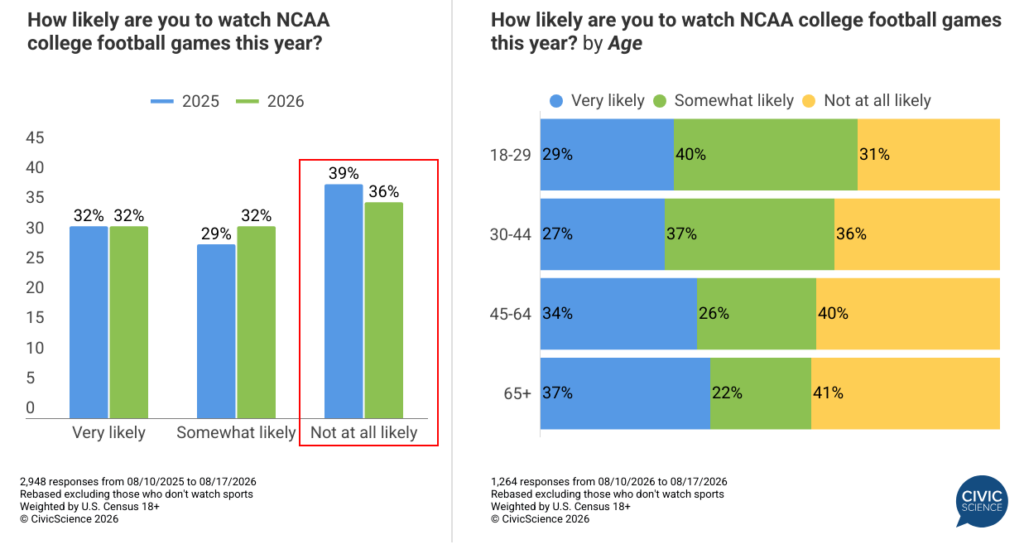
Compared to this time last year, data show a small three-point uptick in the share of U.S. adult sports fans who are at least ‘somewhat’ likely to watch college football games this year. When cut by age, there is some nuance for brands to consider: While younger consumers – led by Gen Z – show the most interest overall, Americans 45+ represent the highest share ‘very’ likely to tune in. Also setting the pace for interest are self-described Republicans, city-dwellers, and those with hybrid jobs.
What Brands Should Know About This High-Value Audience
One key advantage of CivicScience is the ability to pinpoint what a specific audience in any industry, like college football viewers, is planning, what they care about, and much more. Here’s what the consumer-declared data show on how these likely viewers stand out compared to Gen Pop.
- Labor Day Sales: 33% of likely college football viewers plan to partake in Labor Day sales this year, 11 percentage points higher than Gen Pop (22%). They also outpace the average adult in buying furniture during these sales (24% vs. 18%, respectively).
- Fall Leisure Travel: Not only will they be watching football, but they’ll also be on the go this fall – 69% of likely viewers plan to travel for leisure this fall, up from 55% among Gen Pop.
- Self Splurging: 81% of likely viewers say they splurge on spending something for themselves at least sometimes, such as clothes, dining out, or travel, outpacing the Gen Pop by eight percentage points. Among those who splurge, they’re seven points more likely than the average American to splurge on physical items like clothing and shoes (40% vs. 33%, respectively).
While Traditional TV Narrowly Leads Streaming, College Football Viewership Will Primarily Be a Social Activity for Nearly One-Quarter
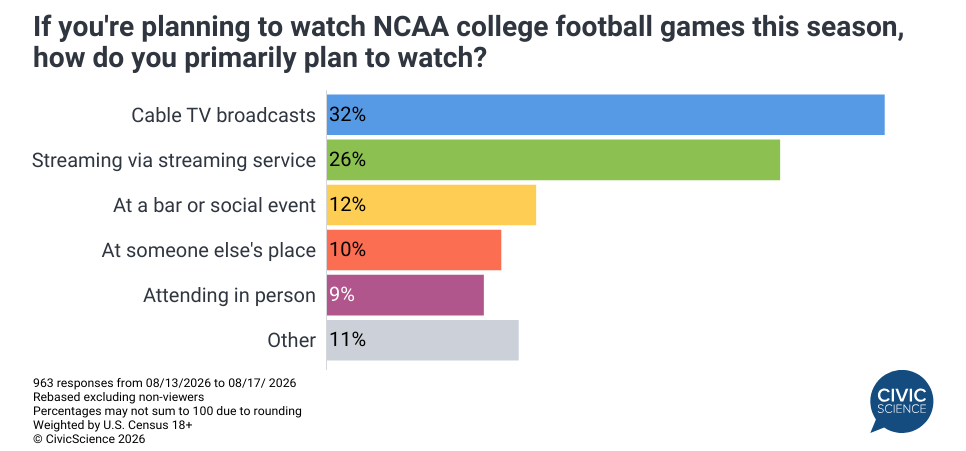
For the upcoming season, traditional TV broadcasts lead the pack for likely viewers, followed by streaming services. One trend to note in particular is that just under one-quarter of planned viewers are likely to turn college football gameday into social activities – 12% will primarily watch while at a bar or social event, and 10% at someone else’s place.
How Much Sway Does an NIL Brand Deal Actually Have on Consumers?
It’s been just over five years since the NCAA allowed collegiate athletes to monetize their Name, Image, and Likeness (NIL), making such deals standard practice. However, the system faces growing scrutiny, especially alongside the transfer portal. As policymakers seek reforms, CivicScience data reveal that American support for NIL has fallen from 55% in June 2021 to 46% this year. Meanwhile, opposition has ticked up to 31%, and uncertainty has climbed to 23%. This shifting sentiment raises questions about the actual commercial value of these athlete endorsements.
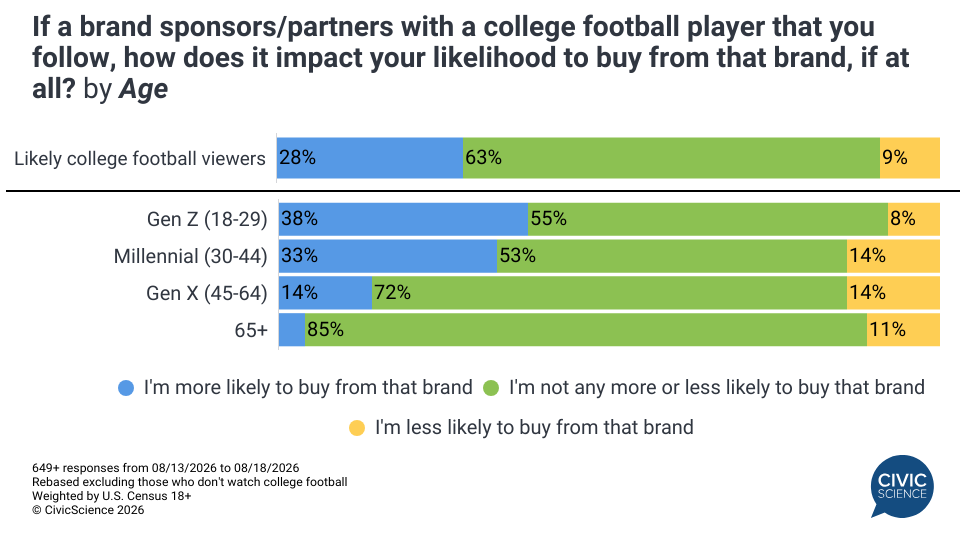
When a fan follows a specific college football player, does seeing that athlete partner with a brand actually influence their buying habits? Not as much as brands might hope. Data show that even among viewers who personally follow a player, only 28% are more likely to support a brand that the athlete endorses. Nearly two-thirds say it changes nothing, and roughly 10% report being less likely to support the brand.
That said, for brands hoping to engage with the 18-29 demographic in particular, the percentage ‘more’ likely to shop a NIL-involved brand jumps to 38%, higher than any other age bucket by at least five points.
The uptick in college football interest, as captured by CivicScience, underscores a highly active consumer base ready to spend on seasonal promotions and fall travel. Marketers can maximize ROI by prioritizing primary broadcast and streaming platforms where most fans tune in. Complementing this media mix with strategic NIL partnerships ensures maximum impact among high-value young adult demographics.