CivicScience has the world’s largest proprietary database of real-time declared intent, allowing brands to activate high-performing advertising that drives up to 80% better performance. See how CivicScience partners achieve superior marketing outcomes here.
For most of the 2010s, Americans’ attachment to their favorite brands barely moved. The share of U.S. adults describing themselves as ‘very’ loyal hovered right around 31% year after year.
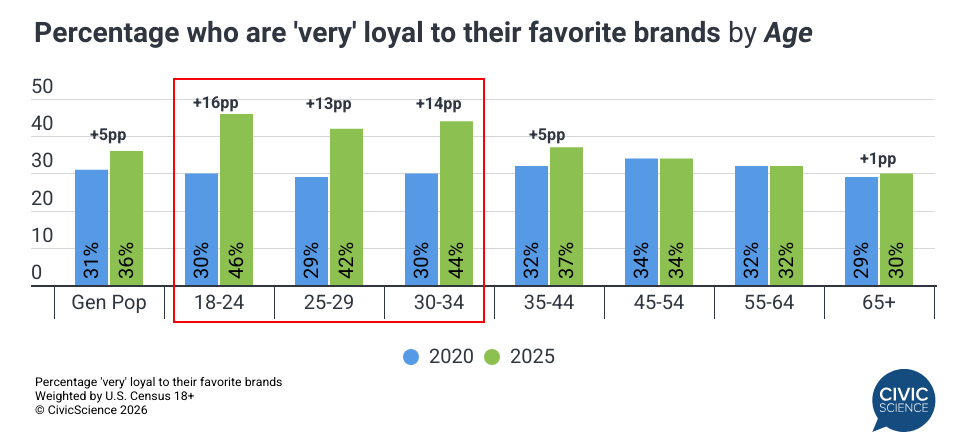
All that changed around the end of 2020 and beginning of 2021. Since that time, loyalty has climbed steadily, reaching 36% by the end of 2025 – five full percentage points higher than half a decade ago.
This increase in self-reported brand loyalty is significant on its own, but when examining specific demographic segments, it’s clear that the groups driving this upward trend are not the ones anyone would expect. This recent rise in brand loyalty has been driven almost entirely by younger consumers.
CivicScience data show the percentage of adults under 35 who describe themselves as ‘very’ loyal to their favorite brands has increased by about 13 percentage points among those 25-29 and 16 percentage points among those 18-24, more than three times the gain seen among Gen Pop.
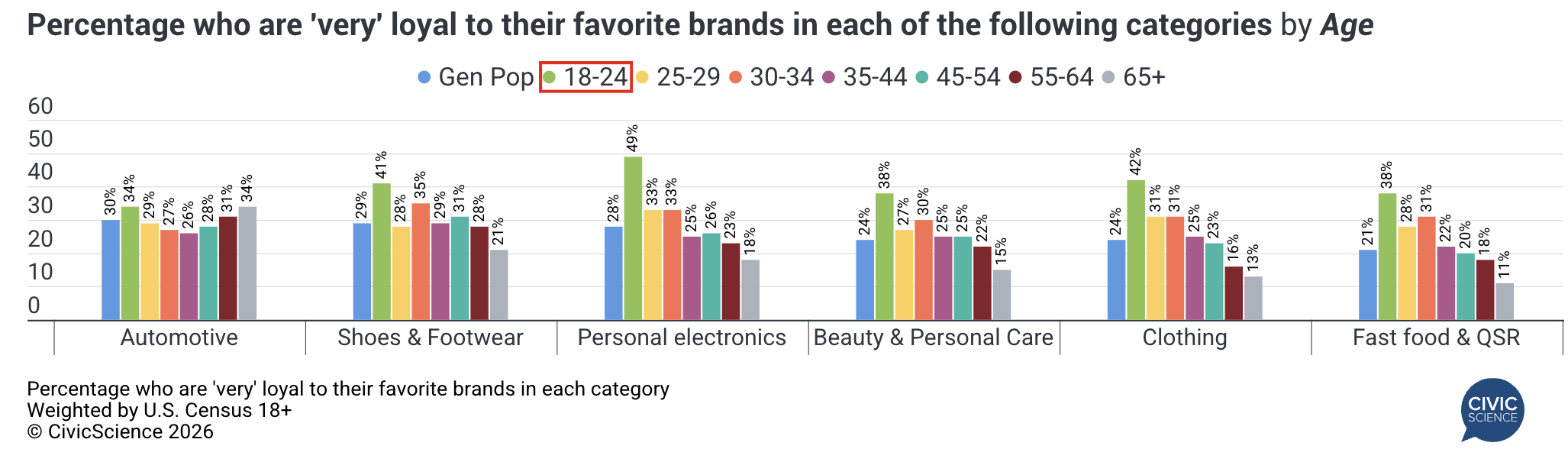
A deeper dive into CivicScience’s consumer-declared survey data highlights the fact that this brand loyalty is not one-size-fits-all. The strength of consumer loyalty varies not just along generational lines but across categories, too. The data show that the average American is most likely to be ‘very’ loyal to their favorite automotive brands, with that loyalty driven by two distinct groups: 18-24-year-olds and those 65 and older. Both of whom are tied at the top (34% each are ‘very’ loyal), while 55-64-year-olds are close behind at 31%.
Loyalty in lifestyle and fast-moving categories, meanwhile, is driven far more by younger shoppers alone. Gen Z adults aged 18-24 hold the highest loyalty rates in personal electronics (49%), clothing (42%), shoes and footwear (41%), fast food (38%), and beauty and personal care (38%). Tech and clothing loyalty drops off significantly at age 55, while categories like footwear and beauty maintain a secondary loyalty peak among 30-34-year-olds.
Loyalty formation looks fundamentally different by category, and campaigns built around a single generational narrative will land unevenly across a brand’s portfolio.
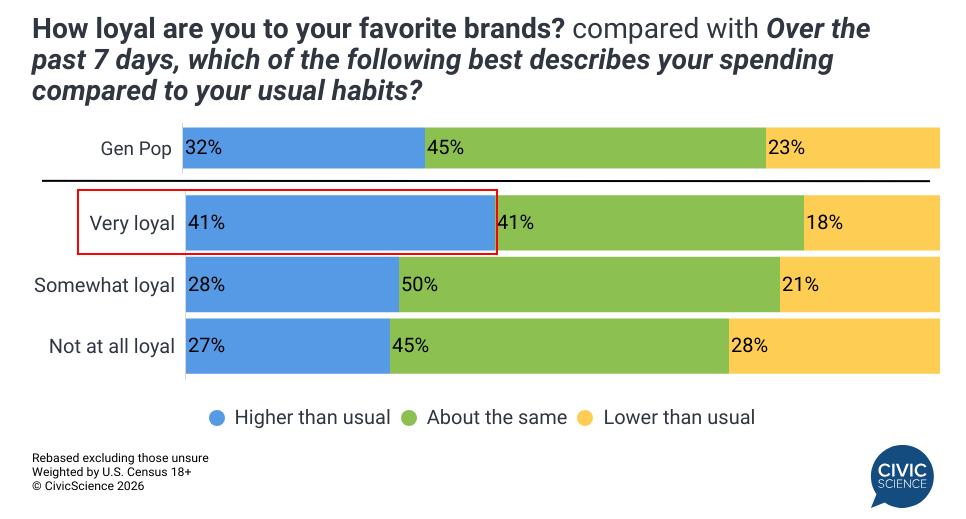
One key reason this resurgence in brand loyalty matters now is consumer spending. With inflation still persistent and many households trimming costs, the consumers most loyal to their favorite brands are the exception: they’re spending above their typical levels rather than cutting back. They’re outpacing both the Gen Pop and non-loyalists in this regard.
The category data tell a more useful story than the topline number alone. Loyalty takes different forms across different categories, and marketers who treat it solely as a generational trend will miss where it actually matters. That distinction only grows more important as AI agents and automated shopping tools take on more of product discovery and search, where early brand loyalty becomes the advantage that gets a brand requested directly.
This analysis draws on findings from CivicScience’s new white paper, “The Resurrection of Brand Loyalty,” which explores the drivers of this shift and its implications for the future of consumer engagement. Explore the full brand loyalty white paper below for the full analysis and additional findings.