CivicScience has the world’s largest proprietary database of real-time declared intent, allowing brands to activate high-performing advertising that drives up to 80% better performance. See how CivicScience partners achieve superior marketing outcomes here.
1. Boomers and high-income households remain print’s base as magazine readership falls.
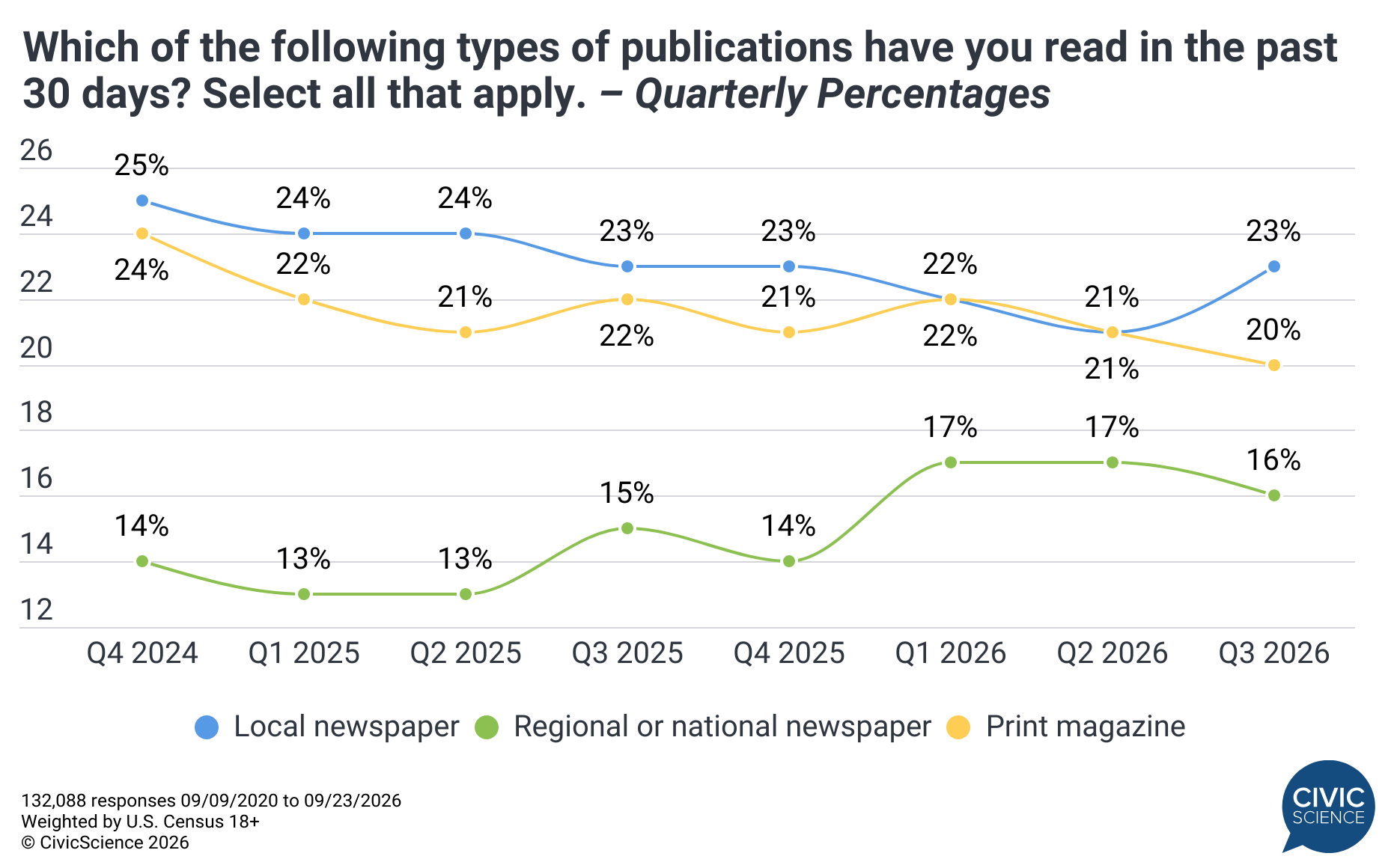
Print media’s two-year trajectory depends on the format. Print magazines have fared worst, with readership falling four percentage points since Q4 2024 (from 24% to 20%) and declining in most quarters of CivicScience tracking over that period. Local newspapers are down two percentage points over the same stretch (from 25% to 23%), though they regained some ground in the latest quarter. Regional and national newspapers are the only format with more readers than two years ago (16% vs. 14%), even after slipping from a 17% peak earlier this year.
A closer look shows that print readers of both newspapers and magazines skew older and more affluent, with higher levels of education. Baby Boomers (65+) over-index the Gen Pop across all three formats, standing out most for their readership of local newspapers (31%) and magazines (33%). Households earning $150K+ are the most likely to read regional or national newspapers (21%), while households earning under $50K under-index across all three categories by at least five percentage points.
Let Us Know: Do you subscribe to a print magazine?
2. Gen Z runs ahead on Strava, while women show untapped potential.
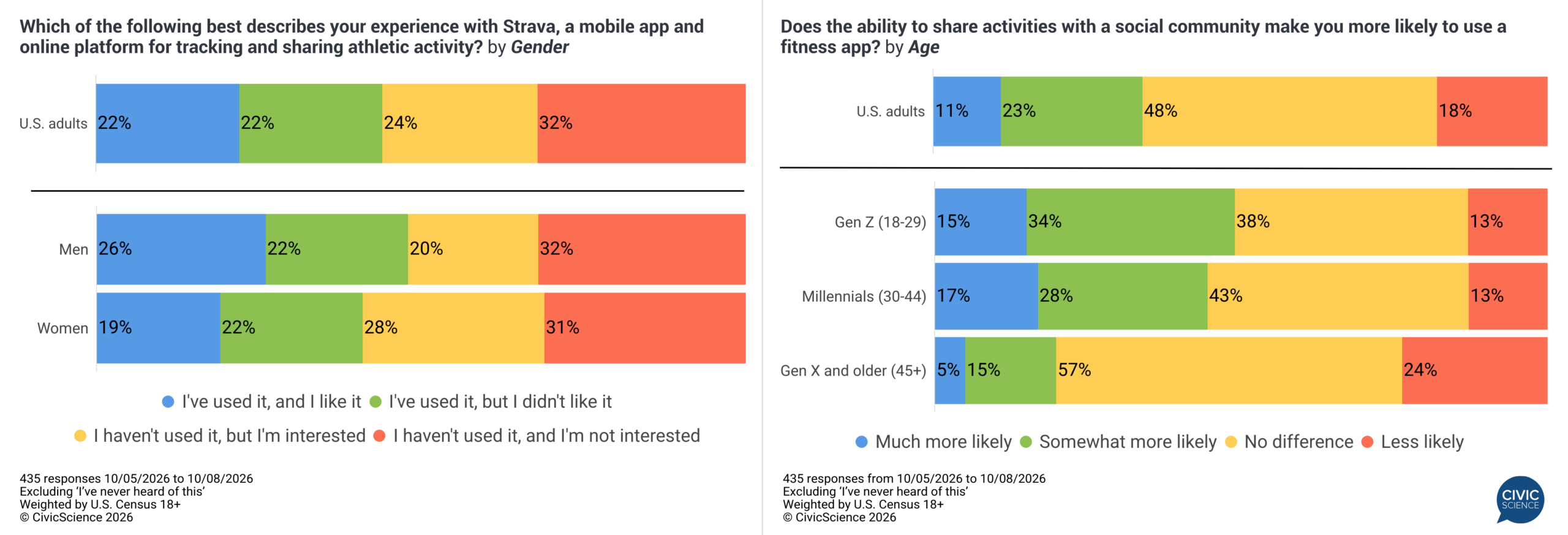
Strava, the fitness app that helps users track and analyze their workouts, has built a broad following. According to the latest CivicScience data, nearly half (45%) of U.S. adults are familiar with the app. Among them, usage is evenly split: 22% have used it and liked it, 22% have used it but didn’t like it, and 24% haven’t used it but are interested. Men are more likely than women to be satisfied users (26% vs. 19%), but women represent the bigger opportunity. Nearly 3 in 10 women (28%) are interested in trying the app, compared to 2 in 10 men. Gen Zers (18-29) are both the most common users of the app (27%) and the most interested in it (35%).
Workout tracking isn’t Strava’s only draw, however. The app’s social features let users like and comment on friends’ workouts, share runs to their Instagram story, and join virtual clubs. These features resonate most with younger users, aligning with recent CivicScience data showing Gen Zers are more likely than older generations to be motivated by the social aspects of fitness. One-third (34%) of U.S. adults say the ability to share activities with a social community makes them at least ‘somewhat’ more likely to use a fitness app. That number jumps to nearly half (49%) of Gen Z and 45% of Millennials (30-44). Meanwhile, about a quarter (24%) of Americans 45+ say these features make them ‘less’ likely to use one.
3. Convenience drives payment app use, but cards still reign supreme.
Consumers are still using their cards at checkout. Debit and credit cards win out in nearly every purchase category studied, from online shopping (62%) and large-ticket retail (59%) to monthly bills (46%). But when it comes to sending money to friends or family, cards take a back seat. Consumers are most likely to use a payment app like Venmo or their phone’s digital wallet when paying their friends back (33%), but one-quarter (26%) still prefer to use cash. Cash also remains common for small purchases, such as coffee, at one-third (34%). It’s also worth noting that just under 1 in 5 (18%) say they prefer to use payment apps or digital wallets to pay bills or when shopping online.
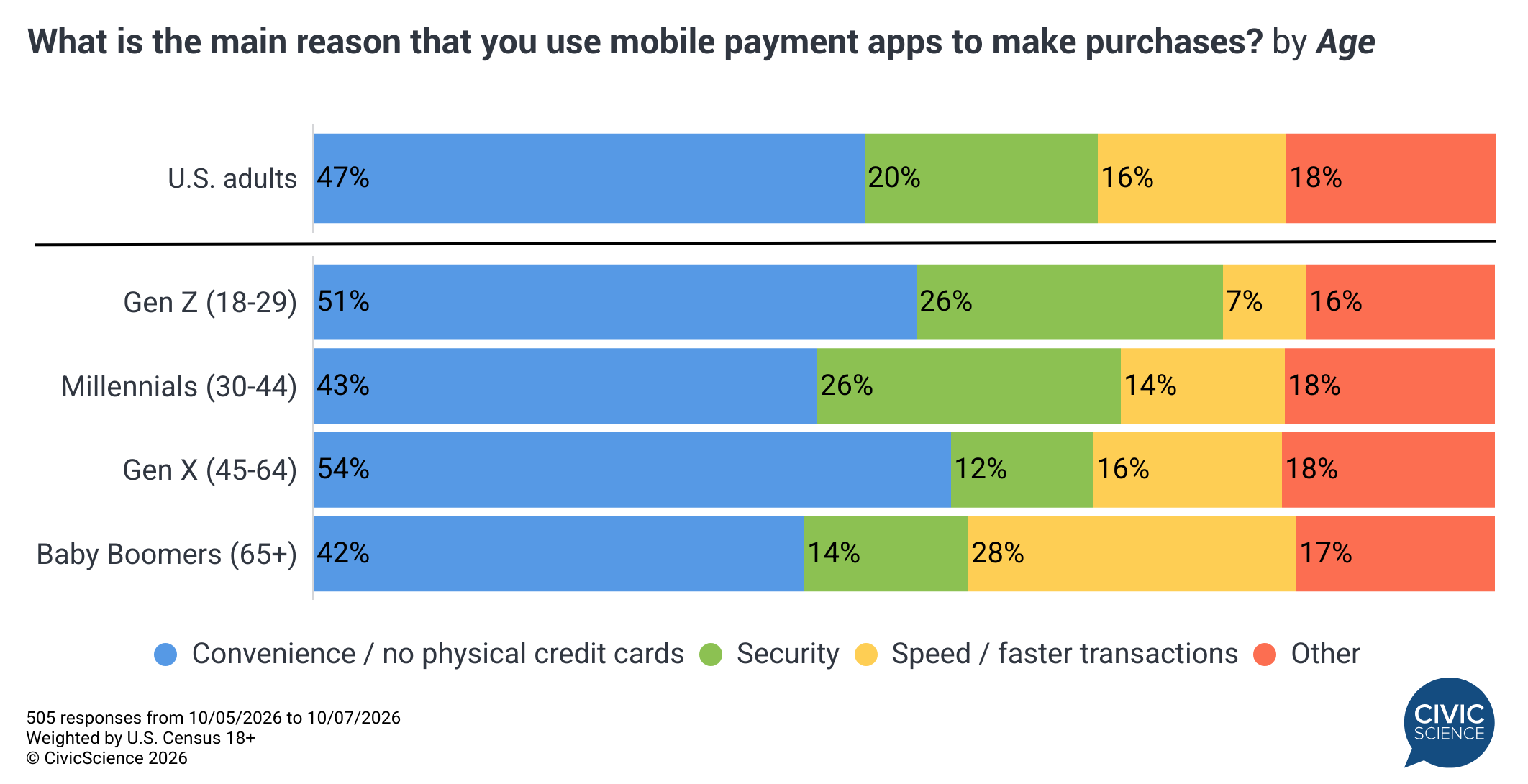
For those using payment apps or their phone wallet to make a purchase, convenience is the main draw, with nearly half (47%) of consumers citing it as the top priority. Second place goes to transaction security, but it’s a distant second, coming in at 20%. After convenience, Gen Z (18-29) and Millennials (30-44) both say security is the most important (26% each), whereas Baby Boomers cite speed (28%). Gen X (45-64) is the most convenience-driven group, with 54% saying it’s the main driver of their use of payment apps.
Take Our Poll: Do you utilize contactless payment methods?