CivicScience has the world’s largest proprietary database of real-time declared intent, allowing brands to activate high-performing advertising that drives up to 80% better performance. See how CivicScience partners achieve superior marketing outcomes here.
After nearly a decade of decline, consumer brand loyalty is on the rise. As CivicScience Founder and CEO John Dick notes, much of that rebound is emotional: consumers feel connected to the brands they choose. New consumer-declared CivicScience data bring that relationship into focus, showing how emotional connection and loyalty move together and what drives consumers to form that connection with a brand.
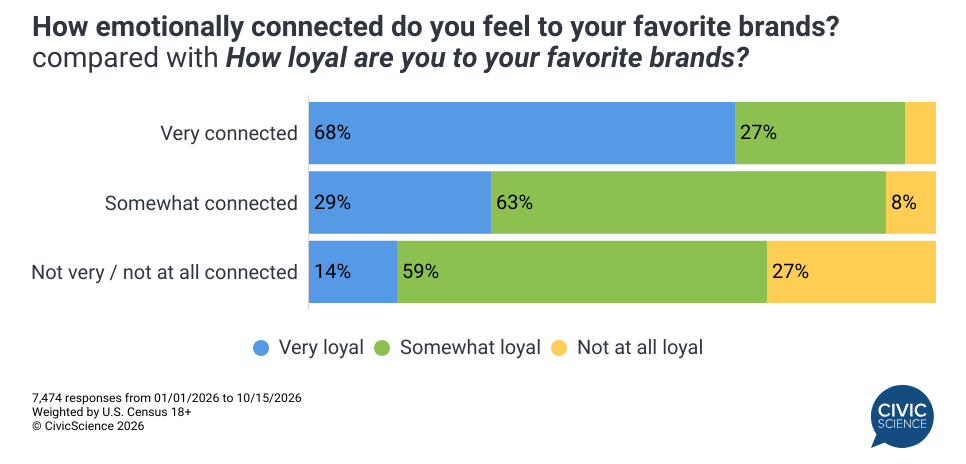
The stronger the emotional connection, the stronger the likelihood they’ll be brand loyal. Nearly 7 in 10 consumers who feel ‘very’ emotionally connected to their favorite brands are also ‘very’ loyal to them, with only 5% saying they’re ‘not at all’ loyal. Among U.S. adults overall, just 36% report being ‘very’ loyal to their favorite brands, nearly half the rate reported by those with a strong emotional bond with their favorite brands.
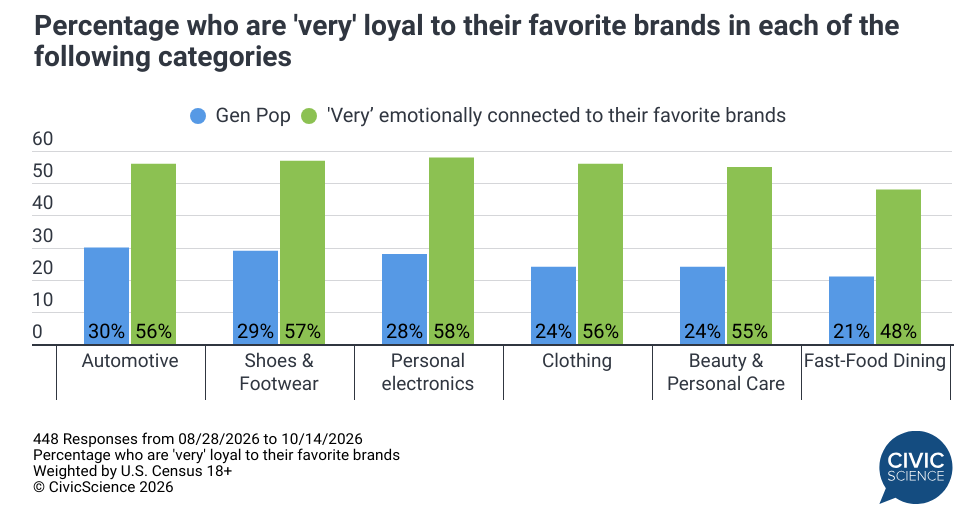
The pattern holds across all six categories CivicScience studied when investigating brand loyalty. Among consumers who feel ‘very’ emotionally connected to their favorite brands, the share who are ‘very’ loyal is far higher than the Gen Pop in every category. Although automotive and footwear are the top brand-loyalty categories among Gen Pop, clothing and beauty see the biggest lifts from emotional connection. Fast food trails the other categories, though its share of ‘very’ loyal consumers more than doubles (21% to 48%).
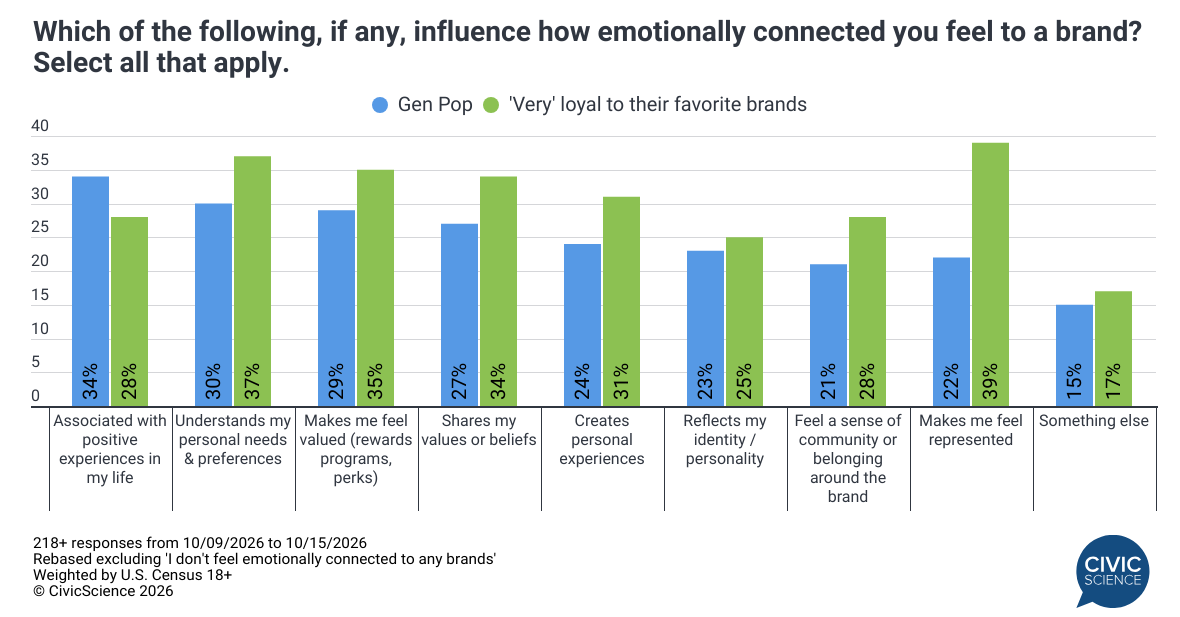
Consumer-reported data also point to what builds that connection in the first place. Brand loyalists cite nearly every driver of emotional connection at a higher rate than the Gen Pop, with positive past associations as the lone exception. Loyalist connection appears to be rooted in what a brand does for them, from understanding their needs to sharing their values. Representation is the standout, with 39% of loyalists citing it as a driver compared to 22% of the Gen Pop. Yet loyalists are only slightly more likely to say a brand reflects their identity or personality (25% vs. 23%). What sets loyalists apart, then, is less about seeing themselves mirrored in a brand and more about seeing people like them included, a distinction with implications for how brands approach messaging and partnerships.
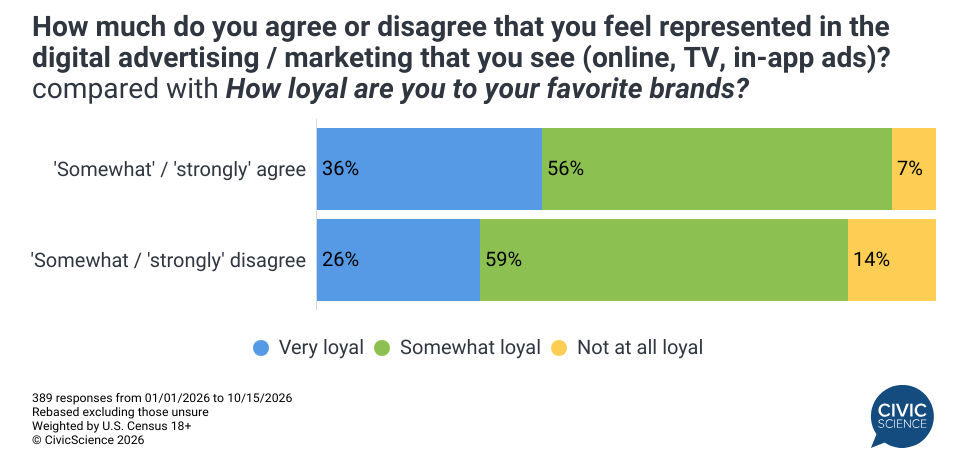
That emphasis on representation may start with advertising, often a consumer’s first point of contact with a brand. Notably, most U.S. adults (56%) ‘disagree’ that they feel represented in the digital advertising and marketing they see. Consumers who feel represented in advertising are more likely to be ‘very’ loyal to their favorite brands (36% vs. 26% of those who don’t) and half as likely to say they’re ‘not at all’ loyal (7% vs. 14%). Lasting loyalty depends on far more than advertising, but it’s harder to grow in the first place when consumers feel overlooked. Using declared insights into consumers’ psychographics can help brands better reflect the people they want to reach.
The path from awareness to loyalty is becoming more personal as consumers are increasingly drawn to brands that make them feel seen. Brands that build a sense of recognition into how they show up, from advertising to everyday experience, will be in a stronger position to turn interested consumers into loyal customers.
This analysis expands on findings from CivicScience’s new white paper, “The Resurrection of Brand Loyalty,” which explores the drivers of rising brand loyalty and its implications for the future of consumer engagement. Explore the full brand loyalty study below for the full analysis and additional findings.