CivicScience has the world’s largest proprietary database of real-time declared intent, allowing brands to activate high-performing advertising that drives up to 80% better performance. See how CivicScience partners achieve superior marketing outcomes here.
A variety of high-profile widespread disruptions and outages to key services and infrastructure have made headlines over the past couple of weeks. While experts and officials emphasize that these are not cyberattacks, new CivicScience data offer a glimpse into how consumers feel and how the disruptions may affect them, including their near-term spending plans.
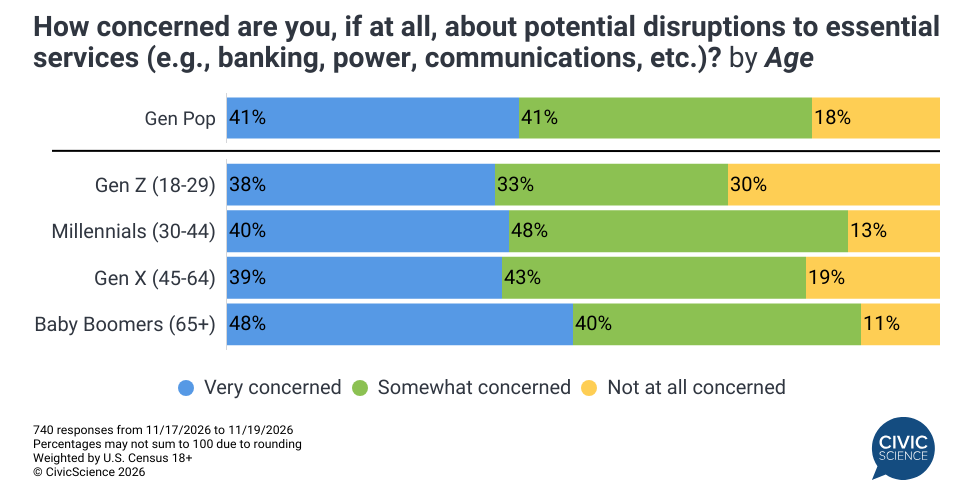
When asked about potential disruptions to essential services, a strong majority (82%) of Americans are at least ‘somewhat’ concerned. This includes 41% who are ‘very’ concerned and 41% ‘somewhat’ concerned. Concern spans generations, though it is strongest among those aged 65+, with 48% ‘very’ concerned. Gen Zers, meanwhile, are the most likely to report they’re ‘not at all’ concerned.
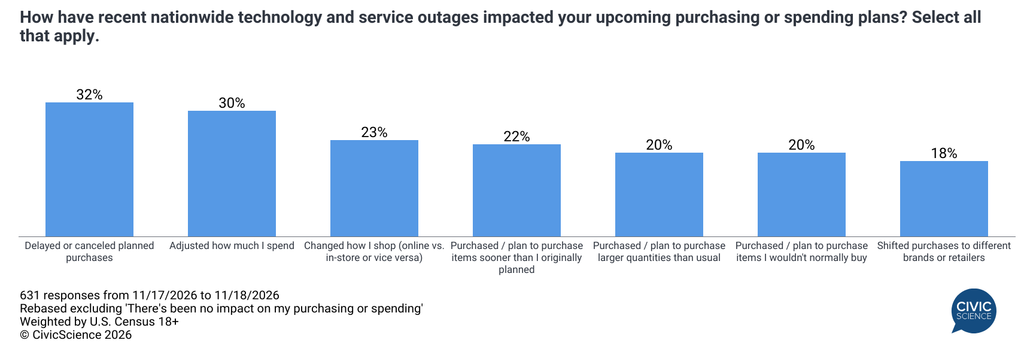
Given how many services have gone down in such a short time frame, elevated concern is no surprise. For a notable share of consumers, those worries are carrying over into their spending. While 63% of U.S. adults say the recent outages haven’t affected their purchasing or spending plans at all, 37% say they have. Among those affected, the most common responses involve caution: 32% have delayed or canceled planned purchases, and 30% have adjusted how much they spend. Another 23% have shifted between shopping online and in-store. In addition, 22% have made purchases sooner than they intended, while 20% are buying in larger quantities than usual.
Likely exacerbating some of the worries about the outages are rumors and social media posts advising consumers to prepare for an extended blackout and to stockpile supplies. These posts continue to be debunked. However, a growing share of Americans say they’re prepping specifically for a doomsday-type scenario — 20% are currently doing so today, up from 17% in 2023, with another 24% not currently prepping but planning to start soon.
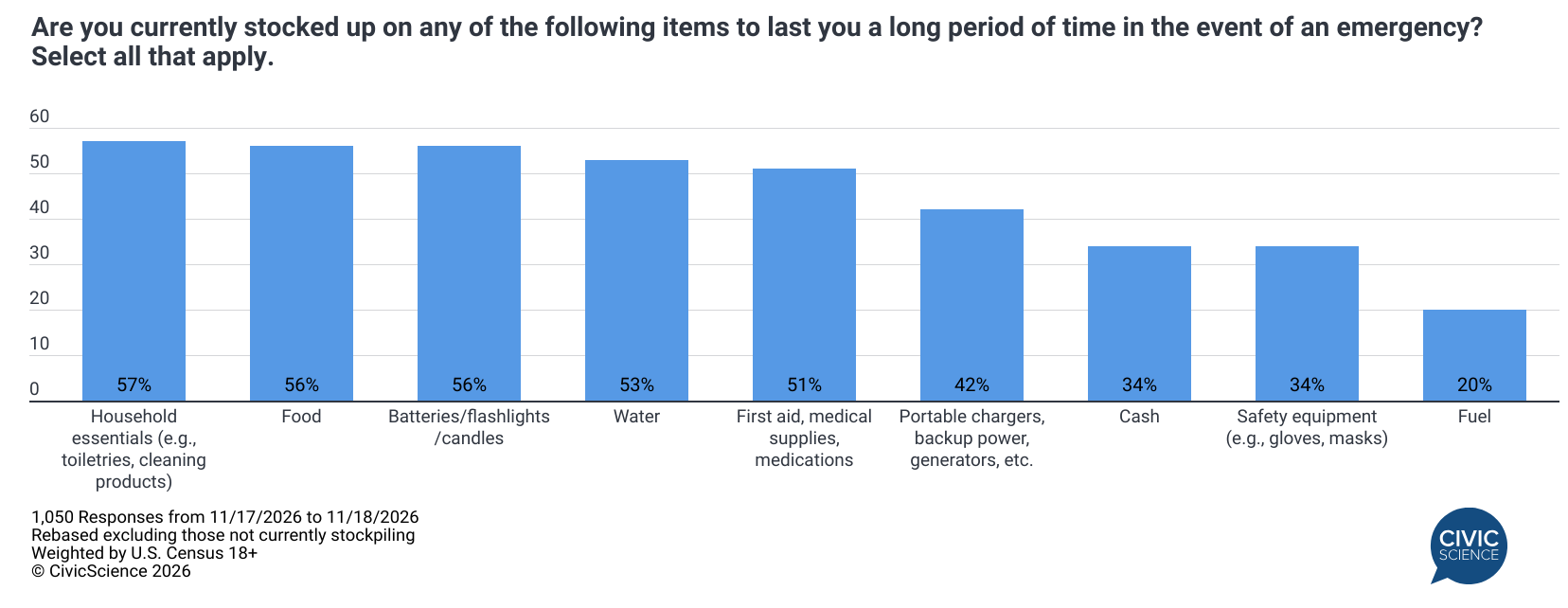
Among Americans stockpiling emergency supplies, household essentials (57%) hold a slim lead as the top priority, perhaps due to memories of the toilet paper shortage during the COVID lockdown days. Food and batteries/flashlights/candles (56% each) are close behind, while fuel ranks last at 20%. Fewer have stocked up on cash or safety equipment (34% each).
While most Americans’ spending plans remain unchanged, more than one in three have made adjustments, and those changes largely point toward restraint so far. Should more disruptions arise, that cautious approach could spread.