A version of this article originally appeared in ROAR Forward as part of a collaboration with their quarterly ROAR Report. CivicScience has the world’s largest proprietary database of real-time declared intent, allowing brands to activate high-performing advertising that drives up to 80% better performance. See how our partners achieve superior marketing outcomes here.
The conventional wisdom has been that Americans in the 55+ demographic are fiercely loyal consumers. Long-term CivicScience data, dating back before the pandemic, supports this notion, with a largely consistent base reporting at least some loyalty to their favorite brands. However, in recent years, that foundation is showing subtle signs of slipping. The percentage of Americans over 55 who say they are ‘not at all’ loyal to their favorite brands is slowly ticking up, standing at 13% as of early March. While this isn’t a drastic or sudden surge, it does mark the highest such percentage since CivicScience began tracking loyalty in 2013.
This shift suggests a more discerning and engaged consumer base, offering a clear roadmap for brands to not only strengthen existing ties but also capture a newly curious audience.
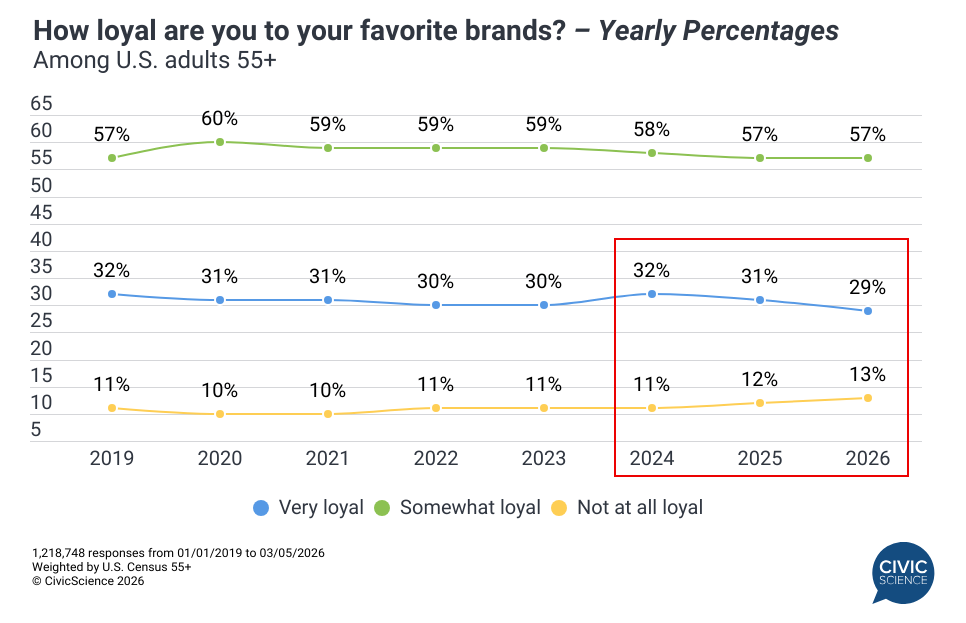
Additional CivicScience data beneath the surface indicates what might be driving this shift, offering a way forward for brands to not only remedy the situation but also retain and gain brand loyalty.
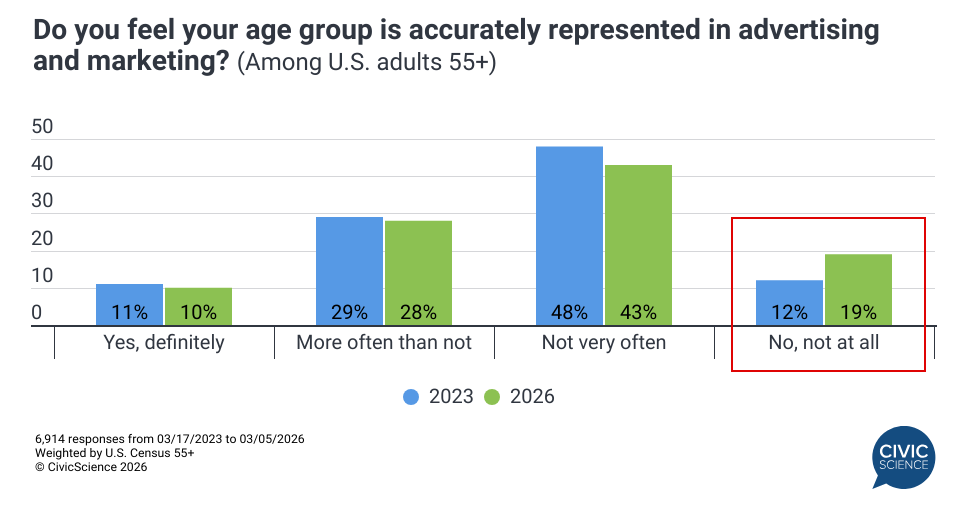
Representation appears to be a notable factor in the evolving brand landscape for older Americans. Data reveals a 58% surge since 2023 in the share of the 55+ demographic who feel ‘not at all’ represented in marketing and advertising. This trend is mirrored by a marginal decline in those who feel ‘definitely’ or ‘more often than not’ represented, suggesting that traditional marketing is increasingly out of step with this audience.
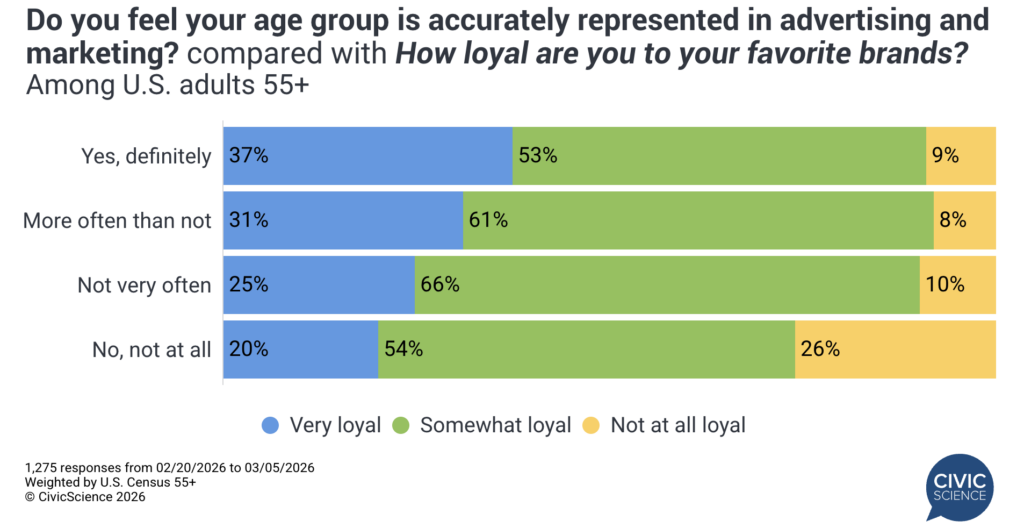
There is a clear correlation between age-group representation sentiment and brand affinity among older Americans. Those who feel ‘not at all’ represented are nearly three times as likely to state they are not brand loyal. On the other hand, the group that ‘definitely’ feels represented is nearly twice as likely to remain ‘very’ loyal, highlighting the potential impact of inclusive advertising on long-term customer relationships.
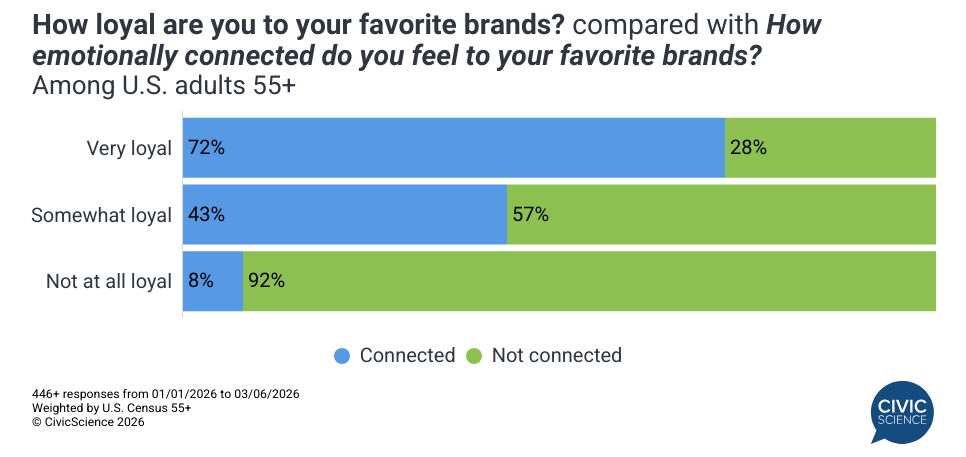
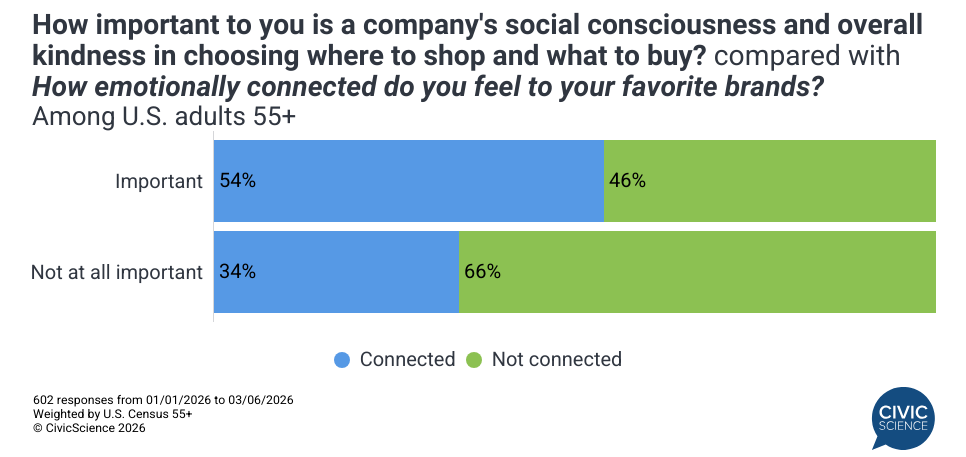
Another element influencing loyalty in the 55+ crowd is the level of emotional rapport they have with their favorite brands. While the demographic is currently divided, with roughly half feeling at least some connection and the other half feeling little to none, the ‘very’ emotionally connected segment remains small at just 9%. Nevertheless, this sentiment is closely tied to brand loyalty, as 72% of the most loyal consumers report some emotional attachment to the brands they buy.
The Path Forward: Values and Quality Are Key
Much like the mediums they use, whether it’s an increase in the percentage who are cord-cutting or who are using TikTok, how to appeal to Americans who are 55+ is evolving as well.
Today’s older consumers are voting with their wallets: 77% will switch to brands that mirror their personal values (up three points from 2024, excluding ‘no opinion’), and 72% weigh a company’s social consciousness and kindness in their purchasing decisions. This isn’t just about ethics; it’s shaping connection. Those who prioritize brand values are 20 points more likely to report a strong emotional connection to the brands they buy.
When it comes to the core drivers of brand loyalty for this audience, quality (68%) remains the most critical factor, outpacing price (24%) by nearly three times. Service and convenience are notably less influential, with each cited by just 4% of respondents.
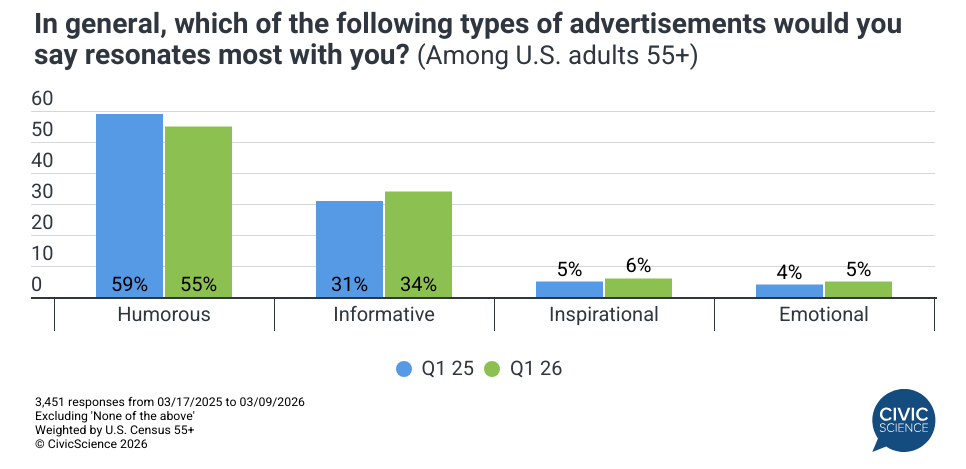
When engaging this audience through advertising, humorous ads remain a staple, but there is a burgeoning interest in informative ads. The year-over-year growth in resonance for informative ads suggests that offering deeper product insight is a successful strategy for brands aiming to solidify their relationships with this demographic.
Growing Interest in Trying Something New
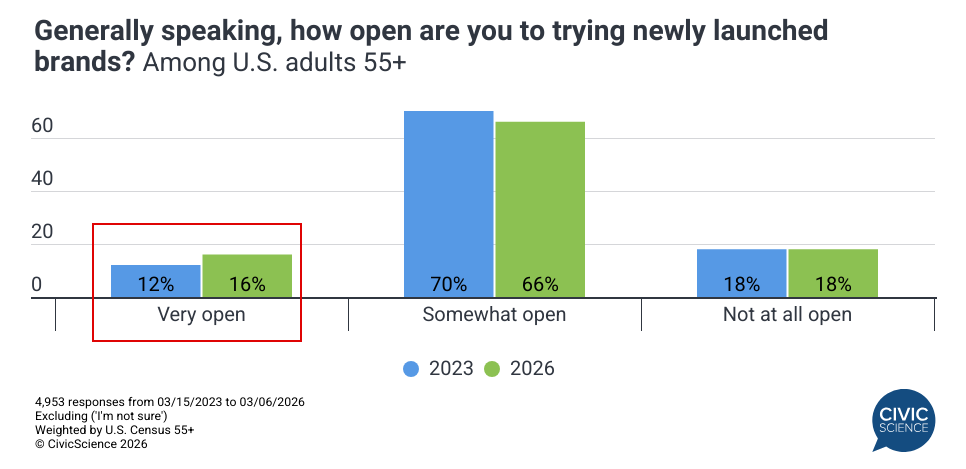
This evolving set of expectations – prioritizing values, quality, and representation – is fueling a broader shift in consumer behavior: older Americans are increasingly open to something new. A strong majority of respondents (excluding those unsure) express at least some receptivity to trying newly launched brands. This openness is intensifying, evidenced by a four-point jump since 2023 in the percentage of those ‘very’ open to new market entrants.
The clothing category clearly reflects this openness. While 60% of 55+ respondents have remained loyal to their favorite clothing brands for six years or more, 26% have been shopping with their preferred brand for three years or less. Notably, 15% of this demographic have made the switch to a new preferred brand within just the past year, signaling a willingness to embrace new options even in a category traditionally rooted in long-term loyalty.
The evolving loyalties of the 55+ demographic suggest a shift toward more intentional, merit-based brand choices. Their openness to discovery highlights a responsive market ready to engage. By leading with authentic representation and clear, informative messaging, brands have a strong opportunity to build deeper loyalty rooted in genuine resonance.