CivicScience has the world’s largest proprietary database of real-time declared intent, allowing brands to activate high-performing advertising that drives up to 80% better performance. See how CivicScience partners achieve superior marketing outcomes here.
Toys make up a big slice of the holiday shopping pie, and this year looks no different. New CivicScience data show 64% of U.S. adults plan to buy toys as holiday gifts, in line with fall 2025. CivicScience takes a closer look at this year’s holiday toy shoppers, including how much they plan to spend, where they plan to shop, and who they’re buying for.
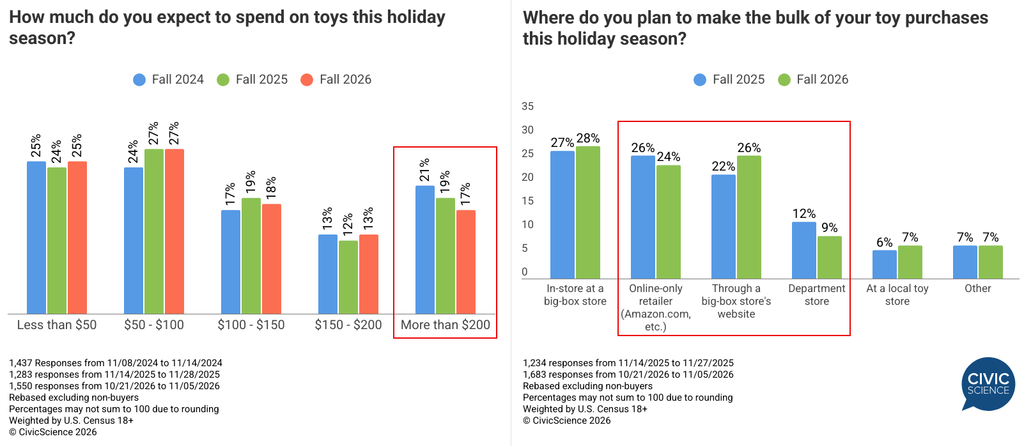
The share of holiday toy shoppers expecting to spend more than $200 has declined steadily over the past three years, from 21% in fall 2024 to 17% so far this fall. Meanwhile, a slim majority (52%) plan to spend $100 or less, up slightly from 51% last fall and 49% in 2024.
The “where” behind that spending has shifted a bit more notably than the budgets. In-store shopping at big-box stores remains the top plan (28%), but big-box retailers are also gaining ground online: 26% of holiday toy buyers plan to make most of their purchases through a big-box retailer’s website, up from 22% last year. At the same time, online-only retailers slipped by two percentage points, and department stores fell three percentage points.
Americans Are Most Likely to Buy for Elementary-Age Children, but Adults Aren’t to Be Overlooked
Among those planning to buy toys as holiday gifts this year, elementary-age children ages 6 to 10 are the most common recipients (38%), followed by preschoolers ages 4 to 5 (31%) and toddlers ages 1 to 3 (30%). Shares drop off after age 10, with 21% expecting to buy for tweens ages 11 to 13 and 19% for teens ages 14 to 17. Infants up to 12 months rank last at 14%. Holiday toy demand centers on ages 1 to 10, but the category doesn’t end there: adults and collectors (22%) slightly outnumber both tweens and teens as gift recipients, and many grown-ups are now buying “kids” toys for themselves and each other.
Games and Puzzles still Lead, but Dress-up and Plush Toys Are on the Rise
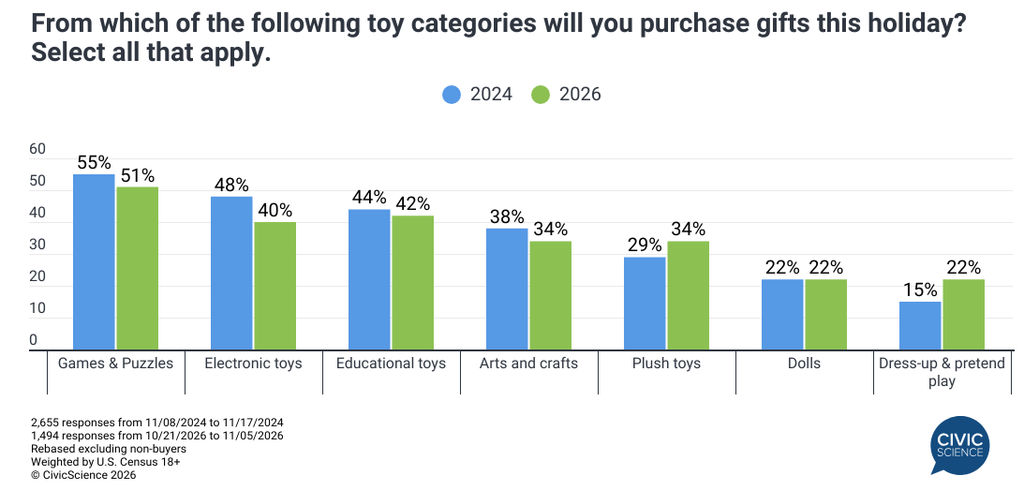
As for what’s on those holiday lists, games and puzzles remain the leading category this year, but interest is down five percentage points from fall 2024. It’s not the only category thats seen a decline from two years ago: Notably, electronic toys have seen the steepest decline, falling eight percentage points, while arts and crafts fell by four points. Conversely, plush toys and dress-up or pretend play are up five and seven percentage points, respectively. The plush gains, in particular, align with the popularity of collectibles like Jellycats and Squishmallows, which appeal to kids and adults alike.
Squishy, squeezable NeeDoh toys are also likely to land on a noteworthy share of lists. The fidget toys have been all the rage, and CivicScience data show that 15% of holiday toy buyers are ‘very’ likely to buy a NeeDoh toy as a gift for a child this year. Those plans, however, may hinge on whether shoppers can find the toys in stock at all.
For Toy Buyers, Ad Influence Extends Beyond Social Media
Whether shoppers are hunting for NeeDohs or another hot toy this season, advertising could ultimately influence what ends up in their carts. Nearly two-thirds (63%) of holiday toy buyers say advertising helps them decide what to buy for their children at least ‘a little.’
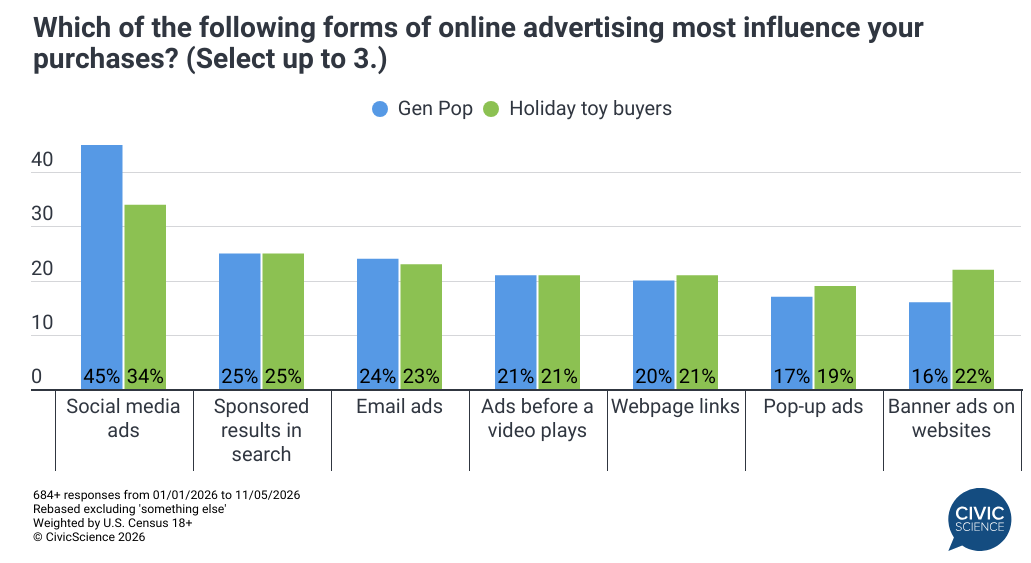
When it comes to the types of ads that hold the most influence, toy buyers look similar to the Gen Pop across most digital ad formats, with a few exceptions. Toy buyers are less likely than average to be swayed by social media ads, while 22% cite banner ads as influential, compared with 16% of the Gen Pop. They are also slightly more likely to cite pop-up ads. The takeaway for brands: social media may lead overall, but toy buyers respond to a broader mix of formats, with about 1 in 5 or more citing each of the other formats studied.
At first glance, holiday toy shopping looks much like recent years. But beneath that steady topline, shoppers are adjusting where they buy, how much they spend, and which categories they choose — a reminder that a stable season can still bring meaningful shifts in how toy dollars are spent.