CivicScience has the world’s largest proprietary database of real-time declared intent, allowing brands to activate high-performing advertising that drives up to 80% better performance. See how CivicScience partners achieve superior marketing outcomes here.
While everyone is busy gathering gift ideas for their loved ones, mapping out budgets, and planning when to buy what, a growing share of Americans are also planning what to get themselves as a holiday present.
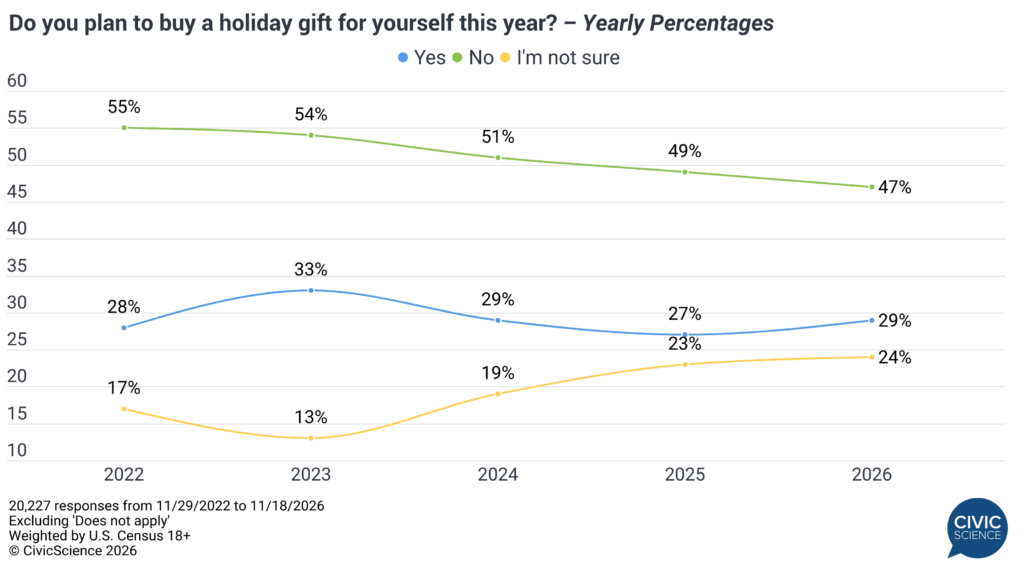
The latest data from CivicScience show that 29% of U.S. adults plan to self-gift this year, with another 24% undecided. This breaks a two-year streak of declining self-gifting intent, with the share planning to buy something for themselves falling from 33% in 2023 to 27% last year.
Self-gifting intent correlates with age. Gen Zers (18-29) are more than twice as likely as Baby Boomers (65+) to buy something for themselves (40% vs. 18%). Both Boomers and Gen Xers (45-54) are the least interested, with 67% and 54%, respectively, saying they don’t plan to self-gift. Parents are also more likely to buy gifts for themselves than grandparents or those without kids (43% vs. 21% vs. 32%). The data also show self-identified Republicans are narrowly more likely than Democrats to plan on buying themselves a holiday gift this year (31% vs. 29%).
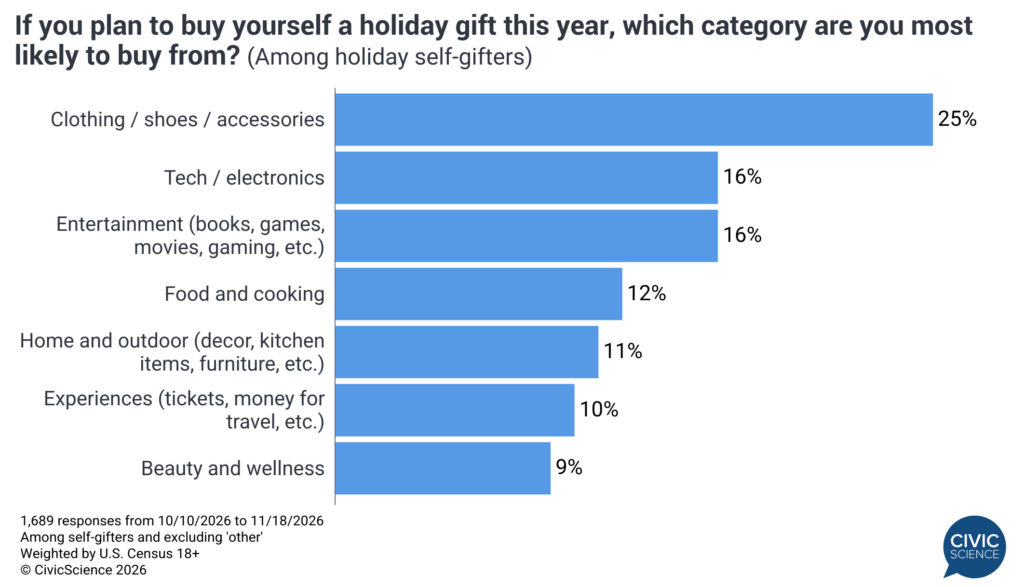
For consumers who do plan to buy themselves a gift, one-quarter are most likely to buy clothing, shoes, and accessories (25%). After that, the categories are all within seven percentage points of each other. Electronics and entertainment (such as books and games) each account for 16%, and beauty and wellness products account for 9%. Boomers are more than twice as likely as Millennials (30-44) to buy home and outdoor items such as decor for themselves (20% vs. 9%).
Buying for Themselves Isn’t Shrinking Self-Gifters’ Holiday Budgets
Self-gifters are also setting aside more for themselves. One-quarter (25%) plan to spend more than $200 on their own gifts this year, up four percentage points from 21% in 2024. Most still plan to stay at $200 or less, with 39% expecting to spend under $100 and 36% between $100 and $200. Men are more likely than women to spend more than $200 (31% vs. 20%), while women are more likely to keep it under $100 (44% vs. 33%).
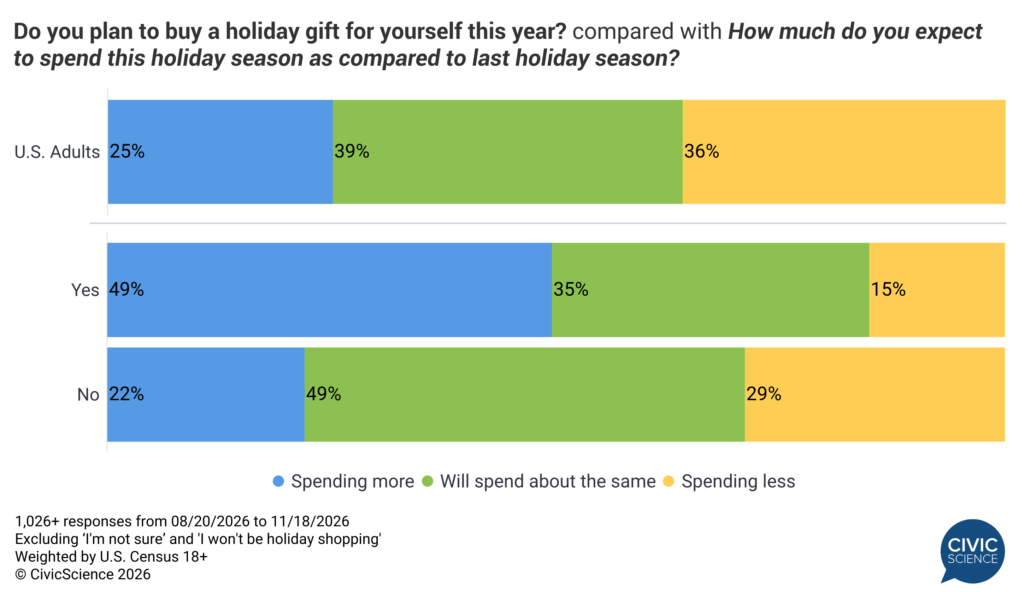
Buying for themselves also doesn’t appear to cut into self-gifters’ broader holiday budgets. Nearly half (49%) expect to spend more on holiday shopping overall than last year, more than twice the share of those not buying themselves a gift (22%). Only 15% of self-gifters plan to spend less.
For Self-Gifters, Treating Themselves Goes Beyond Holiday Gifts
Self-gifters’ holiday plans seem to reflect how they approach spending on themselves more generally. Nearly 8 in 10 (79%) say they currently practice self-care, compared to just over a third (36%) of non-self-gifters. A similar divide shows up in splurging, with 89% of self-gifters saying they tend to splurge on themselves, 30 percentage points higher than non-self-gifters (59%).
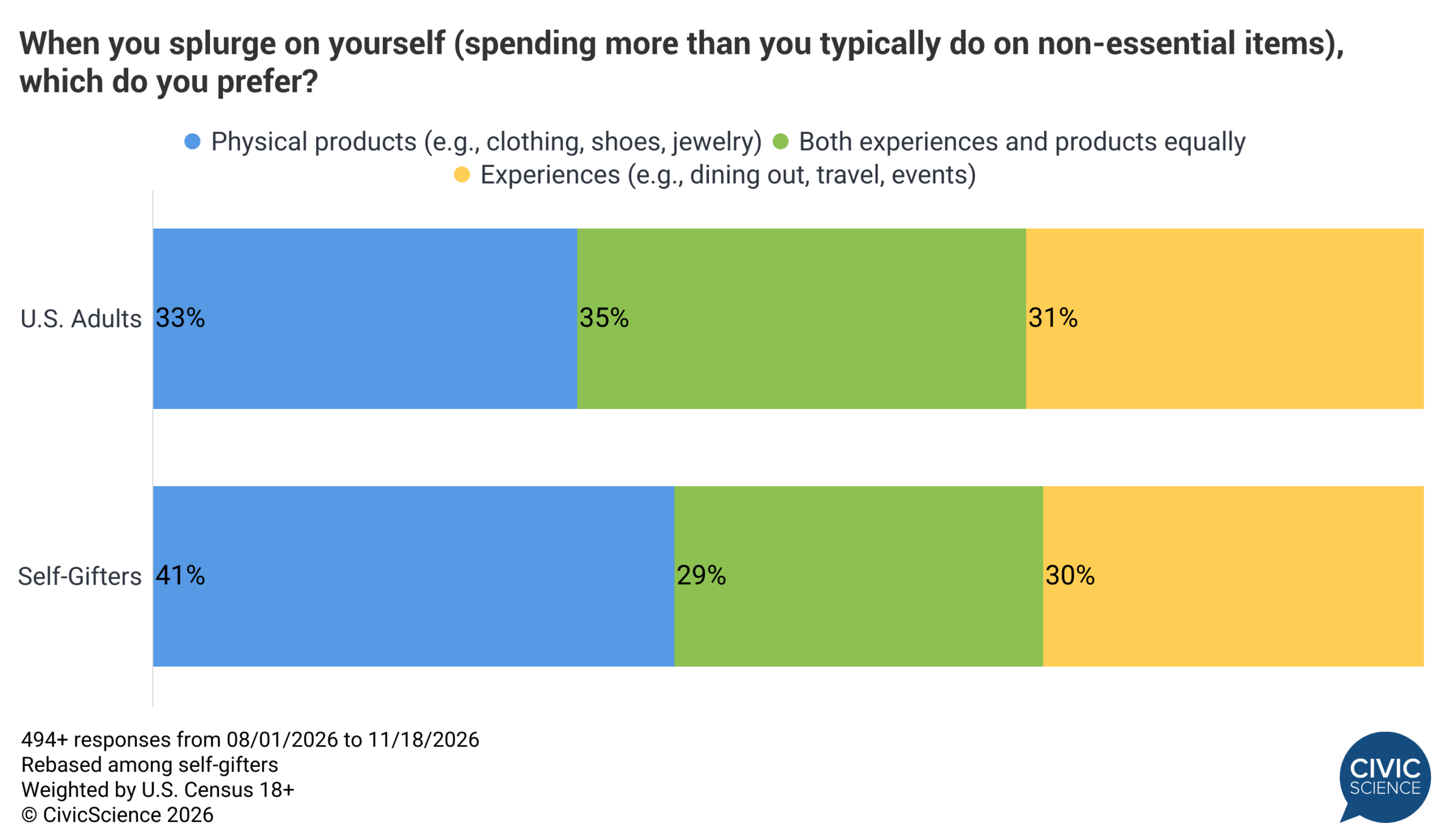
Self-gifters also have a distinct preference for how they splurge. When asked about treating themselves throughout the year, not specifically for the holidays, 41% favor physical products like clothing, shoes, and jewelry, compared to 33% of U.S. adults. Experiences such as dining out and travel draw nearly identical interest from both groups (30% vs. 31%). Because these habits aren’t tied to just the holiday season, self-gifters’ appeal to apparel and accessories brands extends beyond holiday shopping.
The rebound in holiday self-gifting suggests shoppers are ready to spend, both on themselves and overall. With nearly a quarter of Americans still undecided, that group could grow further before the season wraps up. Beyond the holidays, their tendency to treat themselves to clothing, shoes, and jewelry suggests a potential audience well into the new year.