CivicScience engages directly with consumers, collecting over one million survey responses daily, to turn real-time insights into high-performing advertising campaigns. See how leading brands use CivicScience to drive campaign performance here.
While most brands focus on gift-giving for others, many consumers are turning their generosity inward this season. Amid growing economic uncertainty and declining well-being, holiday shoppers are finding ways to indulge and treat themselves. So far, 28% of holiday shoppers plan to buy themselves a gift. Although this figure has dipped slightly — down two percentage points from last year — it still represents a valuable segment. Most notably, another 24% remain undecided, with that share nearly doubling over the past two years. For advertisers, that means there’s not only a solid base of confirmed self-gifters to reach, but also an emerging group that can still be persuaded.
Weigh In: Do you buy yourself holiday gifts?
Targeting Highly Convertible Shoppers
Self-gifters stand out not only for their mindset but also for their demographic and shopping patterns. CivicScience data reveal which age groups, income levels, and political leanings they tend to align with – as well as the differences in their gifting preferences.
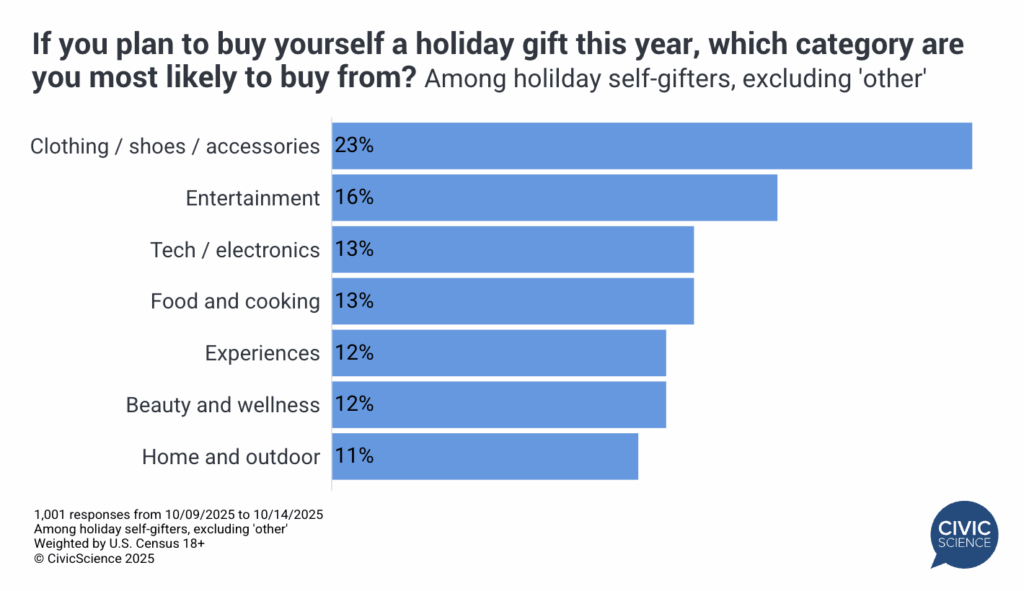
Much like their gifting plans for others, these shoppers are most likely to treat themselves to clothes, shoes, or apparel – outpacing every other category studied by at least seven percentage points. Entertainment items such as books and video games follow, while interest in other self-gifting categories studied remains relatively steady across the board.
Beyond intent alone, self-gifters also tell CivicScience what they value most from brands, why they engage with them, and what makes them likely to convert. Here’s a glimpse of the audience insights available through CivicScience’s millions of daily responses, comparing holiday shoppers who are self-gifters vs those not:
Corporate Social Responsibility: Those who are buying themselves a holiday gift are notably more drawn to socially conscious brands. They’re eight percentage points more likely than non-self-gifters to say a company’s kindness is ‘very’ important in guiding their purchasing. They’re also far more likely to research a brand’s stance on social issues and to switch to companies that better align with their personal values.
Personal Finances: Self-gifters view themselves as more financially literate than those who do not plan to buy themselves a gift. They are also more likely to say they manage their finances ‘very’ well and have a strong pulse on financial markets and economies. But that doesn’t mean they don’t have an occasional indulgence – they’re roughly 20 percentage points more likely to say they splurge on themselves, and they’re more likely than non-self-gifters to take on debt to buy holiday gifts.
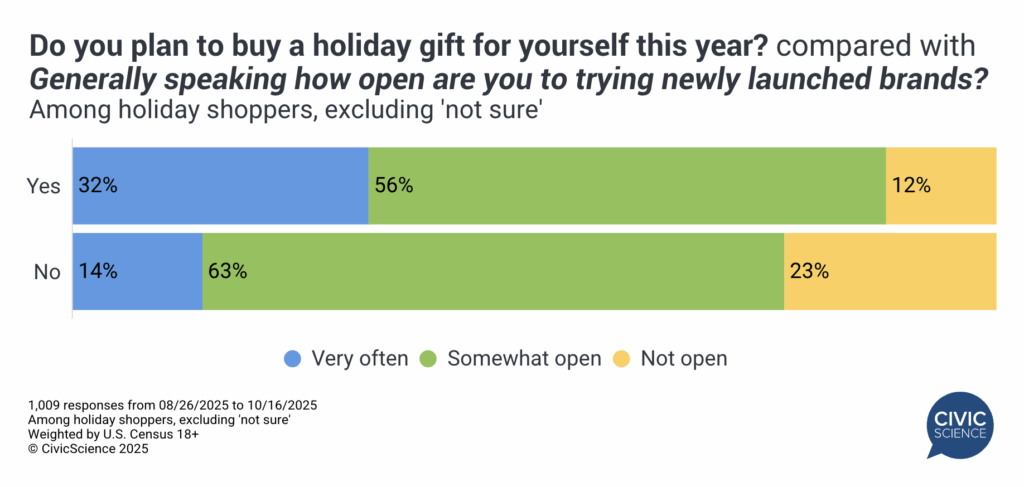
Brand Loyalty: Holiday self-gifters tend to report stronger brand loyalty overall, driven by ‘quality,’ outpacing non-self-gifters by over 10 percentage points. Despite their brand-sensitivity, they’re about 2.5 times more likely to say they’re very open to trying new products and frequently check online reviews before purchasing. This suggests that while they’re loyal to their favorite brands, holiday self-gifters are also curious and intentional shoppers – researching and exploring before they buy.
Psychographics: These holiday shoppers stand out in their mindset, too – they’re more likely to say they don’t always stick to their plans, make decisions quickly and confidently, and often rely on emotions over pure objectivity. This suggests they’re confident, emotionally driven consumers who act on instinct and can be swayed by the right message – but once they decide to buy, they follow through and stay loyal to the brands that meet their expectations.
Holiday Habits: Holiday self-gifters show clear intent when it comes to shopping for the season overall, allowing advertisers to reach them in the right place at the right time. They’re more likely to plan on upping spending on gifts, travel during the holiday season, holiday shop online, and buy from department and specialty stores.
Answer our Poll: Is it healthy to splurge on yourself every now and then?
Holiday self-gifters represent a distinct and valuable segment of holiday shoppers – emotionally motivated yet deliberate in their spending. They respond to brands that reflect their values, prioritize service, and deliver meaningful experiences. Willing to spend more and try new products, self-gifters present advertisers with a high-intent audience that can be reached effectively through real-time insights.
Targeting The Right Audience
CivicScience consumer-reported intent data reveals what’s driving consumers’ decisions, allowing CivicScience clients to reach the right consumers at the right time, on the right channels.