CivicScience engages directly with consumers, collecting over one million survey responses daily, to turn real-time insights into high-performing advertising campaigns. See how leading brands use CivicScience to drive campaign performance here.
Each year, the beginning of January brings about a spirit of change, with individuals committing to make different choices about their daily habits and behaviors. Dry January is one such trend that encourages those who regularly drink to take a sober start to the year (unofficially, not associated with the official UK Dry January). What does this year’s data say about Dry January engagement and the future of the trend? The latest CivicScience data tells a nuanced story about the dueling factors of engagement and commitment.
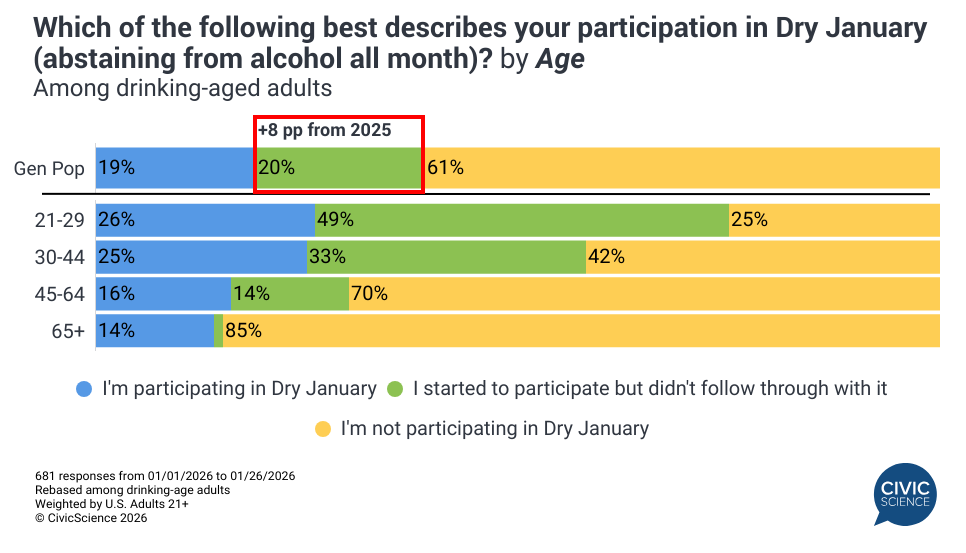
This year, reported Dry January participation reached 19% as of January 26th, a slight one percentage point increase since Dry January 2025. Perhaps not surprisingly, the economy may be influencing participation, as low-income adults are leading the way in giving this month a try, as well as those most concerned about inflation. For those participating, health remains a top priority, aligning with an interest in substituting with mocktails and non-alcoholic beers.
Despite increased participation and rising awareness, the percentage of participants who didn’t finish the challenge nearly doubled, from 12% in 2025 to 20% in 2026. Gen Z adults aged 21 to 29 led the drop-offs, continuing a trend seen last year. However, 49% of this younger demographic say they’ve failed to complete the entire month of Dry January – a seven percentage point increase since 2025.
More Americans to Return To Normal Drinking Levels This Year
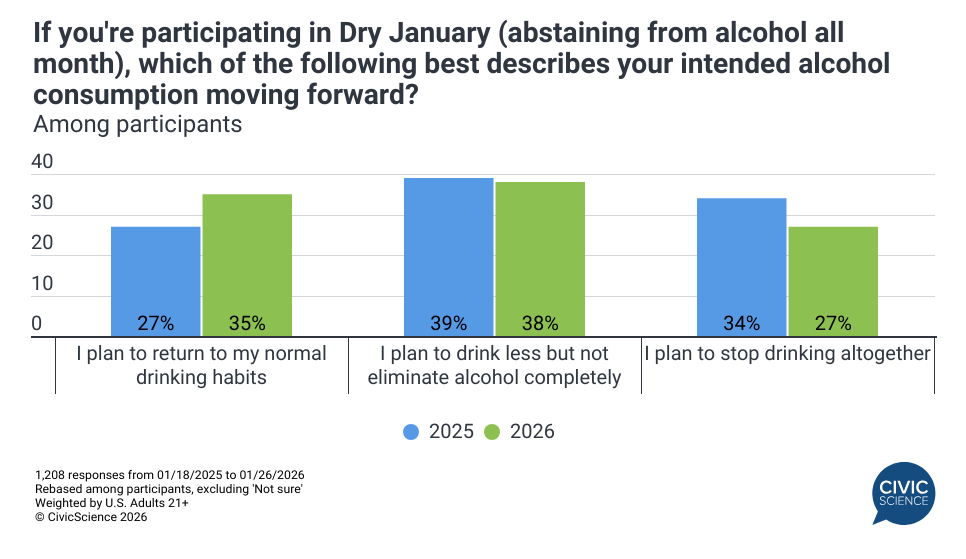
While behavior in January matters, what happens afterward is just as important. The most recent data show that intent to make long-term behavioral changes has decreased. Those who intend to return to normal drinking have increased by eight percentage points since 2025, while those who have decided to stop drinking altogether have dropped seven percentage points in the same period (excluding those unsure).
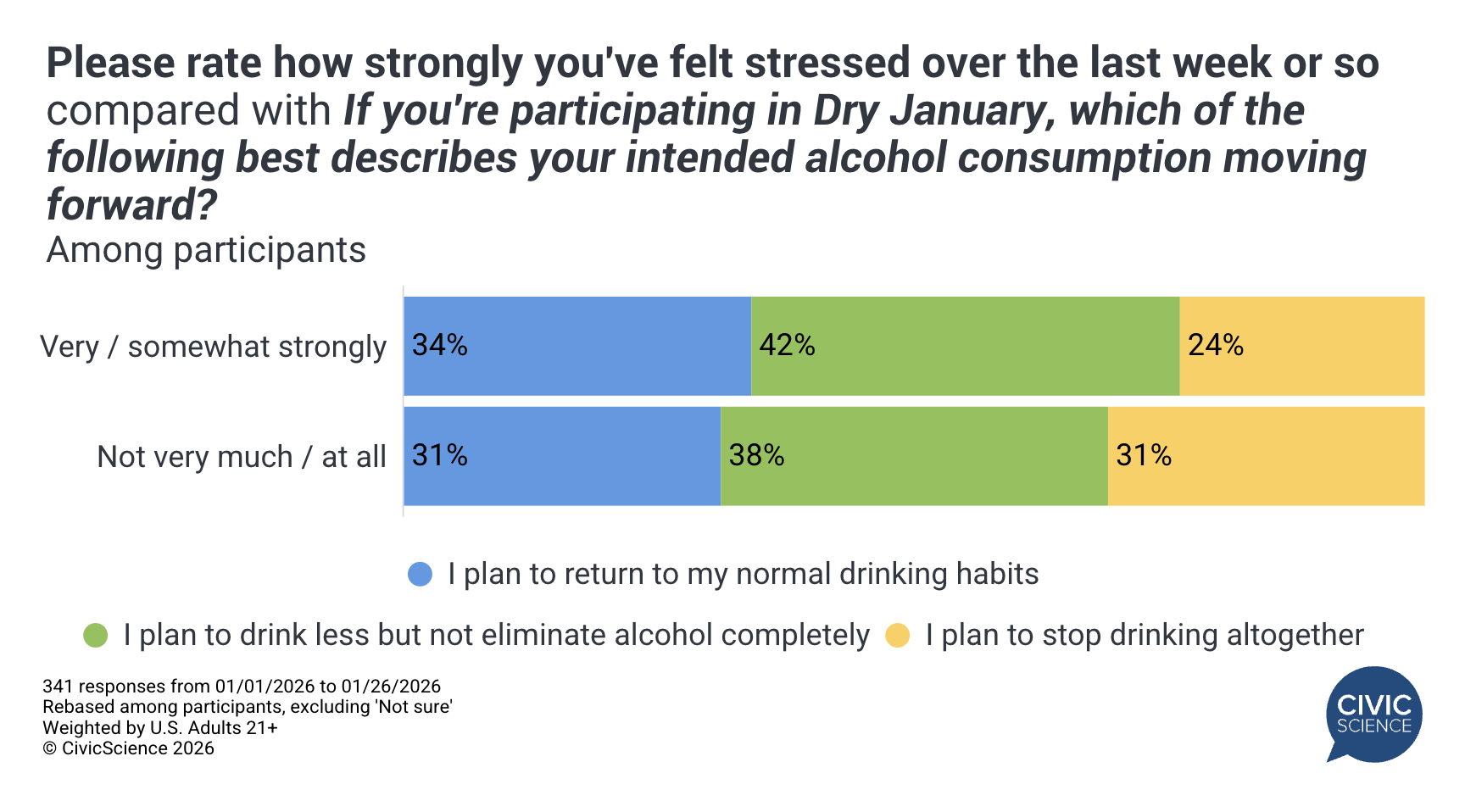
Given that those who report higher levels of stress are more likely to return to normal drinking habits, alcohol may continue to serve a purpose for those seeking to find some levity amidst the stress of daily life.
The rising drop-off rates suggest that while Dry January is now a mainstream fixture, the effort it takes to complete is increasingly clashing with the high-stress realities of modern life. Future engagement likely rests on “flexible moderation” rather than total sobriety, a shift that CivicScience’s real-time tracking can capture as consumer resolve fluctuates day-to-day.