CivicScience engages directly with consumers, collecting over one million survey responses daily, to turn real-time insights into high-performing advertising campaigns. See how leading brands use CivicScience to drive campaign performance here.
Consumers continue to drop their cable and satellite packages in favor of video streaming subscriptions, which allow them to stream their favorite content on demand. Over the past several years, the percentage of Americans who have switched from cable and satellite to streaming (aka cut the cord) has nearly doubled, rising from 34% in 2020 to 64% so far this year. However, that growth rate has slowed of late, rising just three percentage points between 2024 and 2025. A fresh look at CivicScience data exploring consumer mindset and behavior related to video streaming subscriptions offers a glimpse into what’s driving this slowing rate of growth and what to expect in the coming months.
A fresh analysis of consumer-declared data among paid video streaming service subscribers shows just how fluid the landscape is as streamers subscribe, upgrade, cancel, and resubscribe to platforms regularly. In the last six months, 31% of paid subscribers say they canceled one or more video streaming services, while 26% signed up for one or more. A simplified version gives a high-level view of spending: 42% of paid subscribers report spending more (e.g., subscribing to a new service, upgrading to ad-free), while 43% say they’re spending less on video streaming (e.g., downgrading to ad-supported, canceling a subscription). Additionally, just over one in ten say they’ve subscribed to a bundle streaming package.

Take our Poll: Are you considering canceling any streaming subscriptions you currently have?
The Monthly Cost of Video Streaming Subscriptions
More than half of subscribers say they pay $50 or less per month in total for their subscriptions, with the most significant percentage, led by Americans 45+, paying $25 or less. Younger consumers, who are most likely to be cord-cutters, are the most likely to be spending over $100 per month, while men slightly outpace women in paying $100+ as well.

Subscription Fatigue Is Trending Up
The reality of video streaming is that it can often require multiple subscriptions to be able to access all desired content. But holding onto multiple subscriptions can be overwhelming, particularly as costs mount and budgets tighten. The latest view of ongoing CivicScience data finds that the percentage of paid video streamers who say they have canceled one or more of their streaming services because of video subscription fatigue has steadily increased since July. This percentage now stands at 41%, equaling its highest point of the year so far, and is up from 35% in July. That trend may be primed to continue as the number of streamers reporting they have not experienced any video subscription fatigue fell three points over that same time frame.
Additional data also reflects this, finding that the streaming population who say they have four or more streaming subscriptions is falling, down two percentage points from 23% in 2024 to 21% this year.

Streaming and Cable Spending Gets Trimmed, Though Americans Prioritize Other Cuts
Amid higher prices and a looming ramp-up of holiday shopping, Americans have a variety of areas where they’re cutting spending to improve their financial situation. At least one in five consumers tells CivicScience that they have canceled or spent less (or plan to) on streaming services and cable or satellite TV to improve their financial situation. Without contracts to keep people paying each month, users are inclined to cancel anytime and resubscribe when they are ready. That said, it is important to note that Americans are more likely to be cutting back on spending in other areas compared to streaming and TV.
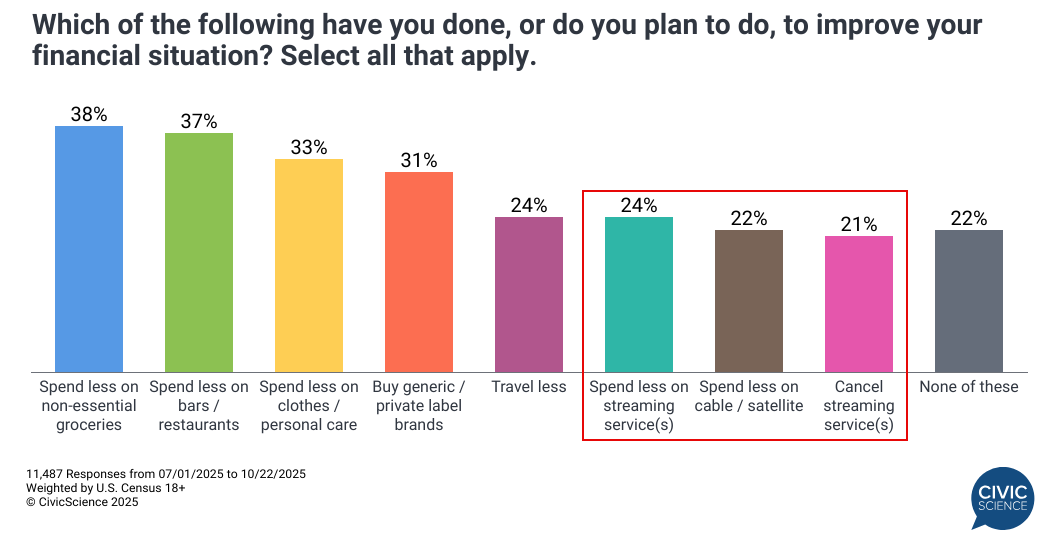
Diving deeper into the financial factors, 85% of people who have canceled subscriptions in the last six months report being concerned about the impact of tariffs on household expenses. In addition, recent subscription cancelers are nearly twice as likely as those who haven’t canceled to say they are buying gifts earlier this season to avoid possible price increases. This group is also more likely to say they are feeling the impact of tariffs.
It is likely that the upcoming holiday season has motivated some paid subscribers to reduce their video streaming subscriptions to free up space in their holiday budgets. Over the last several months, resubscribing to a canceled streaming service has become more common, and it could become more prevalent after the holiday season.
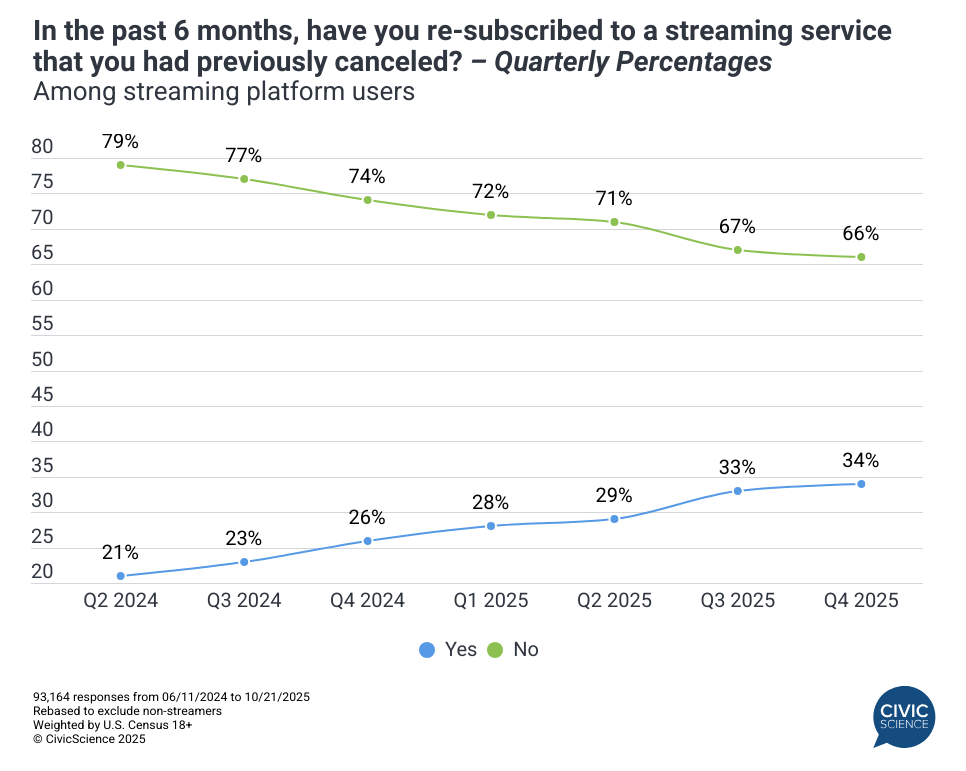
As streaming costs rise and financial pressures mount, consumers are increasingly cycling in and out of subscriptions rather than remaining loyal to any single platform. This fluid behavior suggests that flexibility and value will be the deciding factors shaping the next phase of the streaming landscape.
Targeting the Right Audience
CivicScience consumer-declared intent data reveals what’s driving consumers’ decisions in real time, allowing CivicScience clients to reach the right consumers at the right time on the right channels.