CivicScience has the world’s largest proprietary database of real-time declared intent, allowing brands to activate high-performing advertising that drives up to 80% better performance. See how CivicScience partners achieve superior marketing outcomes here.
Labor Day weekend is now roughly a month away, but consumers are already planning ahead and considering how they might approach the upcoming holiday sales. New CivicScience data show that intent to shop Labor Day sales is up slightly over the 2025 pre-Labor Day period, building on an upward trend that has been ongoing since 2023. That share of interested shoppers is also poised to increase, as more than one-quarter (28%) are still unsure of their plans a month out.
Gen Z (aged 18-29) consumers lead with their plans to participate in Labor Day sales this year (35%), with Millennials (aged 30-44) close on their heels (31%). Across income levels, Labor Day shopping intent is relatively consistent, though adults earning less than $50K are slightly more likely to remain unsure of their plans.
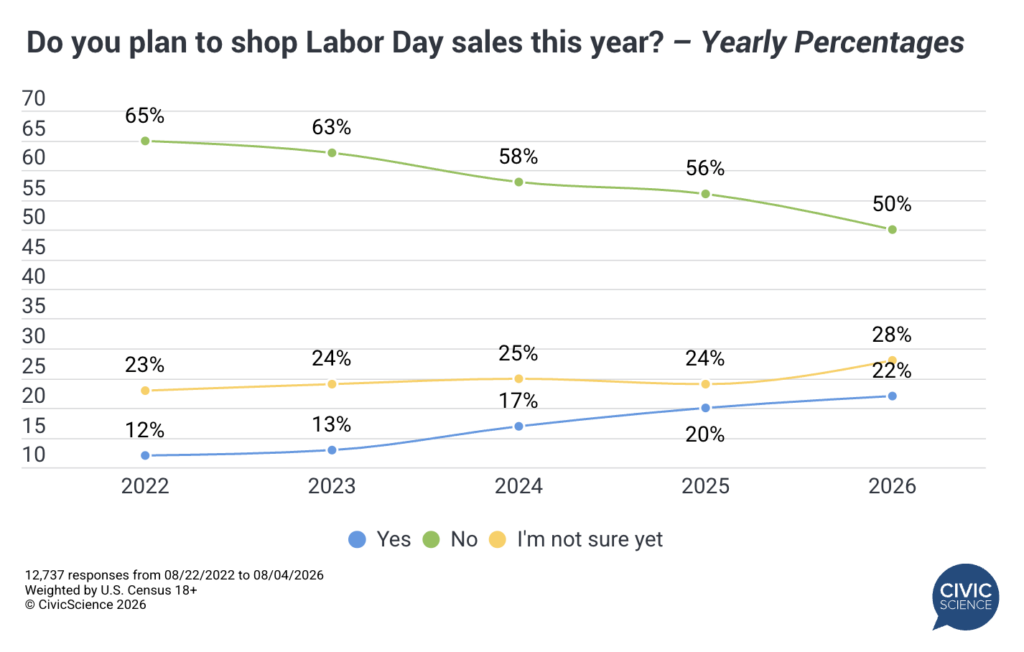
For those already planning to spend, intended spending amounts have also shifted, with the largest increases among those planning to spend $1-$50 and $101-$500, both up by three and four percentage points from 2025, respectively. These specific increases suggest that consumers are looking for the right deal, rather than a broad, discretionary shopping spree.
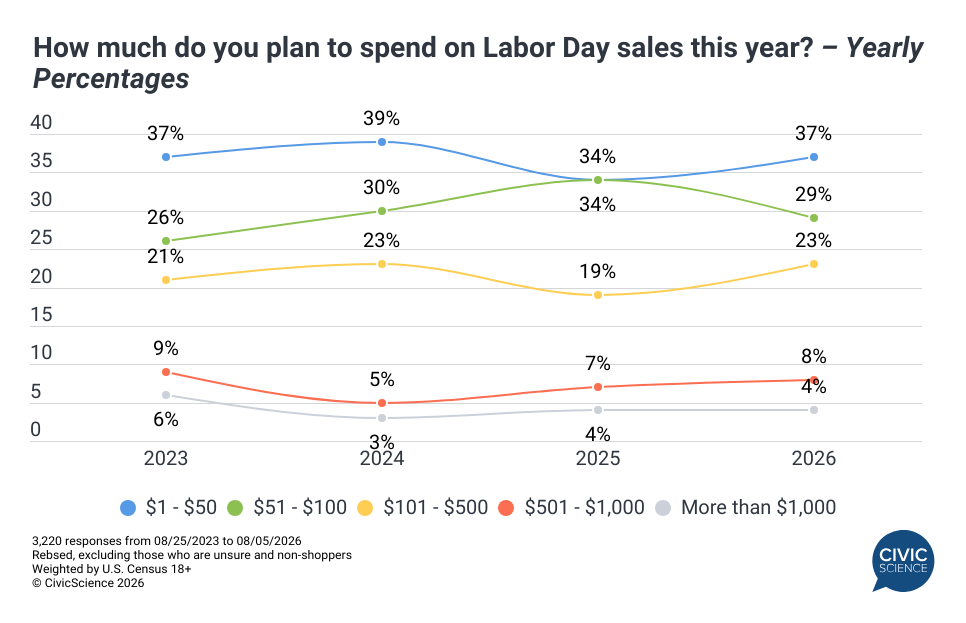
Shoppers Are Approaching Spending With Intention
When examining purchase intent, interest is strongest for everyday items such as apparel (26%), as well as big-ticket categories such as electronics and tech (24%) and furniture/home goods (18%). In contrast, categories like toys and video games (4%) and fitness and sports equipment (3%) rank lowest on the list.
Among top purchasing categories, Gen Z outpaces all other age groups in plans to purchase apparel, electronics, and tech. Meanwhile, adults aged 64 and younger lead with their interest in furniture purchases. Although outside of the top spots, Millennials over-index on interest in beauty/health purchases, while Gen X consumers (aged 45-64) lead in their interest in outdoor supplies, and Baby Boomers (aged 65+) over-index with intended purchases on kitchen and appliances, as well as fitness and sports equipment.
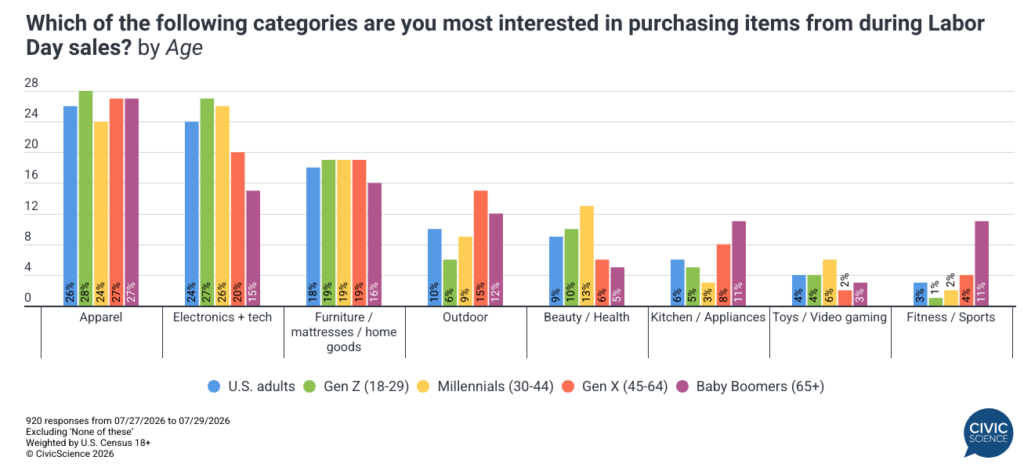
The mix of categories suggests consumers are balancing everyday necessities with a handful of higher-ticket items, reinforcing the idea that Labor Day shoppers are making intentional rather than purely impulse-driven purchases.
Looking beyond Labor Day itself, additional consumer-declared insights from CivicScience find that these Labor Day shoppers exhibit distinct spending patterns compared to the average American.
- Optimistic Income Outlook: Labor Day shoppers are 18 percentage points more likely than the average American to believe that their income will increase in the next six months (55% vs 37%).
- AI for Shopping Support: Labor Day shoppers outpace the Gen Pop in reporting that they enjoy using AI for shopping (35% vs. 20%), a key signal for retailers looking to stand out as shoppers prepare to spend.
- DIY Plans: Labor Day shoppers are a notably proactive audience segment. Nearly half of shoppers (45%) say they plan to increase the amount of do-it-yourself (DIY) projects they’re doing for the rest of the year, up from 32% among Gen Pop (excluding those who don’t do any DIY projects).
- Holiday Shopping: Labor Day shoppers are nearly twice as likely as the Gen Pop to have already started their holiday shopping, indicating that Labor Day sales may appeal to those shoppers getting ahead of their end-of-year spending while the deals are hot (33% vs 17%).
While Labor Day shopping intent continues its multi-year upward trend, capturing consumer plans earlier in the season naturally leaves room for growth as undecided shoppers make up their minds. Those already planning to spend stand out not only for their optimism about their finances, but also for habits that extend beyond the holiday itself: from tackling more DIY projects to getting a head start on the holidays to using AI to help them shop. For brands and retailers, these trends suggest that Labor Day is an increasingly meaningful opportunity to reach consumers who are actively planning their purchases rather than shopping on impulse.