CivicScience has the world’s largest proprietary database of real-time declared intent, allowing brands to activate high-performing advertising that drives up to 80% better performance. See how our partners achieve superior marketing outcomes here.
The post-pandemic era has been a challenging time for the alcohol industry, with sober-curious trends like Dry January gaining serious traction, while economic uncertainty has remained fairly persistent, potentially leaving less room in the budget for alcohol spending. Summertime fun has often been synonymous with drinking alcohol, but how likely is that to be the case this summer? New consumer-declared data from CivicScience offers a glimpse into American drinking habits, with an eye on the summer and beyond.
American Alcohol Consumption Sees Rare, Yet Slight, Increase
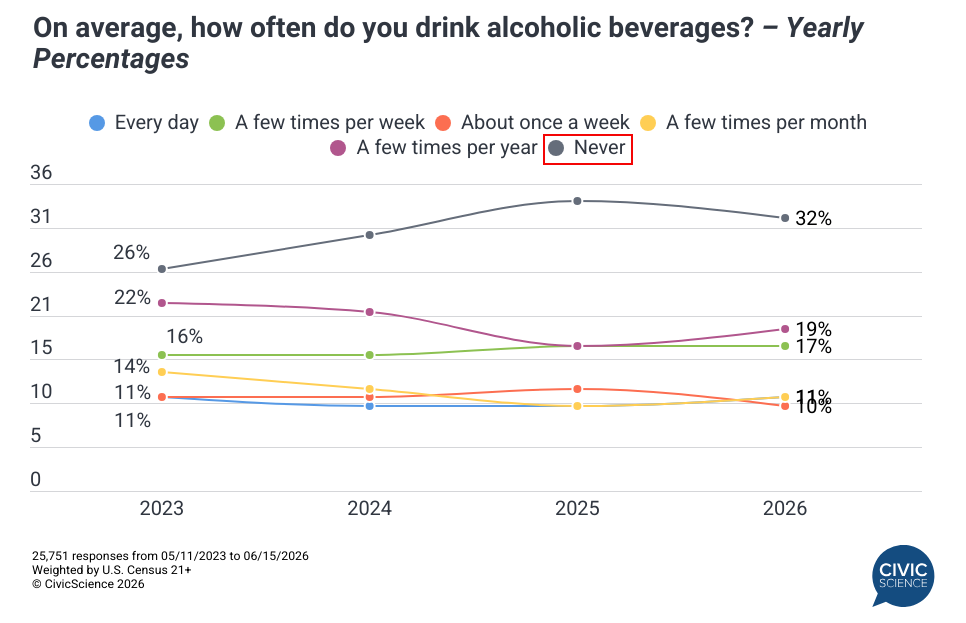
CivicScience has asked Americans 21+ about their alcohol consumption habits in late spring/early summer for several years now. The latest survey data show a slight increase in the overall percentage of Americans who say they drink at least some of the time, rising from 66% last year to 68% so far this year. This uptick breaks a streak of consecutive year-to-year declines, but is primarily driven by a two-point increase in the share of those who drink ‘a few times per year.’ More frequent alcohol consumption – those who drink a few times per week or more – stands at 28%, a marginal increase from 27% last year.
While this is not a drastic shift by any means, an increase rather than a drop is rare, and aligns with an increase in alcohol intent observed ahead of Memorial Day. And like those Memorial Day celebrants, those who drink are much more likely to report recent feelings of stress than non-drinkers, which may play a role in why there’s been an increase this year.
A Growing Share of Americans Expect to Maintain Summer Drinking Habits, Except for Gen Z
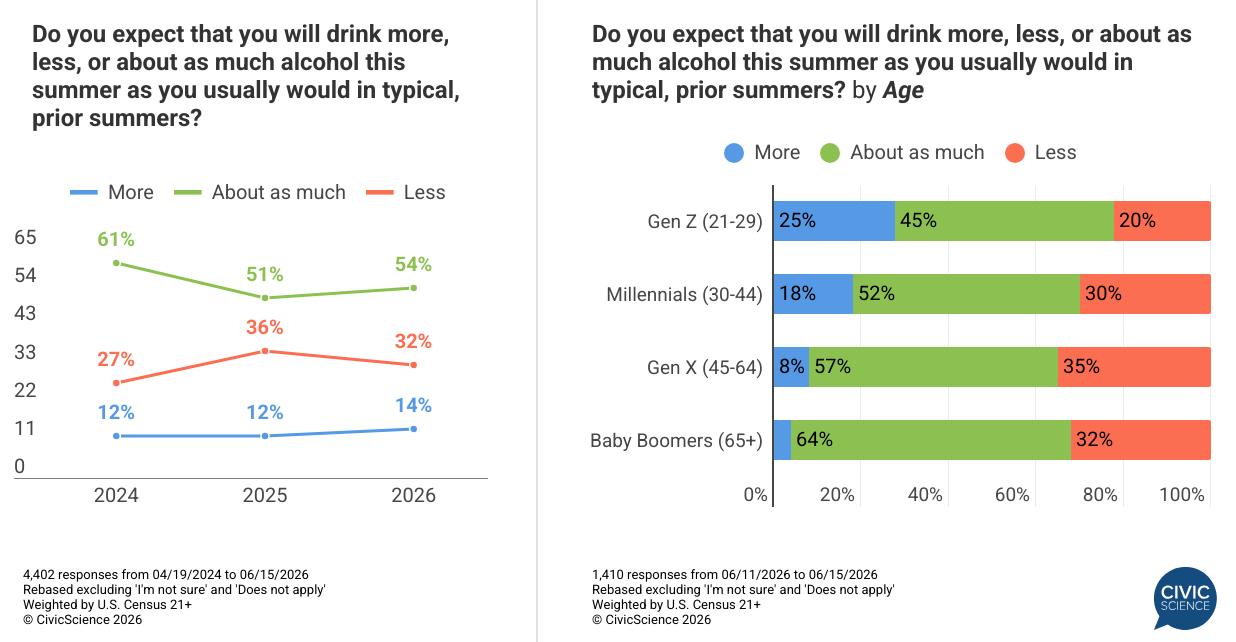
Additional forward-looking data highlight a further shift in summer drinking plans, specifically. Most notably, an increasing percentage of Americans expect they’ll maintain the status quo in terms of how much alcohol they consume this summer. Fifty-four percent of Americans aged 21 or older estimate they’ll drink ‘about as much’ this summer as they do in a typical summer, up from 51% last year. Coinciding with this is a four-point drop in those who will be drinking ‘less’ this year and a two-point jump in those who are likely to drink ‘more.’ Nuances do exist beneath the surface, however.
A closer look at age demographics reveals a distinct generational divide. Gen Z respondents between the ages of 21 and 29, the typical drivers of curiosity in an alcohol-free lifestyle, are the most likely to ramp up their consumption, with 25% planning to drink ‘more’ this summer. In contrast, older demographics are much more intent on scaling back or keeping things steady: 35% of Gen X consumers plan to drink less, and 64% of those aged 65+ intend to drink about as much as they usually do during the summer.
The World Cup is one of the most significant summer events this year, and the data suggest that brands and advertisers should keep a close eye on its 21+ audience. With the tournament in full swing, 30% of those who are watching World Cup matches at least occasionally say they expect to drink ‘more’ than usual this summer, more than twice the rate among Gen pop (14%).
Dry-Tripping Remains a Hot Summer Trend
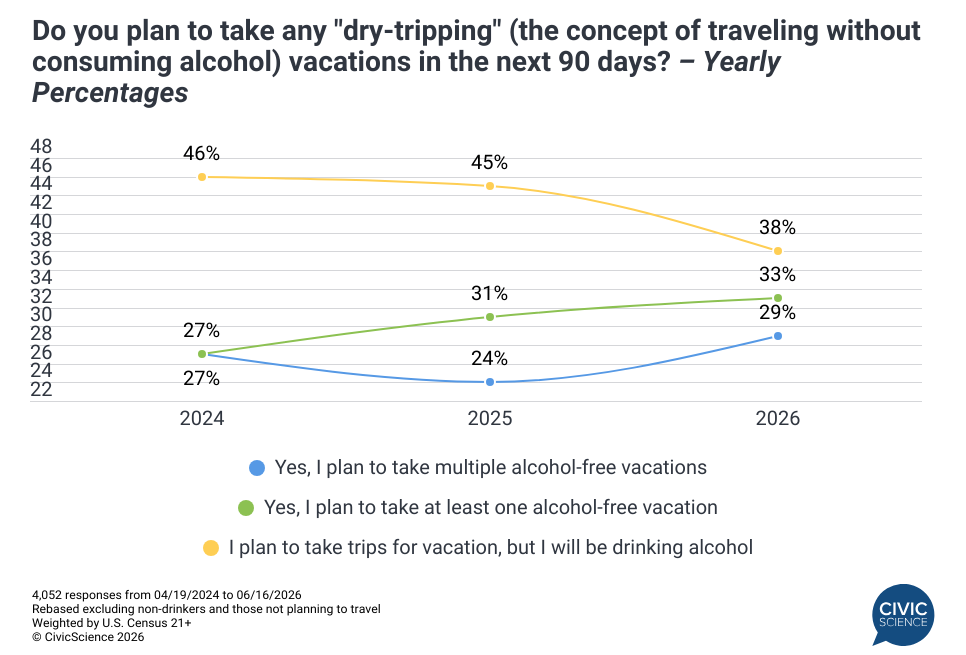
With those planning to drink less than normal this summer still more than doubling the percentage who plan to drink more, there are sure to be impacts on summer vacations. Enter “dry-tripping” – taking a trip that is completely alcohol-free. Among consumers who drink alcohol and have vacation plans, more than 6 in 10 (62%) intend to take an alcohol-free vacation in the next 90 days, a notable seven-point increase from 2025. This includes one-third who are planning to take at least one alcohol-free trip, and another 29% who will take multiple alcohol-free vacations. This steady, multi-year rise in dry-tripping intent suggests that sober travel is no longer a passing fad, but an established norm.
Warm Weather Alcoholic Beverage Preferences Shift Away From Beer
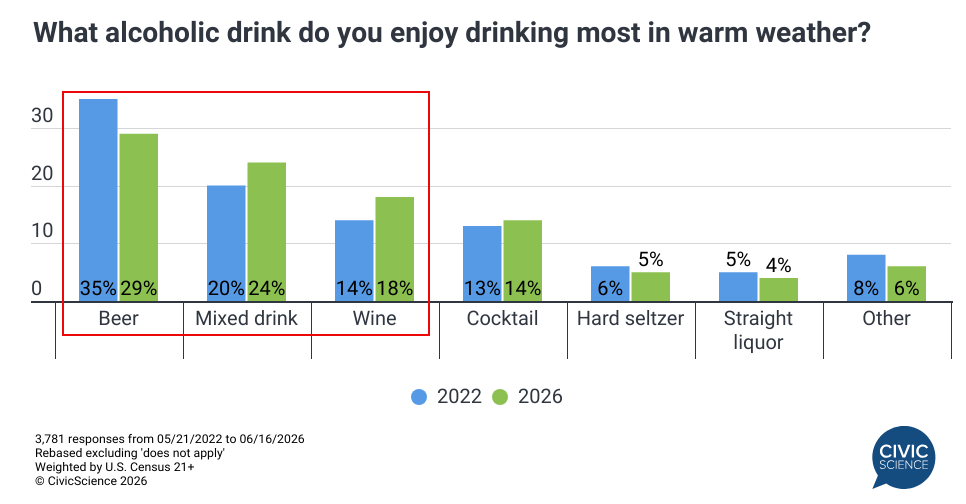
For those who are still indulging in alcohol, what they enjoy drinking in warmer weather is also evolving. Drinkers today are now more likely to say they prefer mixed drinks and wine in warm weather, thanks to respective four-point increases since 2022. And although beer remains the most popular warm-weather alcoholic beverage, it has lost significant ground, with its lead cut from 15 points in 2022 to just five points today.
The state of American alcohol consumption is certainly not going to have the alcohol industry popping bottles. While a minor stabilization in overall consumption provides a slight reprieve, the reality for brands is a highly fragmented consumer base. Success this season will depend on navigating a distinct generational divide, catering to the booming “dry-tripping” travel market, and adapting to shifting beverage preferences that continue to challenge beer’s traditional dominance.