I’m about to talk about golf.
Feel free to skip ahead if you don’t care.
It’s my favorite hobby, and I’ve never really written about it before.
I wish I’d started playing when I was younger. In fairness, I did pick it up when I was 14, but losing those earlier developmental years capped how good I could get – or at least that’s my excuse. Instead, I was playing every other sport, partly because before Tiger Woods came along, nobody really considered golf a sport. Soccer was my go-to, but by the time I got to high school, I had to choose – and I was better at golf – which was unfortunately a pox on social stature where I was from.
It helped that my dad golfed. At least once or twice a week, we would play in the evenings, then on Saturdays, and regularly on every vacation. My mom even picked up the game for several years. There aren’t many other competitive pursuits that double as quality family time.
I had no real shot at playing in college. Going to school in Florida, where kids played year-round versus six months of golf weather in Pittsburgh, was a big disadvantage. Moreover, you need to be able to hit the ball low in Florida, on account of the wind. Growing up on (very) hilly courses in the Northeast, you learn to hit the ball high. Also, I simply wasn’t good enough.
At my first company, golf was business – which was awesome. Consultants and government types were prime for on-course schmoozing. Fundraiser events were plentiful. I regularly logged upwards of 80 rounds a year. In the 18 years since, I’ve averaged around 15.
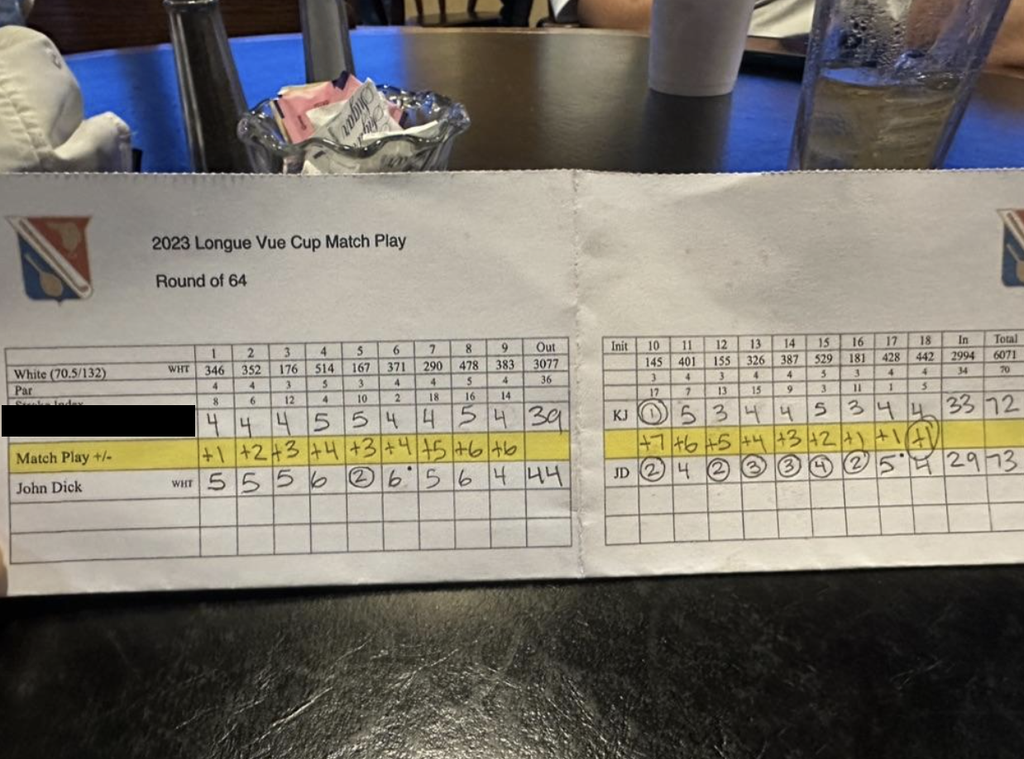
Tech entrepreneurship, with its heightened pace and the fact that very few people in our professional orbit play, is unconducive to a well-practiced golf game. Thus, my consistency woefully suffers. If you want proof, check out the scorecard shared below (replete with my opponent’s hole-in-one), which is part lament (I lost) and part humblebrag (I almost won). It explains my relationship with the sport to a T.
How can you be so bad and so good at something within a span of a few hours? Also, a couple weeks ago, I bladed a ball out of a sand trap into the crowded kiddie pool at our club, 50 yards behind the green. Fortunately, nobody was hurt other than my ego.
And, thus, I defy anyone to name an activity or interest you can simultaneously love and hate, in diametric proportion, like golf. It’s equal parts exhilarating and maddening. You can hit a perfect shot, but never play a perfect round. It’s the ultimate, never-ending pursuit.
One day again, I hope to spend more time trying.
Here’s what we’re seeing:
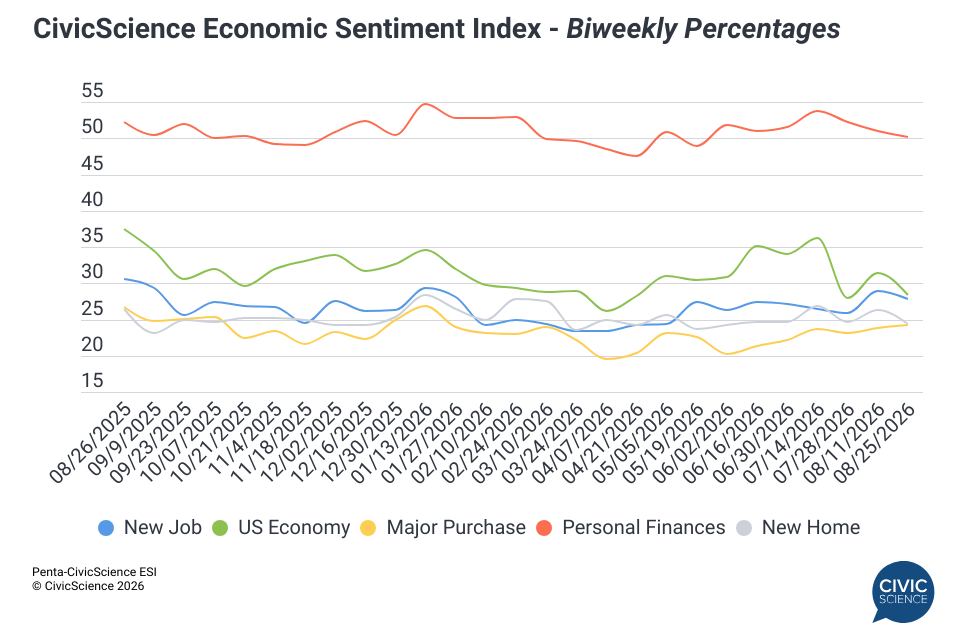
Consumer confidence is back to its up-and-down ways. After a solid upward trajectory from April to July, our Economic Sentiment Index is once again fluttering, having fallen over the past two weeks after climbing, falling, and climbing in the three readings prior. This time, the downward pressure came from darkened views about the long-term U.S. economy, no doubt influenced by renewed chatter about tariffs. The line I’m watching closest below is the orange one. Confidence in personal finances has been swooning for six weeks. If that continues – or steepens – we should start taking it seriously.
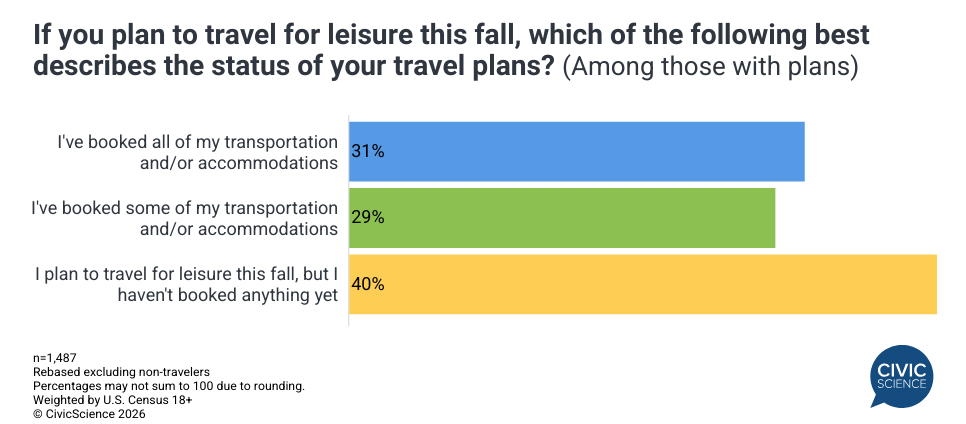
Travel industry folks should pay particularly close attention to the macroeconomy. As we sit here today, 56% of U.S. adults report plans to travel for leisure this upcoming fall, on par with last year’s numbers. Notably, this time, however, 4 in 10 of those expectant (hopeful?) travelers haven’t yet made any of their arrangements. The good news is that it gives hotels, airlines, and other travel-related companies a giant prospect list to court in the coming weeks. The bad news is those procrastinating travelers have plenty of time to chicken out if their belts get tighter. Fortunately, if you are indeed in the travel trade, we’ve published a comprehensive report and targeting strategy for these booking laggards. Go get ’em.
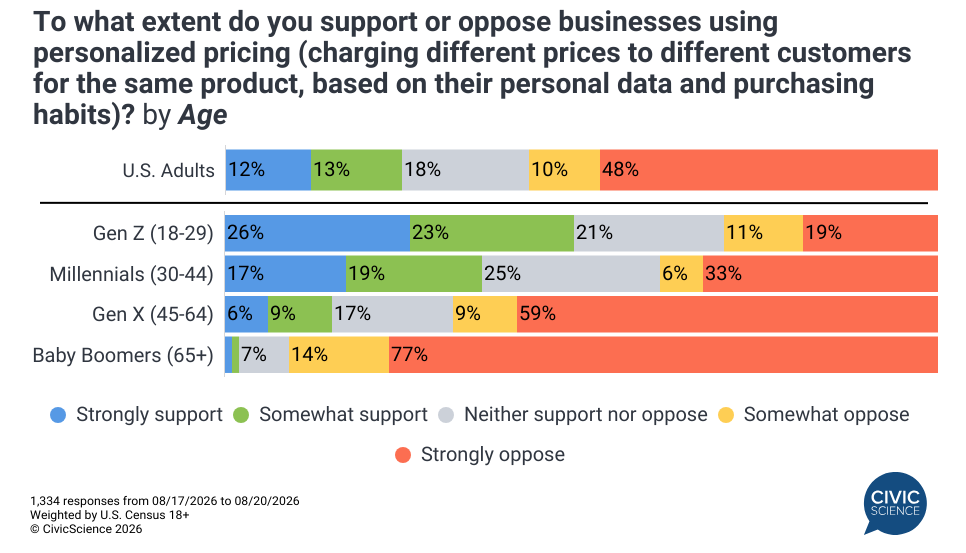
People are getting fed up with tipping. In our 3 Things to Know this week, we learned that Americans are burning out from near-ubiquitous tipping expectations found everywhere from takeout counters to DIY ordering kiosks. The consequence is a much larger share of diners moving from average to below-average tippers. Elsewhere, we found that Gen Z consumers are far more supportive of the personalized pricing trend, probably because they’re more likely to be offered lower prices than Boomers. Lastly, we looked at how diminishing attention spans are changing the way different generations read content online.
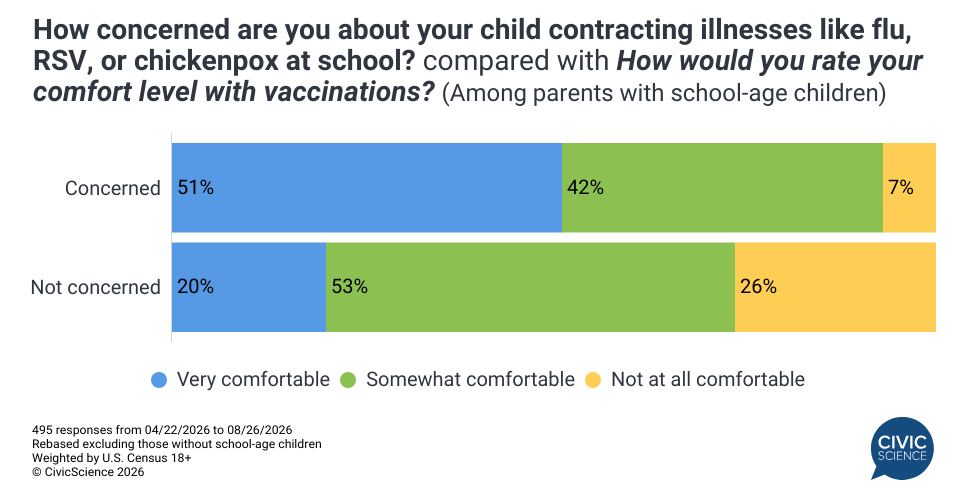
Science is losing the vaccine debate. We published a study on back-to-school vaccine sentiment this week, coincidentally released on the same day the Pennsylvania Department of Health attributed two local deaths to measles infections. Nationally, even as parents prioritized all sorts of health-related measures to prepare their kids for the school year, updating their vaccines was low on the list. It doesn’t take a scientist to explain why – 40% of parents worry about the safety and side effects. The trend in this direction is undeniable – the percentage of Americans who are “not at all comfortable” with vaccines has more than doubled since 2019. This chart says it all.
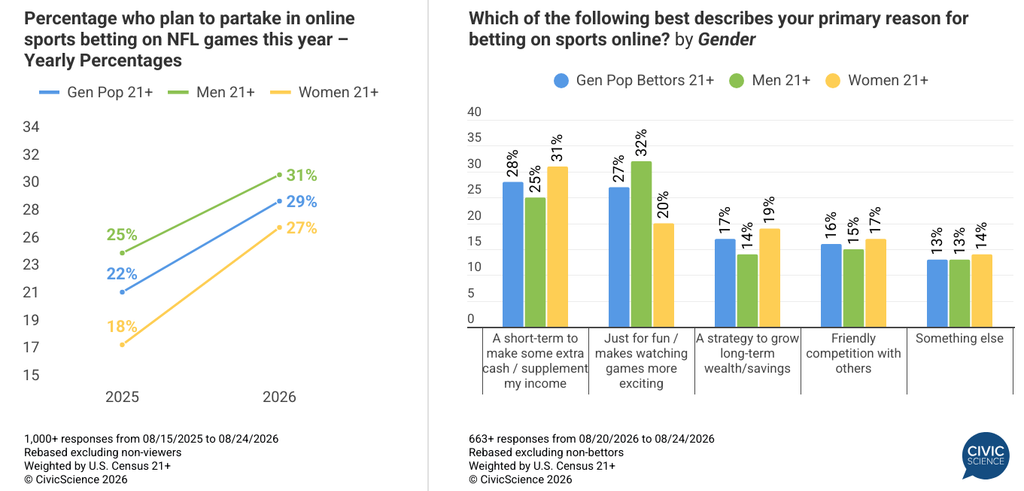
The popularity of the NFL shows no signs of slowing this year. As I sit here writing this during a sloppy Steelers-Bills pre-season game, I’m ready for the real thing. I’m far from alone. A whopping 76% of U.S. adult sports fans are at least “somewhat likely” to watch NFL games this season, with Gen Xers and Boomers (ie, where the money is) leading the way. A few other highlights from our annual pre-regular-season study – which you should read – include the continued growth of streaming as the preferred viewing mode, the rise of women betting on games, and the use of “second screens” while the games are on.
The most popular questions this week:
Do you prefer vibrant colors or neutral tones in your surroundings?
Do you enjoy making pasta from scratch?
How important do you think it is for children to play organized sports?
Is it better to be proactive or reactive as a leader?
Do you think cursive writing should or should not be taught in public schools?
Answer Key: Definitely neutral tones; If people like it, sure; Nah, way too much work; As long as they do organized something; The best leaders are both; I’m too old to say no.
Hoping you’re well.
PS- I’ll be taking off next week for Labor Day weekend. Have fun!
JD