I finally made my pilgrimage to The French Laundry on Wednesday.
It was everything I hoped it would be. More, even.
I’m sure it’s old news to many of you. But for those not steeped in foodie lore, The French Laundry was long regarded as the best restaurant in America and remains in the discussion even today, though the competition is far fiercer than it was when it hit the scene 30 years ago. Indeed, much of that competition — and the chefs driving it — can be traced to the influence of The French Laundry and its legendary proprietor, Thomas Keller.
Dining there had been on my bucket list since I first read Keller’s The French Laundry Cookbook in the early aughts. It still sits on the shelf in our kitchen, though I’ve never developed the skill (or the pantry) to cook a single thing in it.
On that note, over dessert, one of our dinner companions posed a conversation starter to our table of eight friendly business associates: “What’s one topic or skill you know more about than almost anyone?” The answers ranged from “Japanese culture” to “duck hunting” to “throwing a riseball,” which I learned is a difficult softball pitch. Yes, it was an interesting group of people.
As I waited for my turn around our circular table, my brain was churning. I was stumped. I would’ve loved to say “cooking,” given that it’s the thing I’ve spent more time doing and reading about than anything outside of my job. But when you’re surrounded by that kind of hallowed culinary excellence, suggesting I knew the first thing about cooking felt disrespectful.
I am pretty knowledgeable about the mechanics of a golf swing (enough to teach people, anyway) and the geometry and strategy of a pool table (I’m probably better at pool than I am at anything else), but I’ve also been badly humbled by others at those things. I suppose I’m an expert on survey research, but even writing those words is lame, let alone uttering them around a table of fascinating people who were trying to stay awake.
To my relief, the hot potato never made its way to my side of the table before it was time to go. I was off the hook.
For better or worse, I’ve always been more of the dreaded, well-rounded type — good enough at most sports, games, and music to “make the team” and sufficiently knowledgeable on a myriad of topics to hold a conversation. But I’m seldom, if ever, the MVP or the smartest guy in the room.
I’m okay with it, happy enough to be welcome in so many different rooms. It’s allowed me to make a diverse and talented group of friends, get smarter everywhere I go, and enjoy an array of unforgettable experiences.
Just like the evening I had in Yountville this week.
Here’s what we’re seeing:
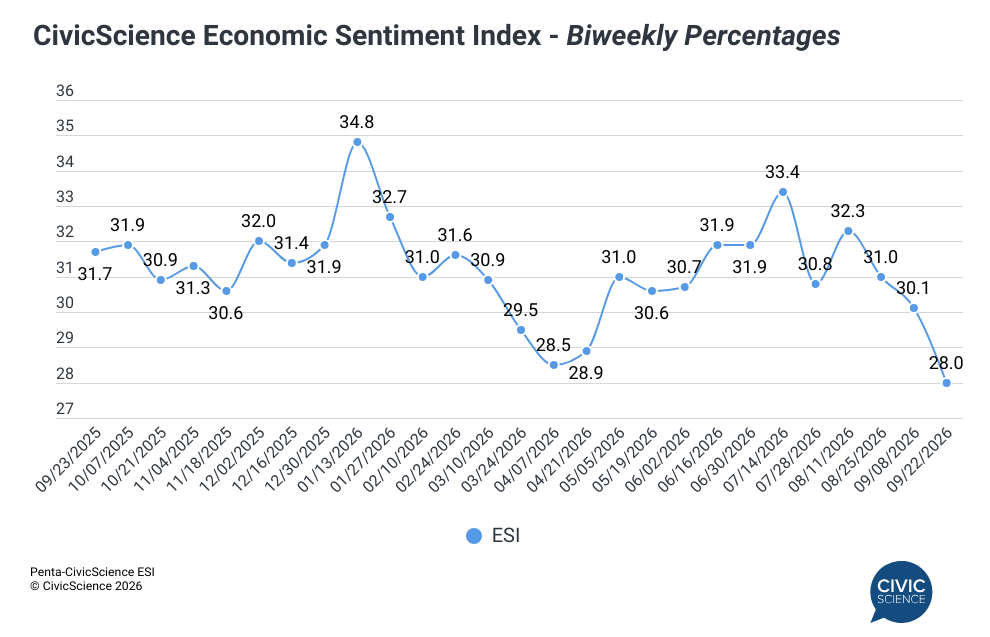
Consumer confidence…yikes. After keeping its head above water through most of August, the bottom has officially fallen out of our Economic Sentiment Index, reaching a new record low in its 13-year history this week. Though we can’t prove it, the latest rate increase by the Fed likely contributed to the consumer malaise — confidence in the housing market and major purchases suffered massive drops. All five indicators fell, however, meaning that the negative vibes are spread far and wide. Time will tell if this shows up in consumer spending (recent history suggests it won’t), but it certainly has implications for the upcoming midterms.
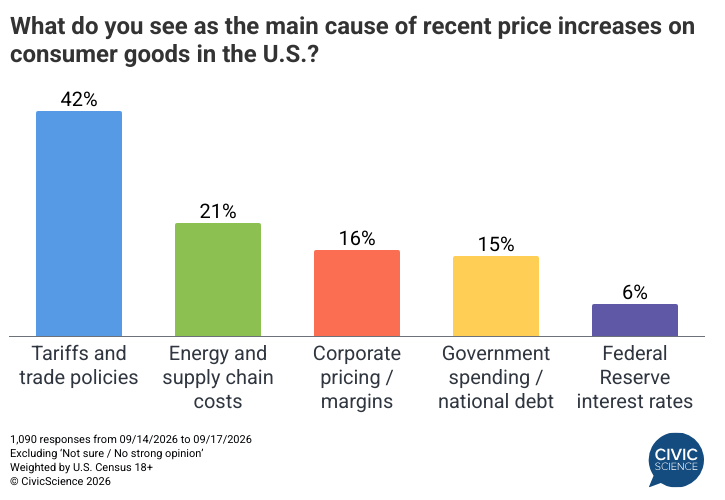
On that note, people are clearly blaming federal policies for the affordability crisis. In our 3 Things to Know this week, we looked at how consumers are reacting to continued “shrinkflation” in the grocery store, the blurb on which included the critical chart below. We also found that people are feeling increasingly uncertain about their job security, even as overall sentiment toward the broader job market has been relatively stable (until this week). And, in perhaps the most shocking thing I read this week, pumpkin spice is evidently NOT America’s most popular fall coffee flavor.
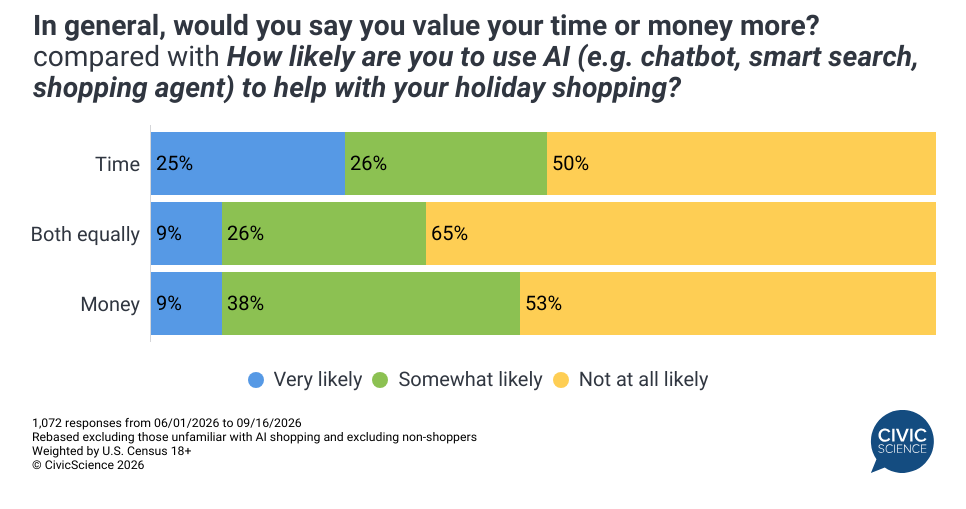
In the age-old time-versus-money debate, the correct answer is balance. We’ve been tracking how Americans weigh the value of money and time for nearly 10 years, seeing many subtle yet notable shifts over time. For example, emerging from the pandemic, when inflation was raging, you might have expected to see the prioritization of money spike. The opposite happened. COVID recalibrated our emphasis on flexibility. Some of the correlations are obvious — like the fact that people who have hybrid working situations are the most likely to value time. So too are the most tech-savvy people. What I learned from our most recent data, however, is that women, Gen Xers, and Boomers (i.e., our most sage demographic groups) know time and money are best in equal measure.
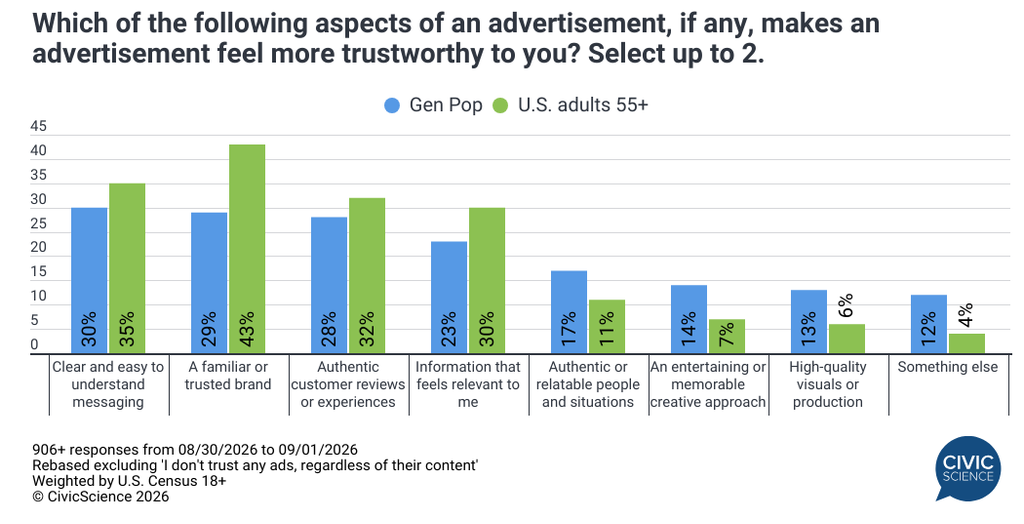
Advertisers need to think differently about reaching older Americans. One of the other underappreciated phenomena of the pandemic was the non-linear increase in technology adoption it spurred among older generations in the U.S. Not only did later-stage Gen Xers and Boomers get comfortable with technology like Zoom and telehealth, but they spent more time on all manner of social and digital platforms. As our latest collaboration with the brilliant people at ROAR Forward highlights, the effectiveness of digital advertising — and digital influencers — on adults 55+ has accelerated significantly in recent years. Just know that what they value in those ads remains distinct from younger generations.
Americans are super loyal to their favorite shoe brands. Expanding on our much-publicized brand loyalty paper from a couple weeks ago, we’re delving into the categories where emotional connection is highest. Few, if any, reach the level of passion U.S. adults feel for their favorite footwear. Shoe brand loyalty is consistent among men and women, as well as across every region of the country. Notably, it’s steadily high among every age group 64 and under, which I personally credit to the influence of Run-DMC (iykyk). Shoe loyalists are more than three times more likely to cite comfort or quality — over price — as their main motive. And, for those of you in the footwear trade, you need to target these folks. Nearly half of them purchase a new pair of athletic shoes two to three times per year.
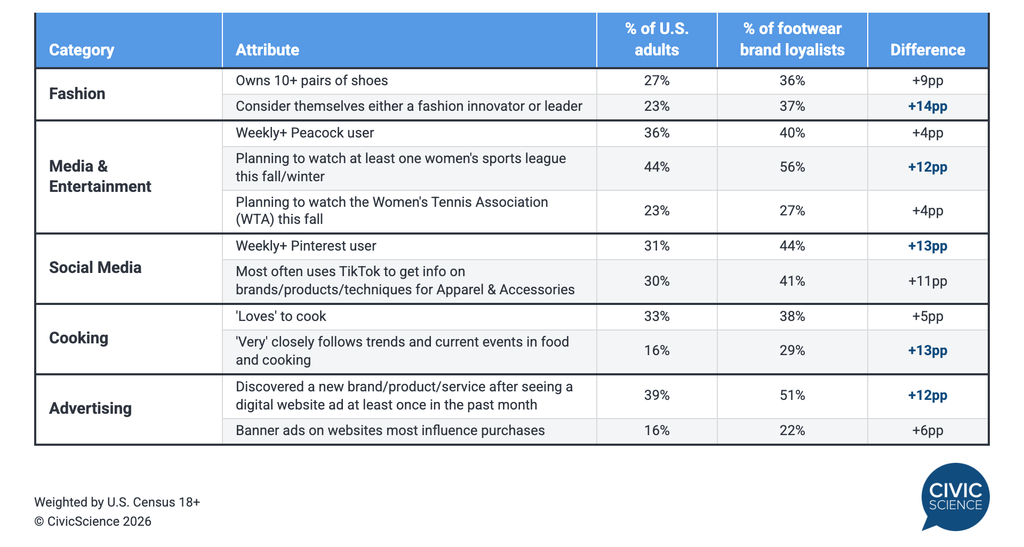
More awesomeness from the InsightStore™ this week:
- Our President and COO, Gretchen Tibbits (who also, incidentally, prepped me with wine selections at The French Laundry that impressed the sommelier), wrote a must-read article this week about the expansiveness of fall sports fandom — beyond football — and the role “second-screen” behavior plays in their sports-viewing experience.
The most popular questions this week:
How much do you rely on AI for travel-related purposes?
Do you think it’s appropriate to bring iced coffee to a job interview?
What’s your favorite type of free restaurant bread?
How do you personally handle moldy food?
Answer Key: Very little so far; I couldn’t care less; Sourdough; I can’t see how anyone could argue otherwise; Toss it in the trash at the first hint.
Hoping you’re well.
JD