I don’t know what to tell you.
The only thing I do know is that we’ve never seen politics or policymaking like this in our lifetime. Whether it’s ultimately right, wrong, or existential, whether the ends justify the means, whether it’s temporary or irreversible, may take years or generations to figure out.
In the moment, people can’t seem to separate the merits of a policy from the methods being used to execute it. The strictures of political tribalism are such that ideas and actions can’t be parsed – that my side is warranted in whatever tactics they employ to achieve their goals, that the other side deserves whatever retribution they suffer for standing in the way. If I moderate, if I hold my side to account even the slightest, my entire house of cards might tumble.
Of course, we all know those are false choices. We just can’t help ourselves.
In following the debates among my friends on Facebook, the extreme polarization never ceases to amaze (and horrify) me. Donald Trump is either “the greatest President ever” or “the worst President ever.” There’s very little in between. I’ve watched Christians punch and counterpunch using scripture from the same bible to support diametric arguments. If so-called followers of Christ can’t agree on right or wrong, who can? I’m only being mildly facetious.
Maybe we are at war. If so, the midterm election is the next big front, while protests and counterprotests between now and then are the skirmishes. The good news is that no matter which side you’re on – or neither – you’re not helpless, though it may feel like it.
Vote, volunteer, donate, or assemble. Speak out. Patronize or boycott companies for the positions they take (or for their silence). Try to have open and empathetic conversations with your friends and family. Leave the hyperbole and name-calling at the door. It only makes things worse.
Most of all, be intellectually honest with yourself. Are your views ideologically consistent? Do you have a foundation of values, an orthodoxy, through which the political news can be filtered? When someone in your tribe does something afoul of that orthodoxy, can you call balls and strikes? Holding your team accountable doesn’t make you a traitor. On the contrary.
There’s lots you can do.
Just don’t look to anyone else for answers.
Because we’re all living in the same uncharted territory.
Here’s what we’re seeing:
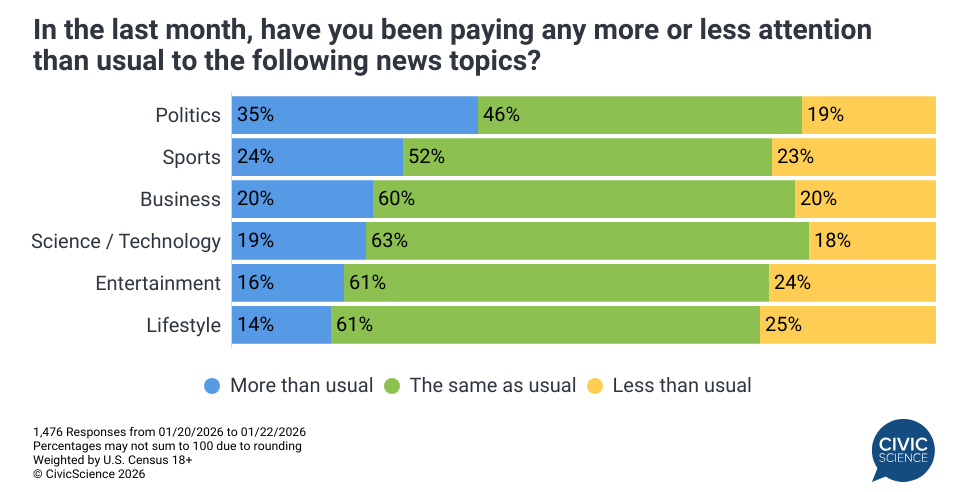
People are paying more attention to political news, but they’re doing it less on social media. In what will be an ongoing area of study for us this year, we shared our first report this week on the changing media habits of U.S. consumers and voters heading into primary season. No surprise, after a year or so of reduced political focus, Americans are tuning back into political news in droves. Notably compared to this same time in 2024, more voters are turning to national websites for political news, while turning less to social media (good). Still, when it comes to the outlets they rely on most for unbiased news, local TV is still the unrivaled leader, and the gap is growing.
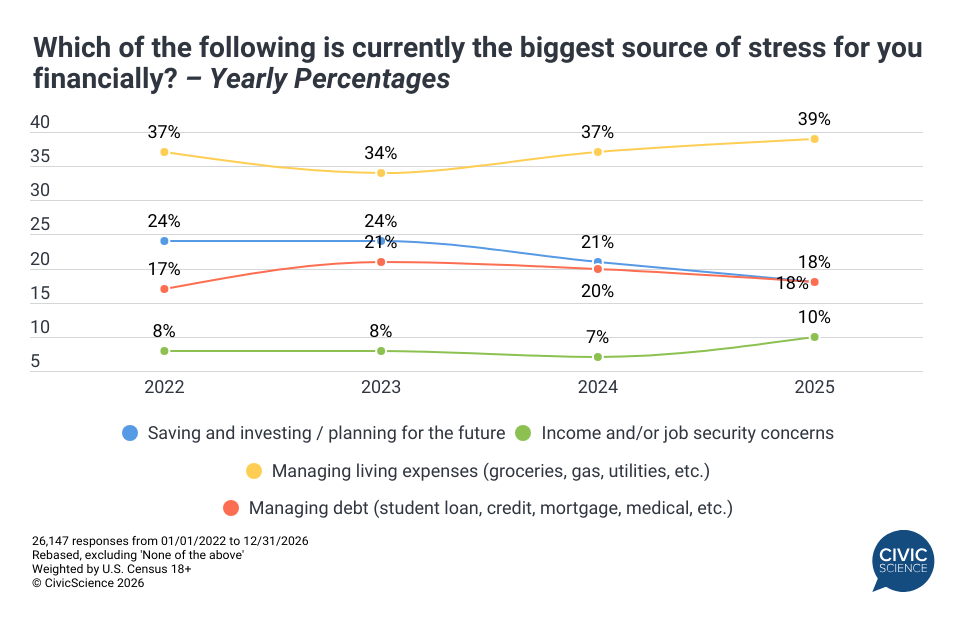
The wealth gap in America just keeps getting wider and wider. Our latest look at the varying spending and savings dynamics across U.S. income groups tells a familiar but worsening tale. 76% of adults report having little to no money left over each month to save or spend on non-essential items. In the least surprising news ever, these numbers skew heavily toward lower-income brackets, meaning they’re able to make very little progress toward getting ahead. The so-called K-shaped economy is legit, with the crux of the K appearing at around $150k in annual household income. Over half of this group reports having “a lot” of money left over each month. Notably, however, job security concerns are hitting these upper-income groups too.
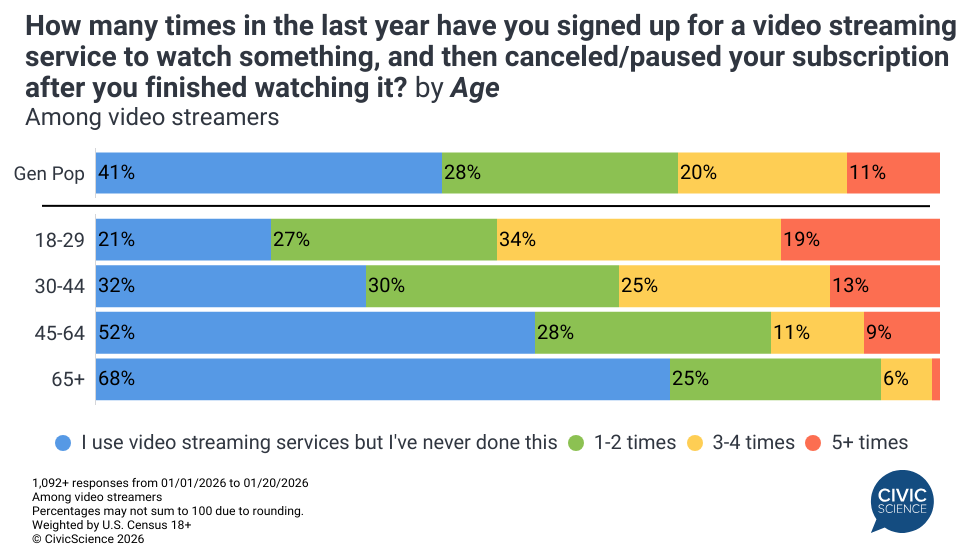
Gen Z has reached peak streaming, and they’re wicked smart about it. The percentage of U.S. adults aged 18-29 who report having “cut the cord” has held steady at around 77% since 2022. This article characterizes that as a slowdown; however, it could be a function of how we’ve tracked the question over the past several years – it’s possible these Gen Zers never knew adult life before streaming. Anyway, that’s not the real story. What’s important to know is how savvy Gen Z has become at using bundled services, ad-supported tiers, and rapid churn tactics to game the system. One in five Zs say they’ve signed up for a service, watched something specific, then cancelled…AT LEAST FIVE TIMES…in the past year. Oh, and now they’re clamoring for social media integration directly in the platforms.
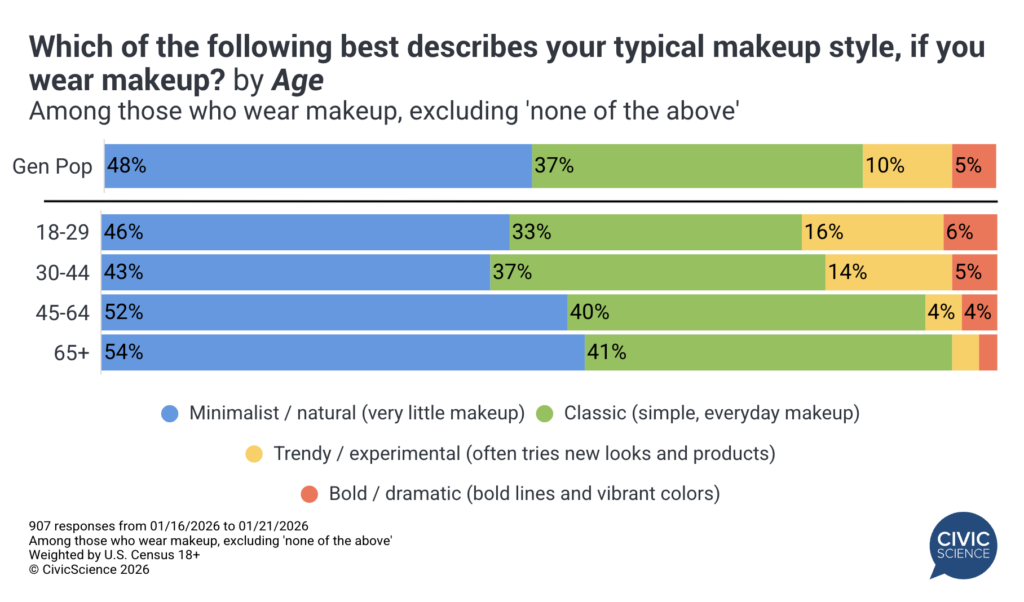
Yet again, the beauty industry is showing its resilience as 2026 gets underway. The cosmetic and personal category appears to be continuing its impressive streak – at least relatively speaking – as consumers rank it near the bottom of the list when asked where they’re cutting spending this year. If I told you people were wearing makeup far less often than before the pandemic and that they’re adopting simpler routines with fewer products, you’d think that would be hallmarks of a sliding category. But no. Consumers are finding all kinds of new ways to prop up the industry. Here are ten big trends we’re watching in 2026.
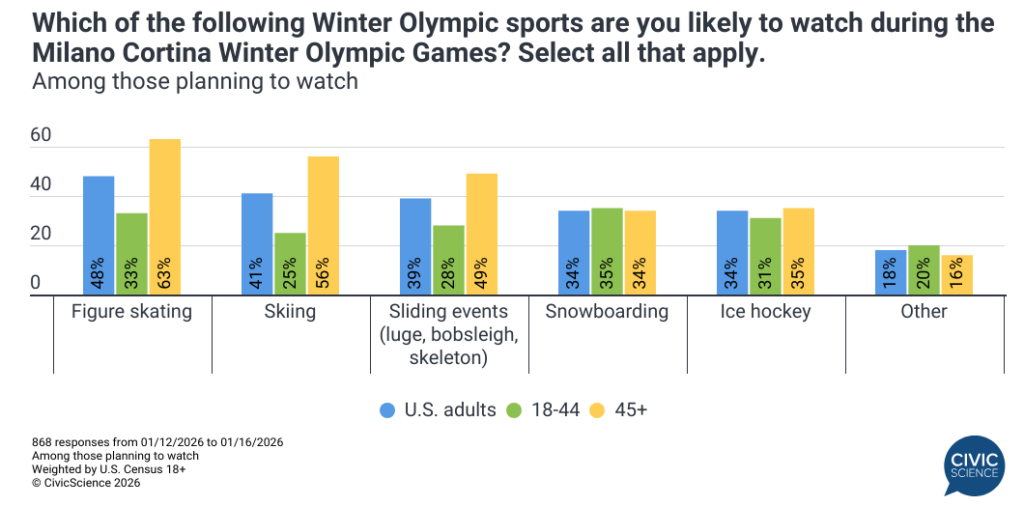
The American Dream is still alive and well, but it means different things to different people. In our 3 Things to Know this week, we found that people’s belief in the American Dream remains solid – 86% of U.S. adults adhere to the concept, ranging from 80% to Gen Zs to 93% of Boomers. Younger adults are narrower in their views on what it means, over-indexing on financial prosperity, while older adults are more likely to value home ownership and safety. We also looked at the growing interest in the upcoming Winter Olympic Games and persistent skepticism about (and personal use of) AI in healthcare.
More awesomeness from the InsightStore™ :
- More people are doing their own taxes this year and getting an early jump on filing;
- We released a new episode of our Dumbest Guy in the Room podcast this week, where I was joined by Nick Thompson, the CEO of The Atlantic, an accomplished author with a great new book on the shelves, and a beacon of light in a media industry that desperately needs it. It’s one of my all-time favorite discussions. Check it out.
- I was also on the other side of the podcast table this week, paying my monthly visit to The Macrocast, where I’m definitely also the dumbest guy in the room. We talked consumer confidence, crypto, and the big economic stories to watch in 2026.
The most popular questions this week:
How important do you think formal driver education is for teen drivers?
Have you personally experienced or witnessed an amazing act of kindness?
Do you currently outsource any household tasks?
Did you live on or off campus during your college years?
Answer Key: Very; More than I can count; Yes; On campus the whole four years; I obsess over it and always ask people how they prefer their name to be pronounced.
Hoping you’re well.
JD