And just like that, it’s October.
September felt like the fastest month in recorded history. Maybe it was the later-than-usual Labor Day. All I know is I blinked and now our Halloween decorations are out.
Meanwhile, our whole team was in Pittsburgh this week. It was the latest of our semi-annual “All-Hands” gatherings, a ritual we started at the end of lockdown. It’s critical to team-building when the company is otherwise widely distributed and fully remote.
It occurred to me that our local employees — about 40% of total headcount — have been getting a raw deal with these events. I never thought about it as much, because I travel plenty. But for a bunch of people in research and engineering jobs, especially those with young kids, the idea of a couple nights away from home (and their car keys) might be a welcome respite. We’ll be planning one of our upcoming gatherings somewhere else.
Anyway, I love these weeks.
For one, I genuinely love the people who work here. Our HR leadership and other managers do an exceptional job of hiring for culture, filtering out the assholes. We also have an unusually high percentage of talented musicians on staff, which I’ve generally found to be correlated with being smart and fun. I take no credit for any of that, but I’m thrilled to reap the rewards.
Naturally, AI was a ubiquitous theme throughout the week, not only in terms of how we’re integrating it into our products, but also how seemingly every single person in the company is using it to be more proficient in their job. Tasks that took days or even weeks are now done in hours or minutes. Many things were impossible, or at least impractical, before. No more.
It makes you wonder what people will do with all the extra time they’re afforded. The cynical answer is simply, “more.” Two projects a week can become 10 or 20. A hundred lines of code can become a million. From a cold-hearted P&L perspective, that would be welcome news. From a human perspective, hopefully it’s something more.
The greatest value I’ve received from AI is how it challenges the way I think. You have to intentionally instruct it to be critical — otherwise it’s prewired to flatter, to tell you how beautiful your baby is. If AI presumes you’re an idiot, it will push you. It’s not unlike how Tara has made me such a better person.
AI done well in the workplace won’t simply enable people to do more of the same work or automate their most menial tasks. It will give them the bandwidth to be more thoughtful, more strategic, and to collaborate more closely with their teammates.
Especially after the fantastic week we just wrapped up, the future is very exciting.
Here’s what we’re seeing:
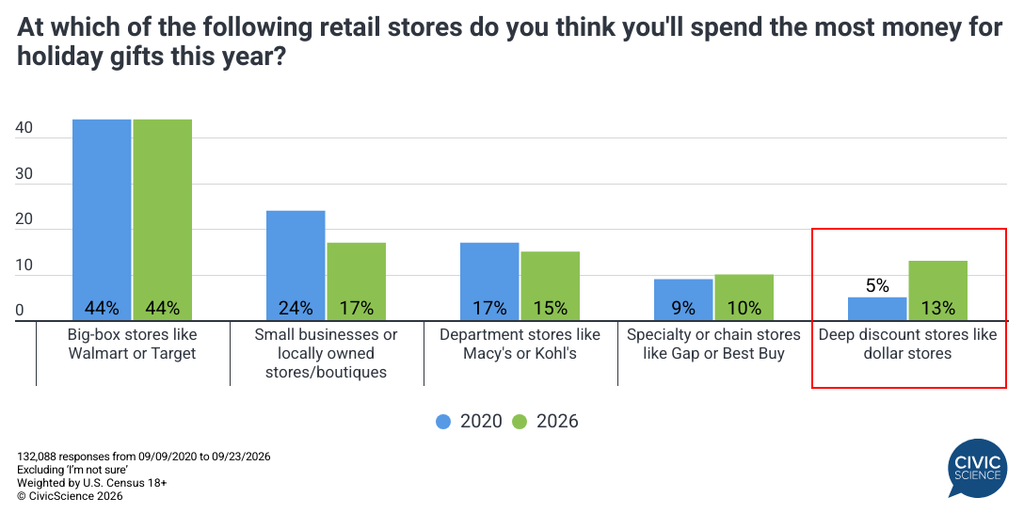
Continued consumer belt-tightening could hurt small and locally owned stores this holiday retail season. In our 3 Things to Know this week, we looked at the growing role dollar stores are likely to play in the upcoming holiday shopping period — yet another tactic consumers will employ to maintain their torrid spending in the face of dreary macro sentiment. Unfortunately, it seems small businesses may take the biggest hit. We also examined shifts in expected spending for Halloween, where online-only stores appear to be stealing share from big-box retailers, YoY. Finally, we learned that young people worry a lot about getting sick on airplanes.
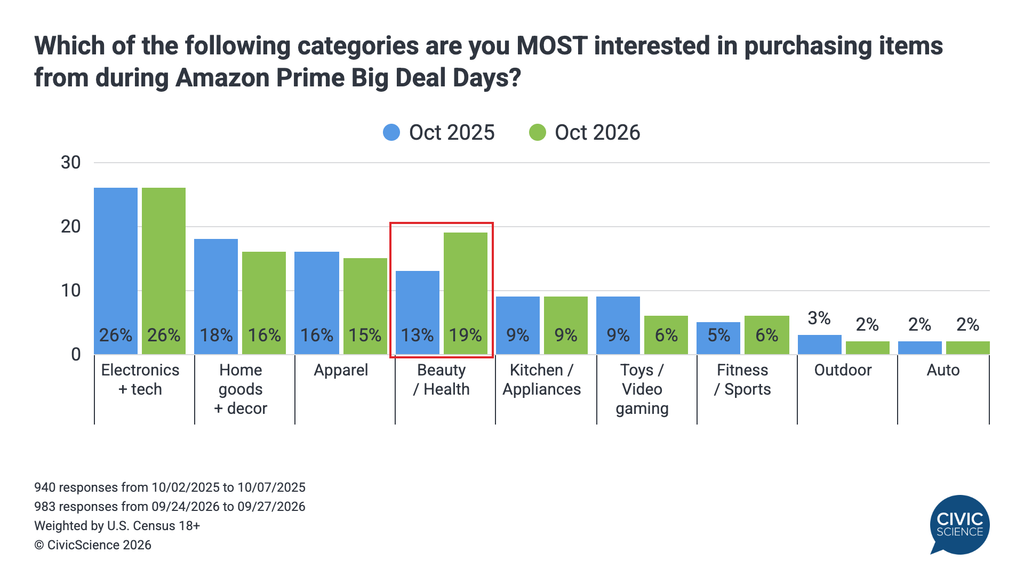
Amazon Prime Big Deal Days are coming at an opportune time. We published lots of shopping data this week as Q4 gets underway, including our pre-event numbers for next week’s Amazon discount event. 69% of Amazon Prime members plan to shop during Big Deal Days (Oct. 6-7), up from 65% last year. The strong intent spans generations — nearly 60% of Baby Boomers expect to log in. Consistent with the year-long trend we’ve seen in wellness shopping, the beauty/health and fitness/sports retail categories are poised to see the biggest gains over last year.
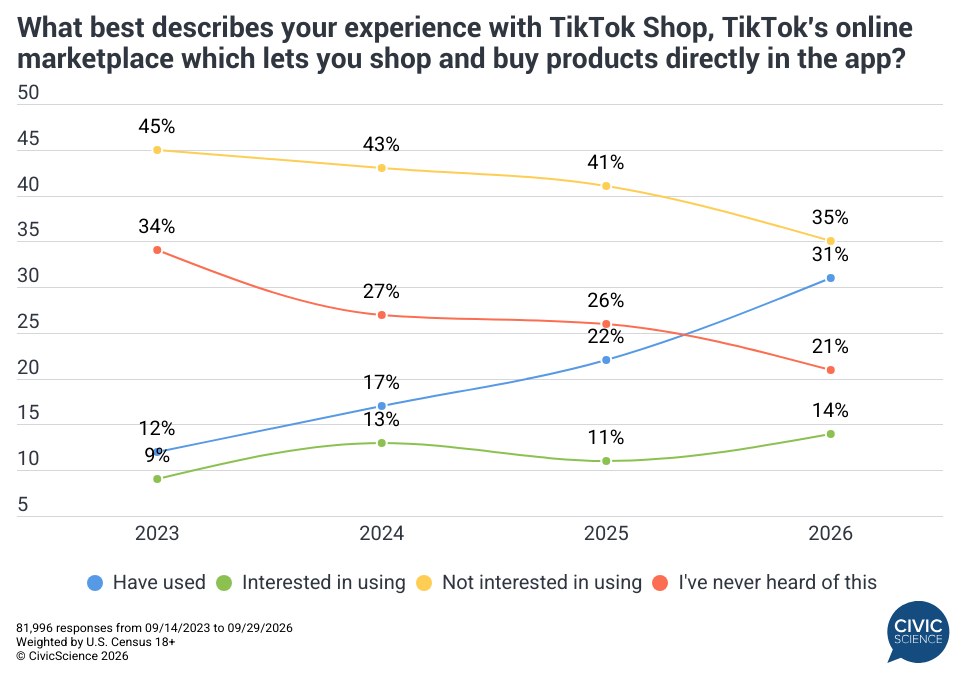
The popularity of TikTok Shop shows no signs of slowing. In our final retail piece of the week, we shared our latest tracking data on TikTok Shop — the growth of which is only accelerating, three years after its initial launch. Expect the platform to be an even bigger player in the holiday retail extravaganza (over one-third (35%) of U.S. adults are at least ‘somewhat’ likely to buy holiday gifts there), as more and more consumers scour the landscape for deals. Retailers who choose not to sell their wares on TikTok Shop may do so at their own risk.
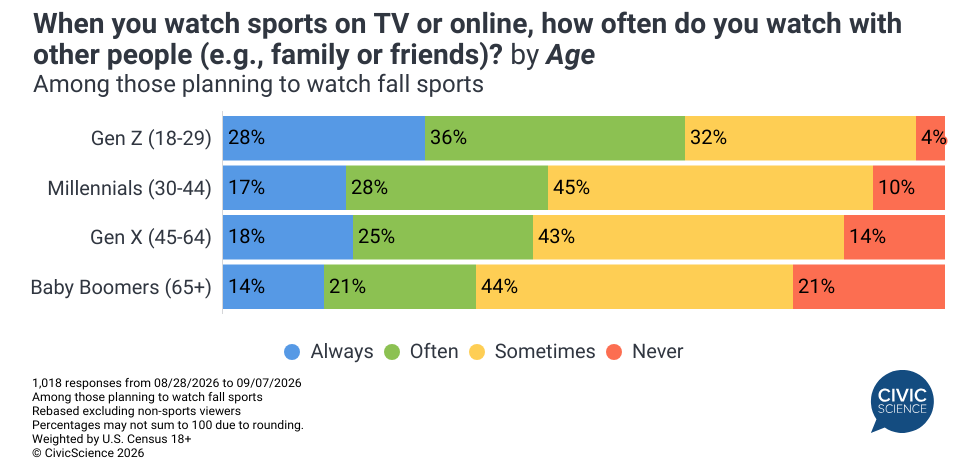
Competition for sports fan eyeballs is absolutely fierce right now. Per usual, it’s the best time of year for sports, with college and pro football in full swing, baseball playoffs underway, and the new seasons of the NHL and NBA launching. Now, the rising popularity of the WNBA, Formula One, and professional soccer has crowded the sports calendar more than ever. We published our latest Fall Sports Viewership report this week (with a preview here) to provide a detailed look at everything you need to know about today’s sports fan. A few of my biggest takeaways are the impact of sports on streaming subscriptions and sports’ continued role as a social connector.
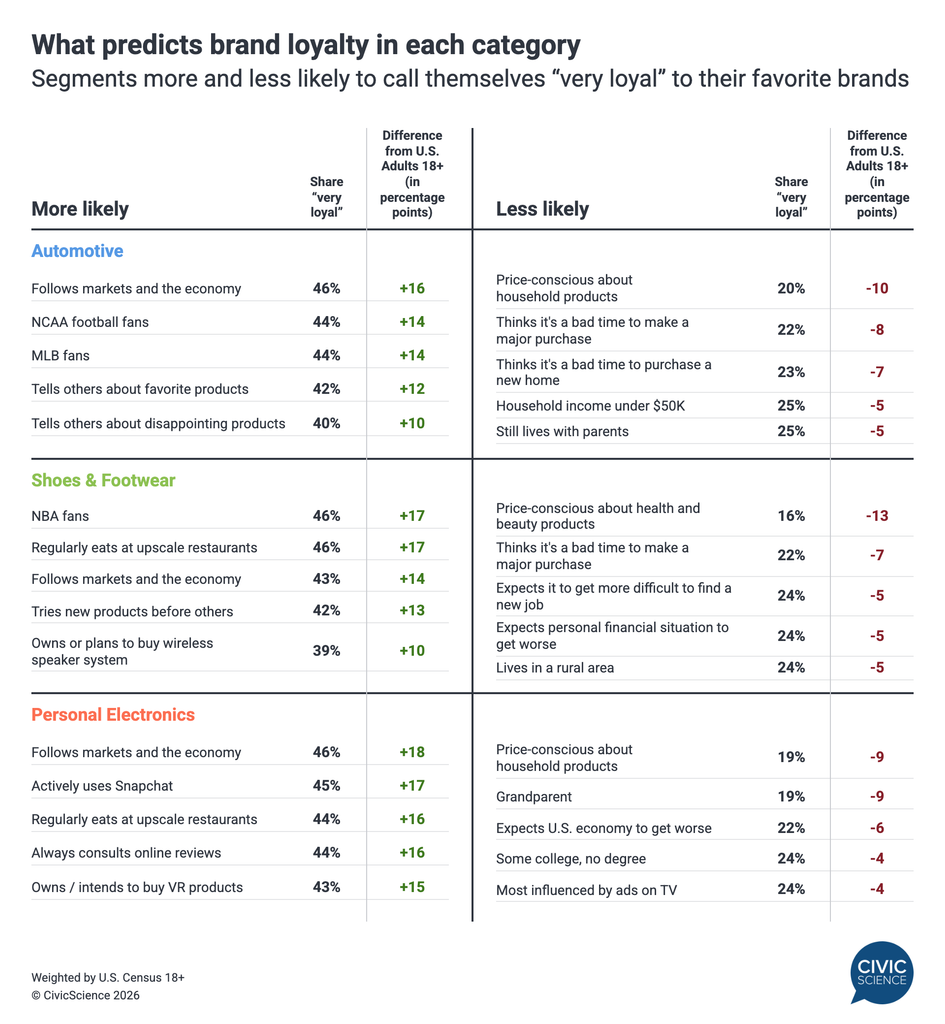
The archetypes of brand loyalists vary widely by industry category. In the newest installment of our series on surging brand loyalty in America, we examined the differing psychographic characteristics of loyalists across six purchase categories, from automotive to fast food. Two traits were prominent across most groups: People who closely follow the markets and the economy AND people who favor socially conscious companies significantly over-index as brand loyal. The differences were more interesting. For example, NCAA football and MLB fans are more loyal when it comes to cars. NBA fans are more loyal when it comes to shoes. NHL fans, when it comes to apparel. There’s way more to read in the report.
The most popular questions this week:
Do you think slang words should or should not be included in the dictionary?
How likely, if at all, do you think it is that you could kick a field goal for $1.2 million?
Would you be willing to move to a different state if you won a house there?
Have you noticed an increase in loneliness in America over the past decade or two?
Do you think American parenting has become too overprotective in recent generations?
Answer Key: Definitely not; Inside of 30 yards, yeah; Nope; Maybe people have always been lonely, but it was never as visible before social media; Yes, but to each their own.
Hoping you’re well.
JD