Vulnerability is strength.
I spoke at a corporate gathering for a big restaurant chain a few weeks ago, and the night before the event, I joined the company’s executive team and support staff for a tech rehearsal. The CEO walked through his remarks first. One element of his presentation – about which he was clearly passionate – was, frankly, a terrible one. You could tell from the side-eyed looks in the room that everyone knew it.
What happened next was fascinating.
They promptly and matter-of-factly told him, unsolicited. It was respectful, for sure, but not skittish. He listened thoughtfully, then calmly acquiesced.
Bear in mind that, by all appearances, this is a very strong-willed – even imposing – and highly successful man. While most of their competitive category is struggling, the company is on a heater. He had every reason to be on a high horse.
I don’t know what was more impressive, the comfort with which his team pushed back or the ease with which – in front of a large group – he forfeited his ground. Either way, it demonstrated a lot of mutual trust, clearly earned.
The whole thing may not seem that remarkable to you. Perhaps you had to be there. But I’ve been around a lot of leaders, I study many others, and that kind of dynamic is very rare.
We’re in an era today where leadership – particularly the male variety – is confused with impervious strength. It’s also a lie. Everyone has weaknesses. Everyone makes mistakes. And, if you’ve somehow convinced everyone around you that you’re infallible, then you’ve surrounded yourself with a special breed of dumb and gullible people.
More likely, they’re rolling their eyes and making fun of you behind your back, unlikely to take the risk or waste the time to tell you when you’re being an idiot. Maybe they’re paid well enough to suck it up. Maybe they play your blind spots to their advantage. Or maybe they figure you’ll eventually fall on your face and be replaced by someone better. Either way, they’re not in your corner, you’re oblivious, and your organization (and you) will never reach its potential.
Self-awareness, vulnerability, and honesty breed trust. Trust provides a pathway to open communication and self-improvement. I try to be that kind of leader, but I know I often fail.
In other words, I wasn’t just impressed by what I saw. I was envious.
We should all hope to have a team, a leader, and a culture like that.
Here’s what we’re seeing:
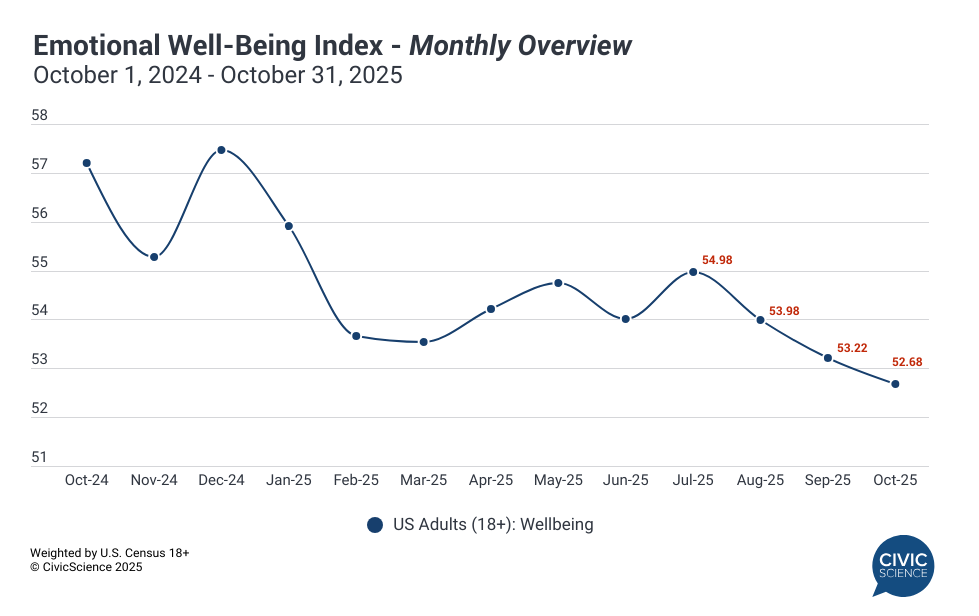
America’s collective emotional well-being is in the dumps. While I was away last week, we released our October Emotional Well-Being Index, and the picture was grim. Feelings of stress, worry, and fear all spiked, while self-reported happiness fell for the third straight month. Maybe the end of the government shutdown will improve matters, but I doubt it. There’s a lot more at work here. Ironically, these indicators don’t necessarily bode poorly for the holiday retail season – consumers with these negative emotional feelings appear more inclined to spend on everything from gifts to dining out, presumably as a means of self-care. Reaching them is a central strategy of our advertising work right now.
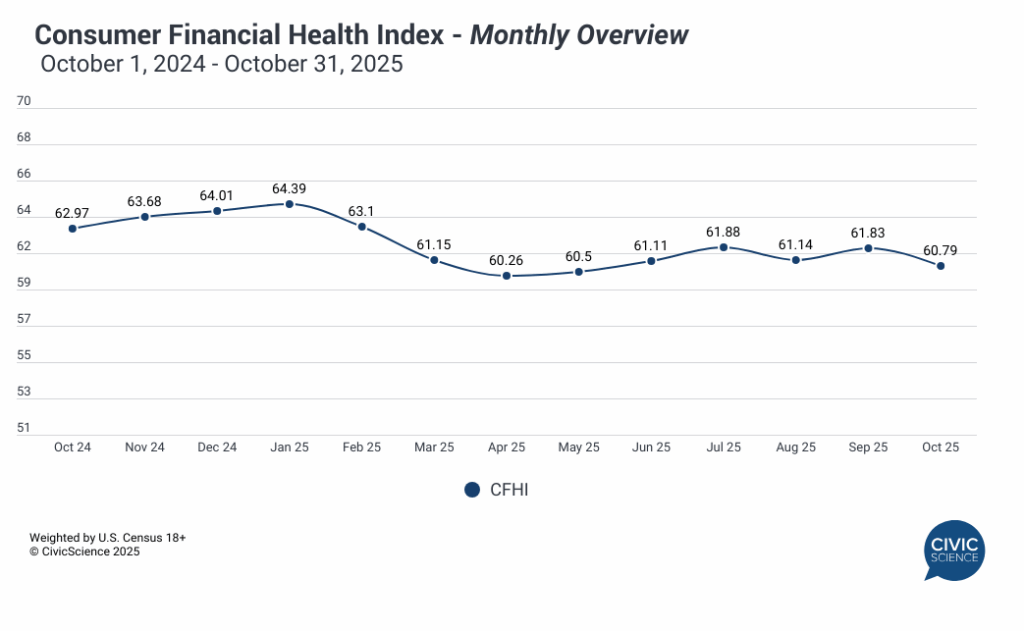
That said, consumer financial health dipped in October as well. As we wait – perhaps in vain – for new government data on the job market and such, we can tell you that Americans are feeling uneasy about their financial situation, after a slight improvement in September. I’m more certain the government shutdown impacted these numbers; however, rising concerns over income and job security suggest it wasn’t that alone. Notably – vis-à-vis holiday retail – consumers’ debt outlook worsened appreciably last month, indicating an expectation that (see: above) “spending for self-care” will happen at the expense of heavy credit card and Buy Now, Pay Later usage. Christmas might be fine, but hold on to your hats when January comes around.
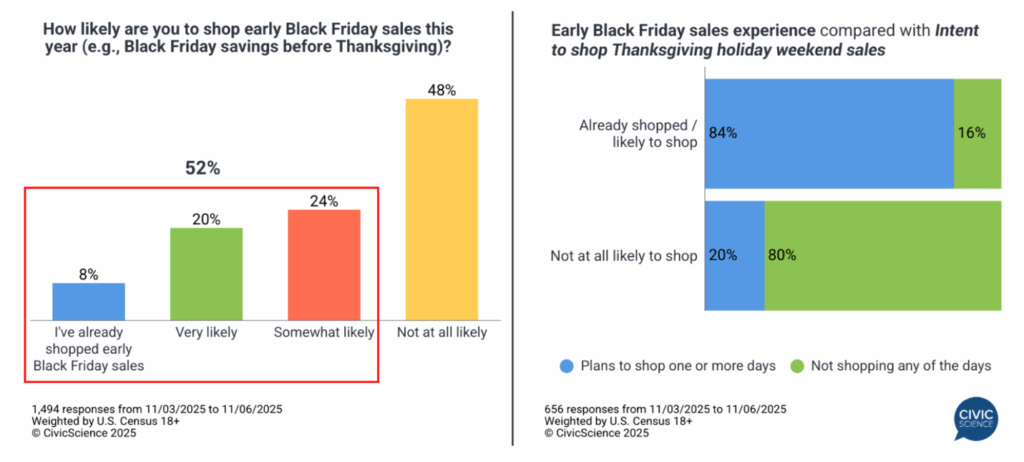
The SNAP crisis gripped the country. In our 3 Things to Know this week (which admittedly came out prior to the end of the shutdown), we learned that a supermajority of Americans were concerned about disruptions to food assistance programs (for themselves or their neighbors). Notably, older Americans were significantly more worried than younger generations. We also found that U.S. consumers are shopping early and often to stretch their holiday retail dollar. Over half of holiday shoppers plan to take advantage of early Black Friday promotions (or they already have), but they’re also not waiting for them. Lastly, we examined trends in contactless shopping. Higher-income consumers still prefer interacting with humans.
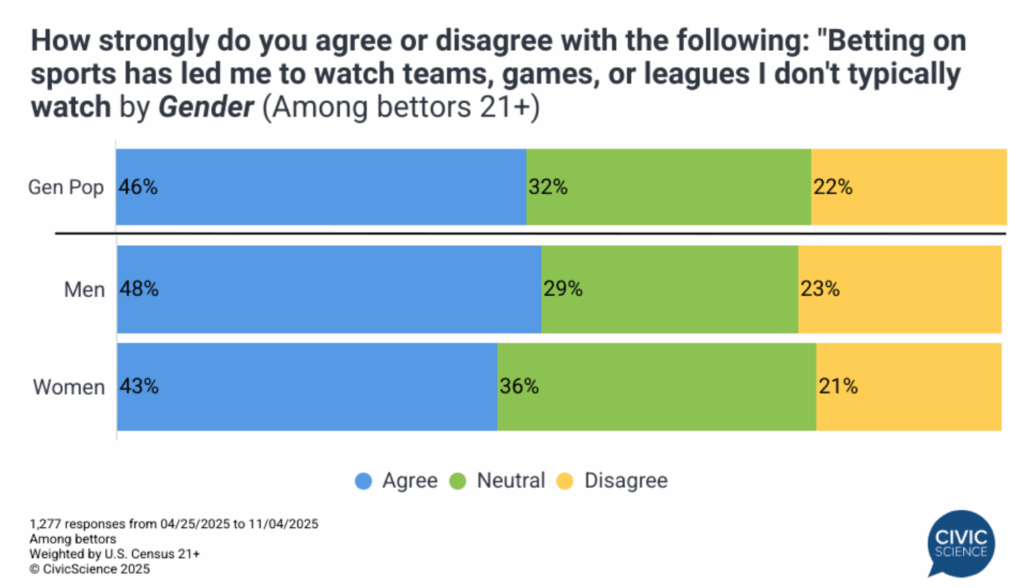
Sports betting is a bad strategy for managing financial headwinds. We published a deep dive into the online sports “gaming” industry last week, and the findings ranged from fascinating to scary. For example, I was surprised to learn how popular sports betting is among Major League Soccer fans, although it does make a lot of sense given the psychographics of the most frequent online bettors. I was also reminded why sports teams, leagues, and media companies are so eager to promote gambling – it’s not just the ad dollars. Sports bettors are far more likely to tune into games they wouldn’t otherwise watch. On the frightening side, activity and average wager size have been climbing – specifically among the demographics with the least financial security.
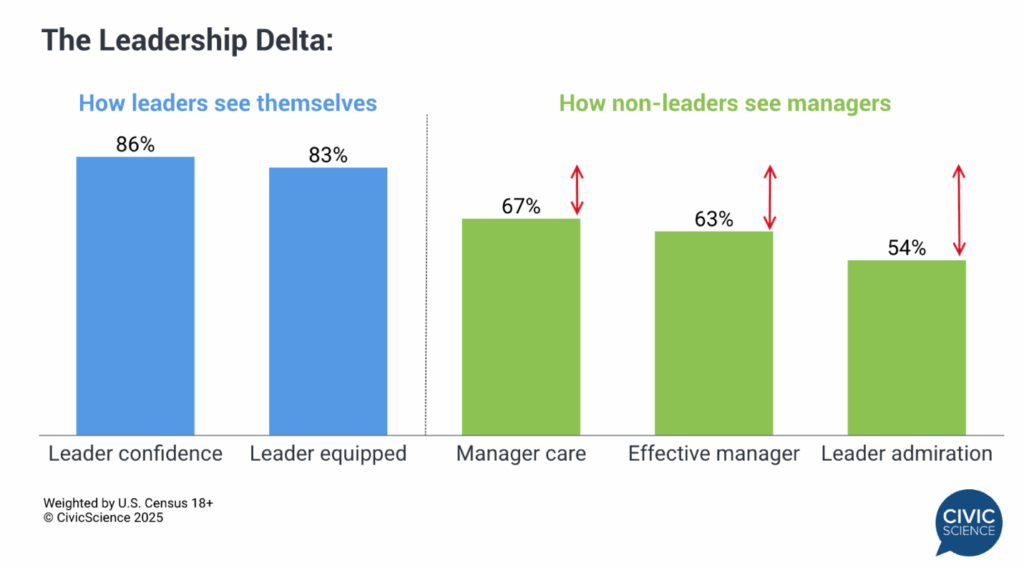
There’s a big perception gap between managers and employees in the workplace. Apropos (coincidentally) of today’s intro, we recently released our latest Pulse of the U.S. Workforce Report, with a focus on the dynamics between leaders and workers. The key finding was the significant delta between the confidence managers have in themselves and the confidence non-managers have in their bosses. Coinciding – and likely helping to explain – that deficit is the high belief among non-managers that they have the confidence and tools to be effective managers themselves. Another big headline is that only 30% of managers and untapped managers turn to their own leaders for help, instead relying on everything from family to ChatGPT.
More awesomeness (two weeks’ worth) from the InsightStore™:
- We published three studies on the state of travel in the U.S., identifying a growing group of people interested in cruises, the profile of solo travelers, and the significant relationship (and predictive qualities) between travel and emotional well-being;
- Nearly half of Americans are considering buying second-hand holiday gifts, and here’s who they are;
- You missed our latest Economic Sentiment Index last week, which looked more or less as you would expect;
- Last week’s 3 Things to Know looked at trends in plant-based meat, the growing prominence of dieting, and what people find most useful about LinkedIn.
The most popular questions this week:
Would you be open to living in a home that’s no wider than 12 feet?
Would you ever consider auditioning for a baking competition show?
Would you be thrilled or nervous to come across a group of bobcats in the wild?
Would you say social media is a positive or negative force when it comes to civic engagement?
Have you ever tried a “dirty soda?”
Answer Key: Not in a million years, says the claustrophobe; Baking no, cooking yes; Depends on whether I’m armed; Positive for engagement, negative for discourse; No interest whatsoever.
Hoping you’re well.
JD