Things are moving so fast.
I’m coming to you today from an early morning flight home from Vegas. If you’ve never been on such a journey, the sights (and smells) are something. Likely half of the passengers haven’t slept, and the other half haven’t yet sobered up. Gladly, I’m in neither of those categories.
I was in Sin City for Goldman Sachs’ Private Innovative Company Conference (PICC), an invite-only gathering of startups, midsize firms, and related investors, large and small. It was a mix of stage content, receptions, and organized speed-dating. My brain is full; my tank, empty.
At the opening soiree, I joked with a fellow founder I met that if everyone had to take a drink every time they heard the term “AI,” the whole lot of us would be flat on our faces in two hours. Surprisingly, it didn’t play out nearly as we expected.
In what seemed like a flash, AI quickly became so pervasive — akin to “the internet” or “oxygen” — that it’s simply presumed to be core to any growth business. The technology, people reiterated frequently, is rapidly becoming commoditized.
My humble theory is that AI will eventually look like cloud computing does today, in which a small handful of mega-scale companies own the enterprise infrastructure, while becoming less and less distinguishable from each other over time. If you move from AWS to Azure to Google Cloud Services, there’s no telling them apart (no offense). Partly it’s because lots of workers in those companies hopped from one to another. Trade secrets evaporate, tech reaches equilibrium, and competition devolves into one of price, terms, and switching costs.
AI could very well be on a similar path. Already, the frontier models are reaching surface-level parity, notwithstanding their various quirks and marginal strengths. I’m sure technologists see starker differences among them — for now — but I suspect those will smooth over soon enough. They’ll take turns gaining edges, until the others reverse engineer them.
And, so, the next generation of winners won’t be “AI companies,” any more than Netflix is an “internet company.” They’ll be all manner of product and service providers who put AI to work in creative ways, while relying on differentiated, proprietary assets (like data), industry expertise, first-mover advantage, and operational execution to slay their peers and incumbents.
We’ve all seen this movie before.
It’s just coming sooner than I expected.
Here’s what we’re seeing:
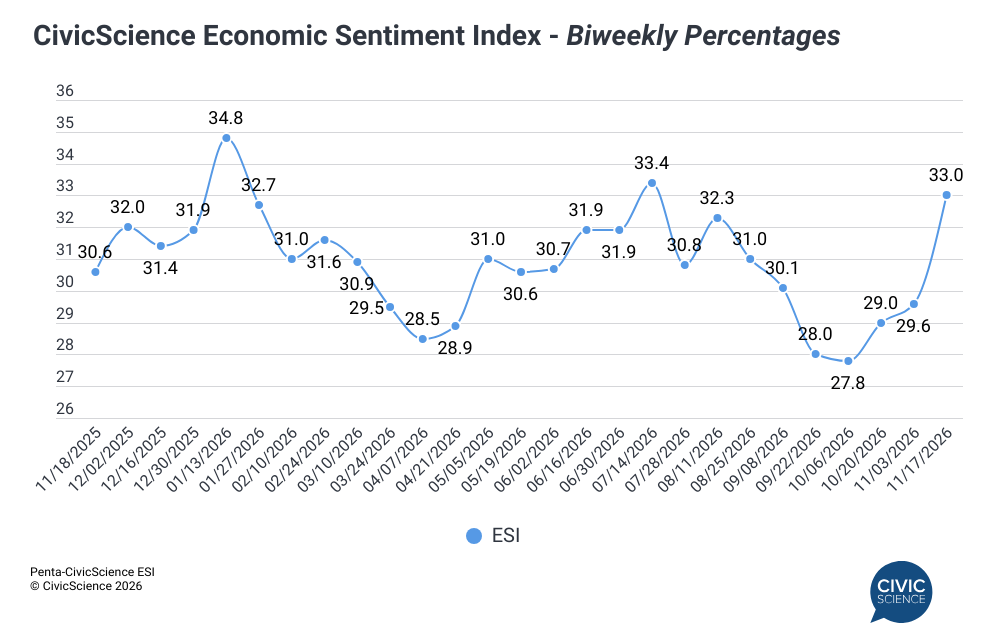
Consumer confidence is on an absolute tear. Our Economic Sentiment Index almost jumped off the page in its latest reading, the steepest two-week gain in its 14-year history. It must’ve had something to do with the Milwaukee Brewers winning the World Series, I assume. In any event, the gains were driven primarily by Americans’ longer-term outlook for the U.S. economy, a metric that climbed a whopping eight points in a fortnight. Time will tell whether these warm-and-fuzzy feelings show up in near-term holiday retail numbers (I doubt it) or if it’s just vibes for now. Stuff is still expensive.
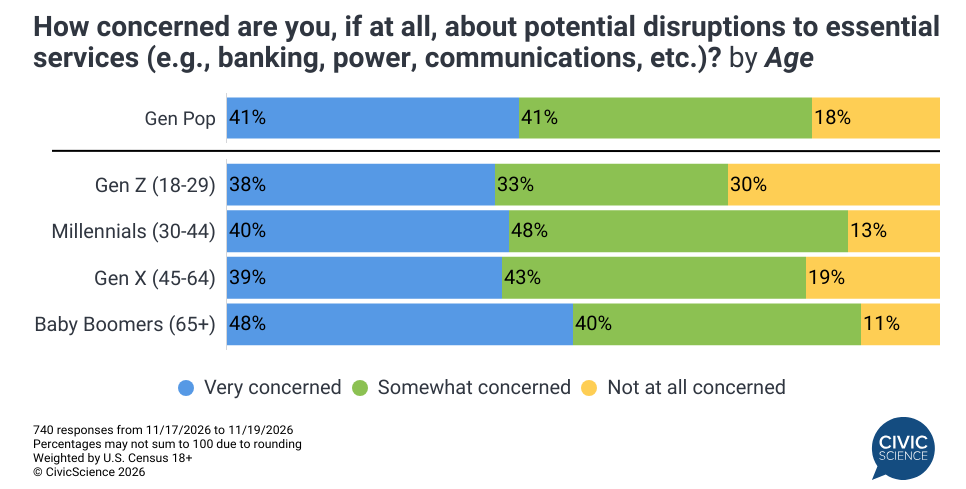
Technology and infrastructure worries could counterbalance our economic giddiness. The airline, banking, and power disruptions over the last week got our collective undergarments in a bunch — leading 82% of U.S. adults to be at least ‘somewhat’ worried (41% ‘very’ worried) about the safety and reliability of our critical services. Boomers are the most freaked out, while Gen Zers and Gen Xers (we’ve spent our whole lives expecting shoes to drop) are the least. Over a third of consumers say the recent events have them rethinking some of their purchase decisions, while 1 in 5 are actively prepping for more problems to come. Bet long on batteries, flashlights, and toilet paper, I guess.
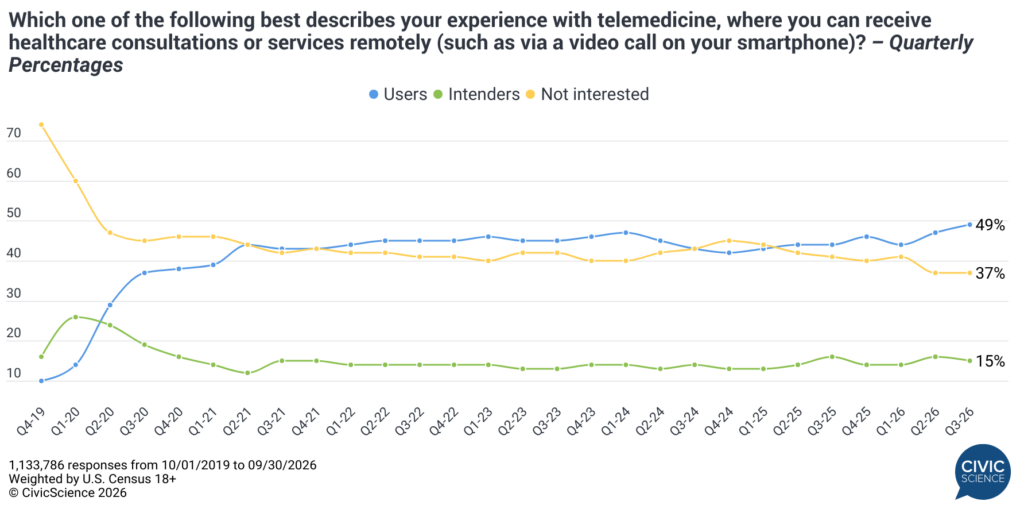
Like clockwork, the use of Buy Now, Pay Later services ahead of the holidays is reaching record heights. In our 3 Things to Know this week, we highlighted the entirely predictable, yet still disturbing YoY increase in new-age layaway usage in the months leading up to Christmas. More and more people are relying on them for basic essentials, but higher usage is happening across nearly all spending categories, especially beauty and home décor. We also looked at the continued popularity of telehealth — a trend that’s shown no signs of slowing since the pandemic — and the growing numbers of consumers (particularly younger ones) who use resale markets to purchase sold-out goods and services (not just event tickets).
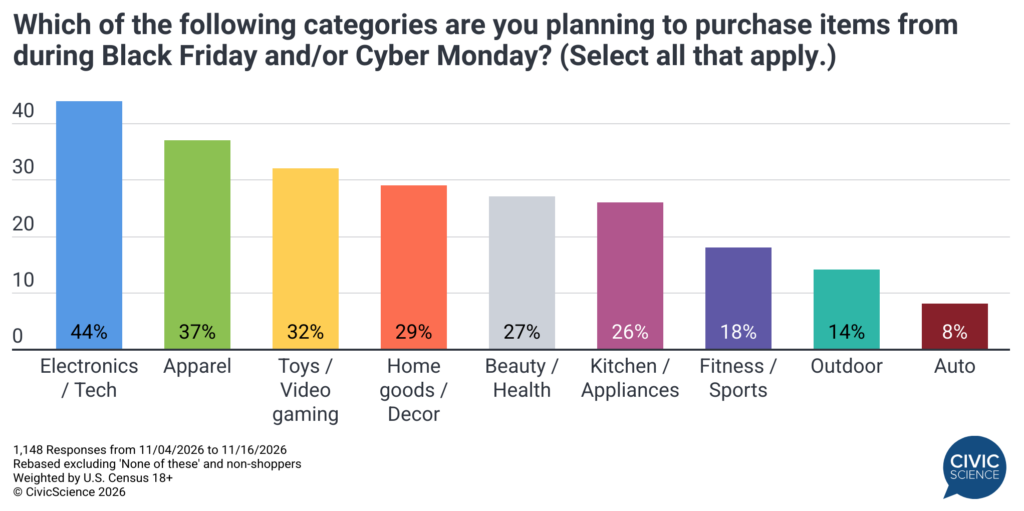
Black Friday shopping intent is mostly on par with 2025, though it could be more spread out over the weekend. 54% of adult consumers say they plan to hit the stores between Thanksgiving and Cyber Monday, up one inside-the-margin-of-error point from this time last year. What’s different is that a higher percentage claims they will shop on Thanksgiving Day and/or Sunday, up five and three points, respectively. In-store shopping intent is up significantly over last year, while electronics and apparel are the most sought-after categories. If you’re looking to reach and attract these buyers before it’s too late, we offered a handy little roadmap of their profiles and tendencies. Oh, and 22% of BF shoppers say they’re using an AI tool to help with their holiday shopping this year.
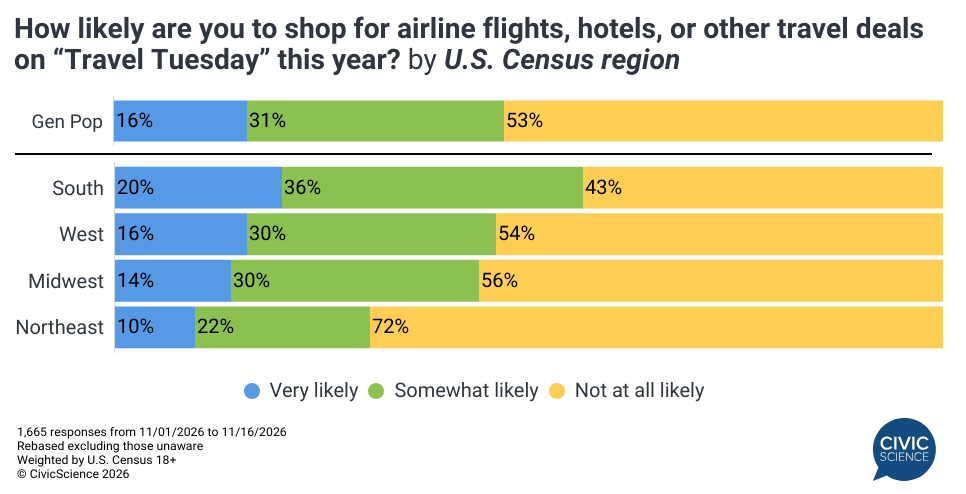
Then, a bunch of people will log on to their devices for Travel Tuesday. Once everyone is squarely back to work on December 1st, 47% of U.S. adults say they’re at least somewhat likely to take part in Travel Tuesday deals. That’s basically flat to last year, but up from 34% when we first started tracking the event in 2023. 35% of TT shoppers say they’re planning an international trip and 23% are planning a cruise. These deal-seeking travelers over-index as women’s pro sports fans and podcast listeners, while citing email promotions and banner ads as the formats that influence them most (social media, much less so).
The most popular questions this week:
How concerned are you about future tech issues impacting your travel plans?
Do you typically do any planting in the fall?
In your opinion, is preschool education essential for children?
Do you think renting is generally a better financial decision than buying a home?
Have you ever been on a boating trip gone wrong?
Answer Key: At this point, I just leave myself at the mercy of the travel Gods; No, but when Tara reads this, she’ll remind me she wants to plant bulbs this year; I don’t know about “essential,” but it’s pretty important; In this housing market, maybe; Yes, late-night towing was involved.
Hoping you’re well.
JD
P.S. — I’ll be taking off next week for the holiday. I hope you and yours have a fun and bountiful Thanksgiving.