CivicScience has the world’s largest proprietary database of real-time declared intent, allowing brands to activate high-performing advertising that drives up to 80% better performance. See how CivicScience partners achieve superior marketing outcomes here.
1. Buy Now, Pay Later services are seeing another year of growth, and more Americans are using them for essentials.
As the holiday shopping season enters its peak, Buy Now, Pay Later services (BNPL) are set for yet another year of growth. The latest CivicScience data show that BNPL users’ outstanding balances have increased. Just 38% of BNPL users currently owe nothing, down from 46% in 2025. The share who owes between $1 and $100 has climbed steadily since 2024, from 24% to 34% so far this year. Notably, the percentage owing $500 or more is back up to 17% after dipping to 13% last year.
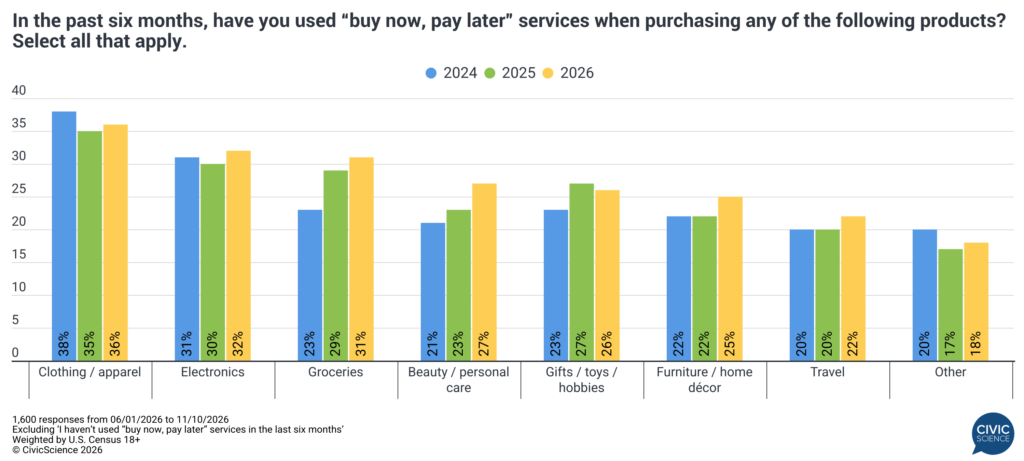
Americans are also shifting towards using BNPL services for necessities rather than non-essentials. While clothing remains the top category at 36%, groceries have seen the largest increase of any category studied since 2024, climbing eight percentage points (from 23% to 31%) to sit nearly in line with electronics (32%). Other categories, such as beauty/personal care (27%, up from 21%), and furniture/home décor (25%, up from 22%) are also up. Notably, the split when it comes to income reveals that those earning under $50K are the most likely to use BNPL for groceries (35% vs. 26% of those earning $100K+), while higher earners lean toward electronics (36% vs. 30%) and travel (25% vs. 20%).
2. Resale markets are most popular among Gen Z, but parents are no strangers to buying marked-up products.
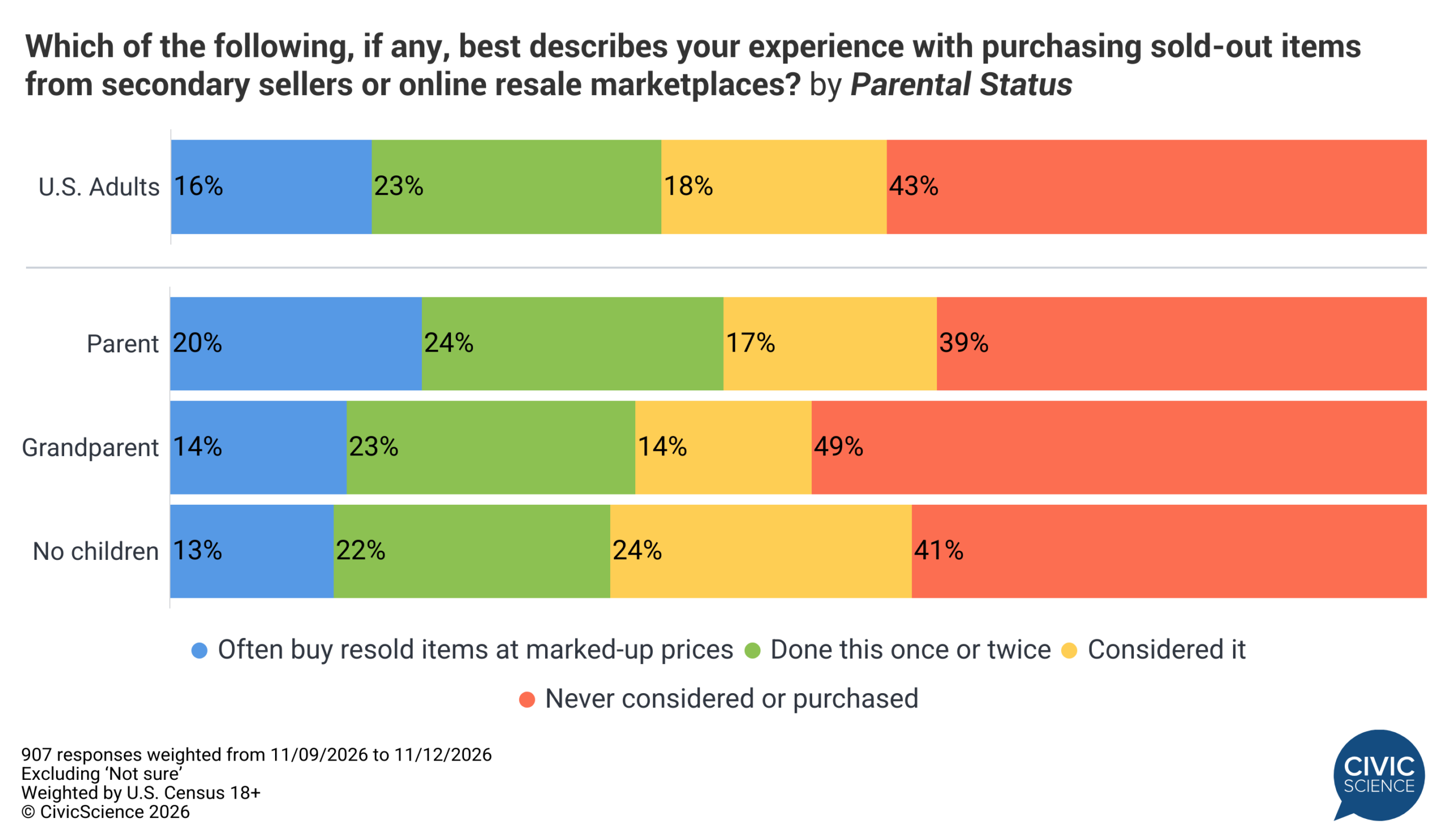
From concert tickets to NeeDohs, resale markets have become part of how many U.S. adults shop. Nearly 2 in 5 U.S. adults say they have bought sold-out items either from an online marketplace or a dedicated reseller. This includes 16% who do so ‘often’ and 23% who have done it ‘once or twice.’ Forty-three percent say they haven’t even considered buying an item from a secondary market.
Gen Z (18-29) are by far the most likely to purchase a marked-up item, as 32% buy resold items ‘often.’ Millennials (30-44) are a distant second at 21%. Only 2% of Baby Boomers (65+) buy ‘often,’ and only a further 8% have done it ‘once or twice.’ Parents are also more likely to buy resold items ‘often’ (20%) than grandparents (14%) or those without children (13%), a notable gap heading into a holiday season where hard-to-find gifts like plush and squish toys are in high demand.
Take Our Poll: How comfortable are you with buying tickets from third-party resale sites?
3. Americans are using telemedicine more than ever, but not everyone.
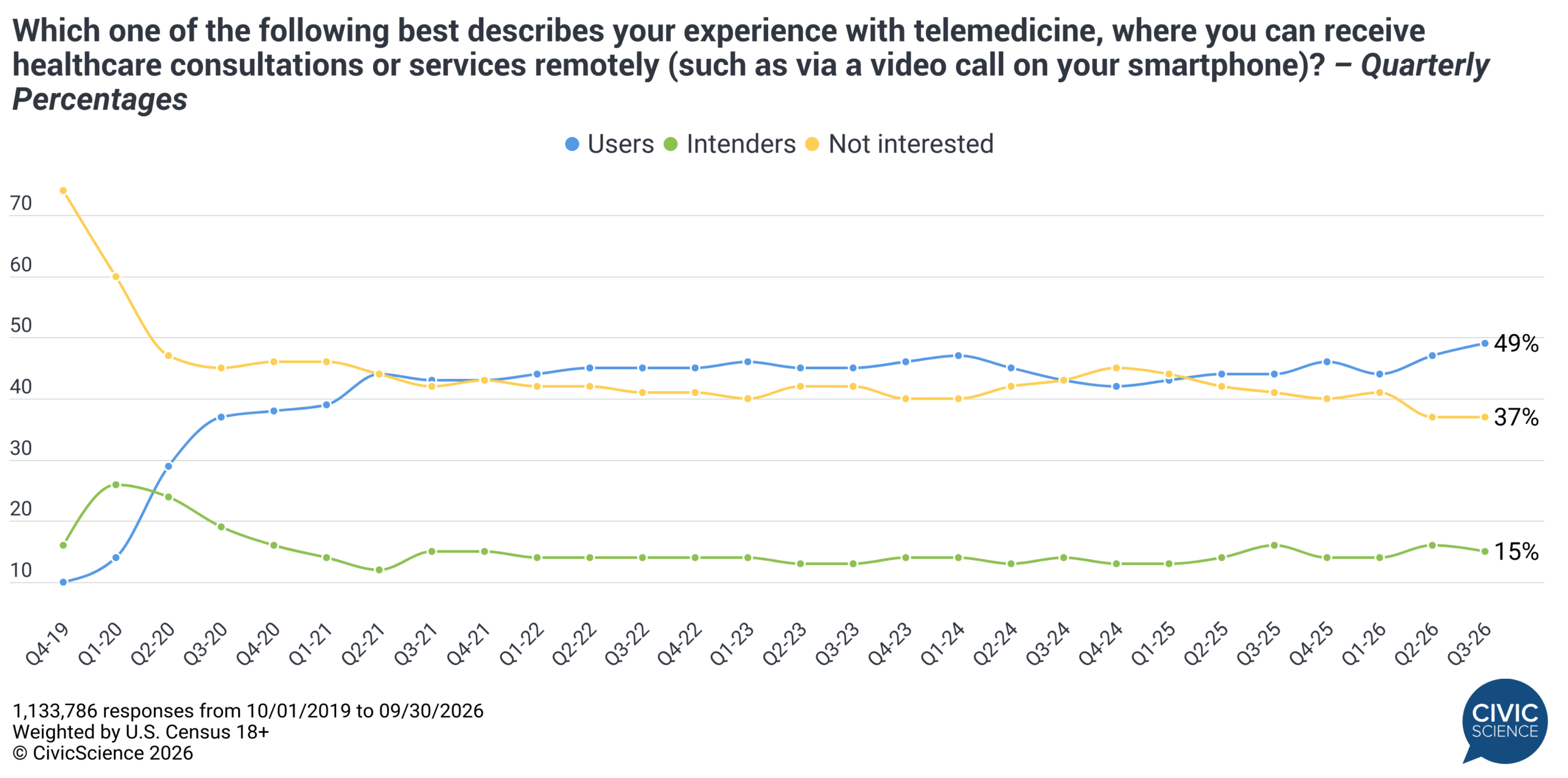
More than six years after the COVID-19 pandemic pushed healthcare appointments onto screens, CivicScience data show telemedicine usage has hit a new high. Policy may be playing a role, as Congress extended pandemic-era Medicare telehealth flexibilities through the end of 2027 back in February. As of the end of Q3 2026, nearly half (49%) of U.S. adults have used telemedicine, up from 10% in Q4 2019. The share of those who are ‘not interested’ has fallen to 37%, down from 41% at the beginning of this year.
Telemedicine users skew suburban (46% vs. 41% of the Gen Pop) and well-educated (20% hold a graduate degree vs. 15%). They are also more likely to be covered by employer or retirement insurance (42% vs. 31%). Meanwhile, city dwellers (27% vs. 34%) and Baby Boomers (18% vs. 21%) remain underrepresented. Even with Medicare’s telehealth flexibilities extended, those on a government-assisted insurance plan are also underrepresented (37% vs. 44% of the Gen Pop).
Let Us Know: Do you support or oppose the increasing reliance on telemedicine?