I guess we’re talking about vaccines again.
One of my golfing buddies is the head of the infectious disease department at UPMC – a handy friend to have during the pandemic. He was the first one to tell me to stop Lysol-ing my groceries, that COVID only traveled by air, indoors. We were sneaking on the (closed) golf course together by mid-May.
As months and strains rolled on, I relied on my friend for direction – which almost always synced with the public guidelines. If he wore his mask in the locker room, I wore mine. When he stopped, I stopped. Otherwise, I was vigilant in following the rules, for all the reasons you’re supposed to.
My friend also taught me – very early on – that the medical guidance on COVID was fluid, that even the brightest doctors in the world were learning the “novel” virus by the day. The quick 180 on mask recommendations was the perfect example. The lousy communication about it left a crack in the door for conspiracy theorists and anti-establishment types who gleefully blasted it wide open. Soon, “experts” became pariahs. Scientific consensus, a controlling weapon of the deep state.
And now, here we are. One in four U.S. adults say they reject recommended vaccines – for themselves or their families – because of distrust in government and/or pharma companies. Only 54% of U.S. parents rely on their doctor for vaccine guidance. Thirty-three percent rely on friends or social media. We didn’t ask what percentage of people regularly play golf with an epidemiologist.
While creeping on social media vaccine debates this week, I realized a few things. First, people who’ve made up their minds about vaccine science are unlikely to change, no matter the veracity of arguments and data to the contrary. It’s boring, if not maddening, to watch.
More interesting is how the debate has evolved (devolved?) into one of “rights.” Parent A, who says, “I should have the right to decide what chemicals to inject in my child,” has a reasonable point. So, too, does Parent B, who says, “I should have the right to send my child to a public school that is safe from preventable diseases.” If my rights go only so far as they infringe upon yours, here the vaccine debate hits an impasse.
For now, it appears Parent A is getting what they want. Unless the next regime returns things to where they were, it will make for a fascinating, if dangerous, experiment.
All I know is I’m glad my kids are out of school.
Here’s what we’re seeing:
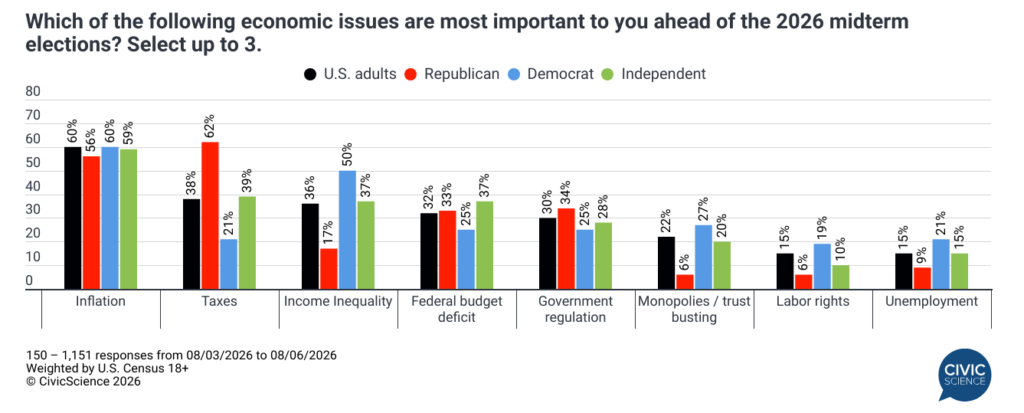
Consumer confidence bounced back – mildly – this week. After a steep drop the last time around, our Economic Sentiment Index regained more than half of its losses in the latest reading. The rebound was driven by a big jump in respondents’ longer-term outlook for the overall economy and employment market – even after a soft jobs report hit the news. Offsetting the positive numbers were declining metrics around personal finances and major purchases, which meshes the increase in credit card debt reported this week. Per usual, it’s a mixed bag.
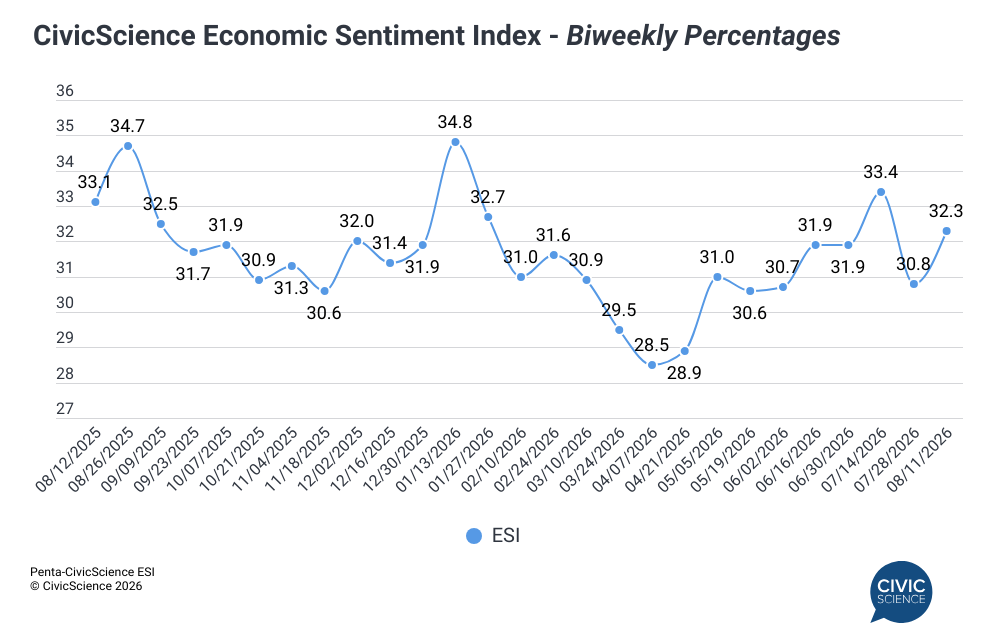
Severe weather is spurring a wave of preventative home improvement projects. So, the big news in the Dick Family this week was the 60-foot tree that exploded from a lightning strike on Monday, crashing into our house, tearing two holes in our roof, crushing our deck and patio, knocking out various utilities, and more (everyone, thankfully, was okay). I thought about sharing the longer story in today’s intro, but after Maddie’s car wreck and our church burning down, you’re probably getting bored with our personal drama lately. Ironically, we published a study this week about rising concerns over extreme weather and how one in five Americans are planning prophylactic household projects to protect from it. If you work for Lowe’s or Home Depot, we shared a roadmap for reaching these vigilant home-improvers. Meanwhile, we’ll be spending a lot of non-preventative money there in the coming weeks. Sigh.
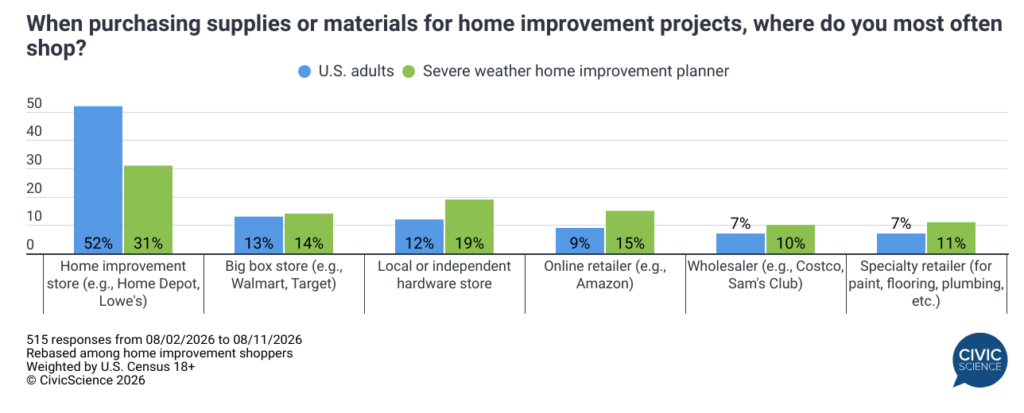
Everybody’s mad about inflation, but other economic issues are more divisive. In our 3 Things to Know this week, we looked at the fiscal matters Americans are most focused on heading into the midterms. Inflation ranked number one among every group, except Republicans, who are slightly more concerned about taxes. Democrats over-index in their worries over income inequality and the budget deficit. We also examined how long-distance friendships are influencing travel behaviors and how social factors contributed to the blockbuster summer movie season.
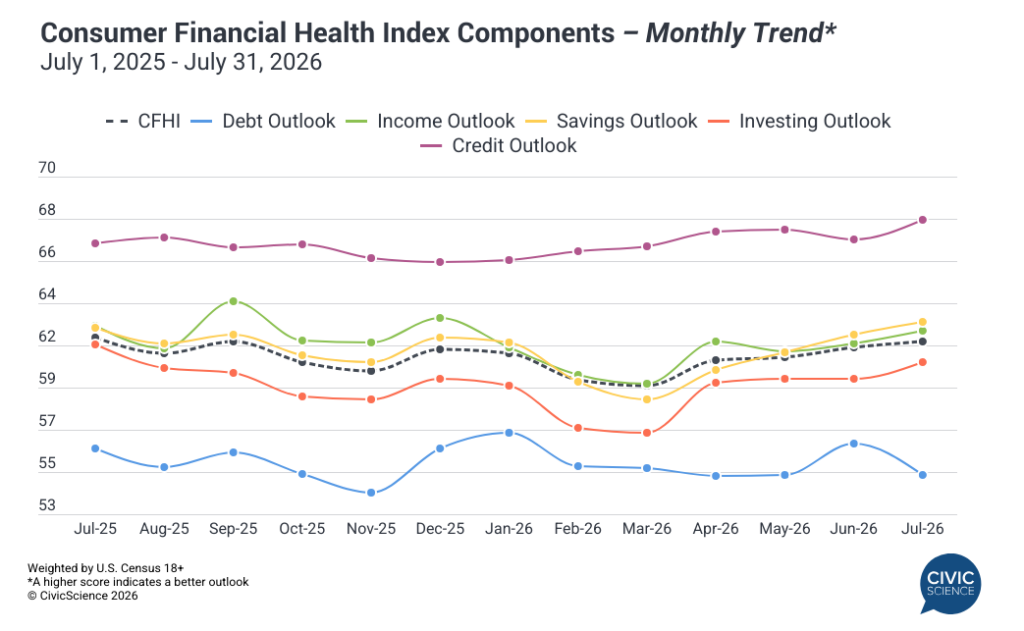
Consumer financial health improved for the fourth consecutive month in July. Americans are feeling more positive about their household financial outlook, as our CFHI reached heights we haven’t seen since September of last year. Four of our five major indicators improved, with personal savings and income leading the rosy story. The one negative was a dip in household debt outlook – see above: rising credit card balances – but that’s been our worst metric for many months, with no obvious consequences…yet.
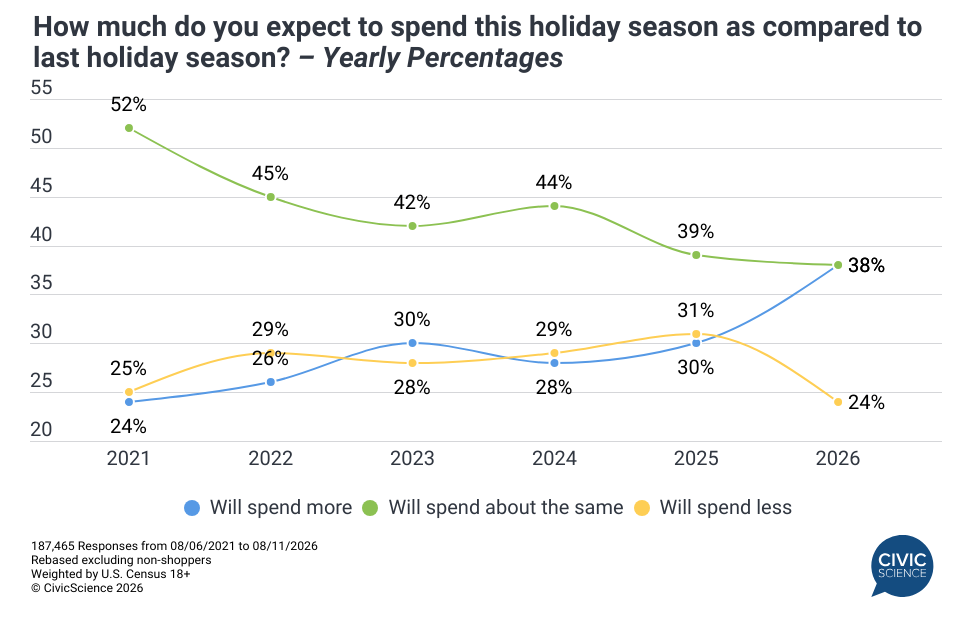
We’re tracking holiday retail spending already. Our first of many reports on the 2026 holiday shopping season came out this week. Notably, the trend of early buying seems to have slowed somewhat, with slightly fewer Americans reporting they’ve started than did at this time in 2025. The bigger news is that a much larger share of shoppers say they plan to spend more money on gifts this year. No doubt, this corresponds with the recent rise in financial health – but time will tell if it holds.
The most popular questions this week:
Do you think the US needs to take a more balanced approach toward remote work?
Would you be willing to own a genetically modified hypoallergenic dog?
To what extent do you think “ragebait” is a problem in today’s media landscape?
Would you feel comfortable calling the plays for your favorite football team?
Do you feel you can rely on your community during difficult times?
Answer Key: It seems fairly well-balanced already; I would own almost any dog; The answer scale can’t possibly go high enough; Oh my gosh, that would be my dream; Very much and I have receipts.
Hoping you’re well.
JD