CivicScience engages directly with consumers, collecting over one million survey responses daily, to turn real-time insights into high-performing advertising campaigns. See how leading brands use CivicScience to drive campaign performance here.
1. Nearly 60% of vehicle owners stick to a regular maintenance schedule, but owners are open to delaying work like oil changes as they plan for holiday spending.
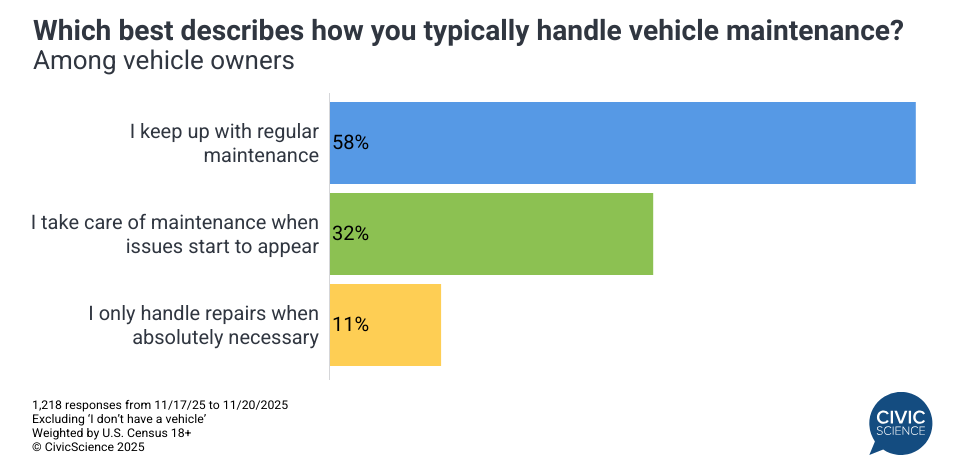
New CivicScience data indicate that vehicle maintenance is a routine activity for a majority of U.S. vehicle owners, with 58% reporting they typically adhere to a regular maintenance schedule. Economic outlook and price sensitivity appear to be key drivers of adherence, especially for essential maintenance. Consumers who are more price-sensitive or those who anticipate the U.S. economy will worsen in the next six months are more likely to stick to their regularly scheduled upkeep, perhaps hoping to ward off more expensive surprise vehicle repairs.
Among consumers who are delaying auto care, an oil change (37%), tire replacements (31%), and diagnosing the check engine light (23%) are the most common tasks to be put off. Glass (windshield/windows) repair and battery replacement are much less likely to be delayed (16%, respectively).
Additional data suggest holiday spending may also play a role in delaying vehicle maintenance. Nearly three-quarters of holiday shoppers who have delayed auto care in the past 12 months say they plan to spend the same amount (40%) or more (33%) on the holidays, compared to last year. Additionally, 34% say they plan to buy more gifts this year than they did last year.
Take Our Poll: When you have a minor crack in your car’s windshield, what do you do?
2. Consumers are split on the future impacts of AI technology, but lean negatively amid concerns about fraud, misinformation, and job displacement.
Americans are sharply divided in their views on the future impact of artificial intelligence, but they are slightly more likely to be pessimistic than optimistic. So far this quarter, 40% of respondents expect AI to have a net negative impact on their quality of life over the next ten years, compared with 35% who expect a positive impact. This marks a reversal from Q1 2025, when 40% expected a positive impact, compared to 37% who foresaw negative impacts.
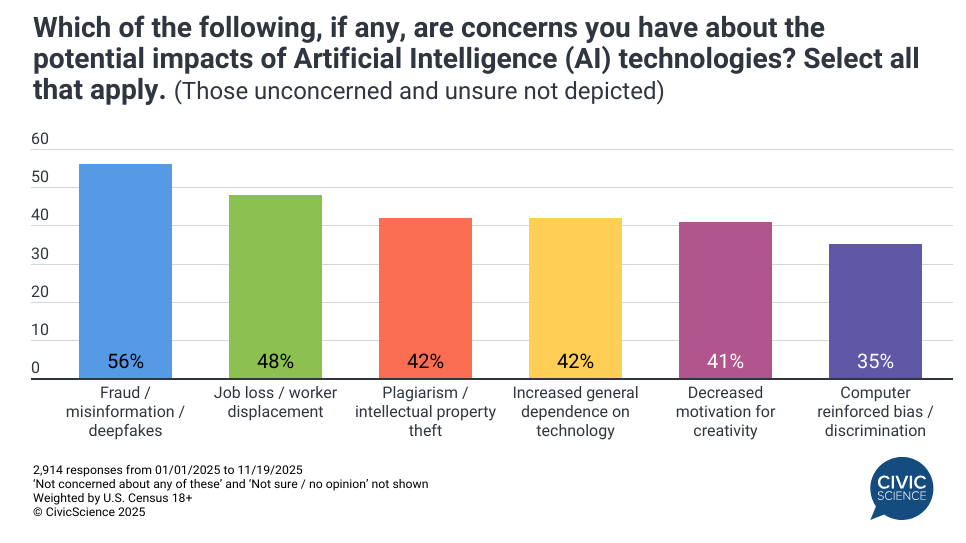
Honing in on what could be shaping that negativity, Americans tell CivicScience that misuse in the area of fraud, misinformation, and deepfakes, as well as job impacts, are their primary sources of concern. Highlighting deep anxieties, all other concerns garnered around 40% as well (those unsure and unconcerned not shown).
Weigh In: To what extent do you worry about being scammed or fooled by an AI-generated video online?
3. Many Americans feel budget changes have significantly impacted the quality of American education.
Along with AI concerns, new CivicScience survey data reveal a widespread concern among U.S. adults regarding the impact of recent budget changes on education. Among those with an opinion, 38% believe the quality of children’s learning has been significantly reduced by recent education budget cuts, paired with 28% who feel it has been ‘somewhat’ reduced. This concern is consistent across family demographics, with 38% of parents and 40% of grandparents agreeing that budget shifts have meaningfully worsened learning. The data suggest that a large segment of the Gen Pop perceives a tangible decline in the quality of instruction and support available in schools.
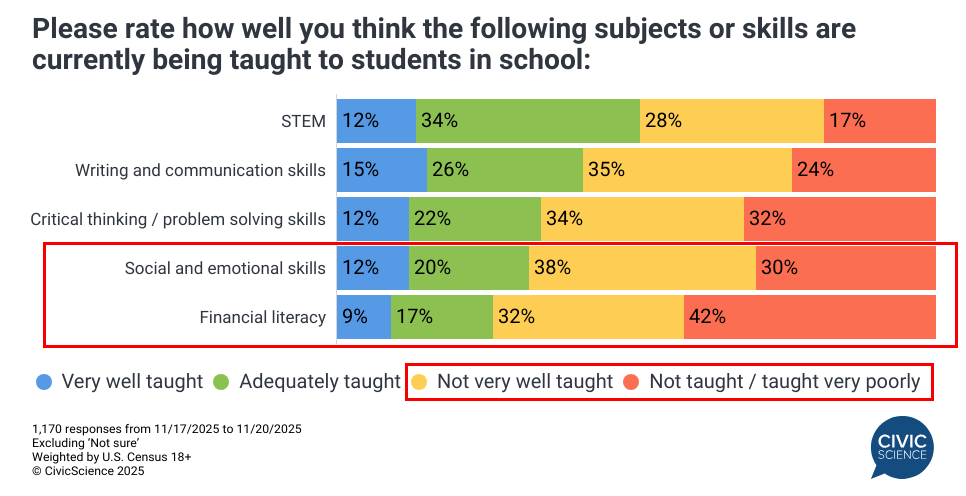
CivicScience also identified specific subject areas where Americans perceive the most significant instructional gaps. Financial literacy stands out as the subject respondents feel is the most lacking. Following closely is concern about the quality of instruction in social and emotional skills. These findings underscore a public perception that American schools may be failing to adequately nurture essential life skills, and highlight a potential need for targeted investment and curriculum reform in areas the public deems most deficient.