CivicScience has the world’s largest proprietary database of real-time declared intent, allowing brands to activate high-performing advertising that drives up to 80% better performance. See how our partners achieve superior marketing outcomes here.
Customer loyalty programs have become increasingly common as brands across industries compete for repeat customers and long-term engagement, and ongoing CivicScience data show these programs are gaining significance to shoppers as participation continues to grow.
Nearly three-quarters of U.S. adults 18+ say loyalty programs are important in deciding where to shop, and the percentage who have signed up for more than five retail loyalty programs is up nearly 50% over the last few years.
However, additional CivicScience data suggest that growing participation in loyalty programs may not necessarily translate into stronger overall brand loyalty.
Consumers prioritize experience and convenience over loyalty perks
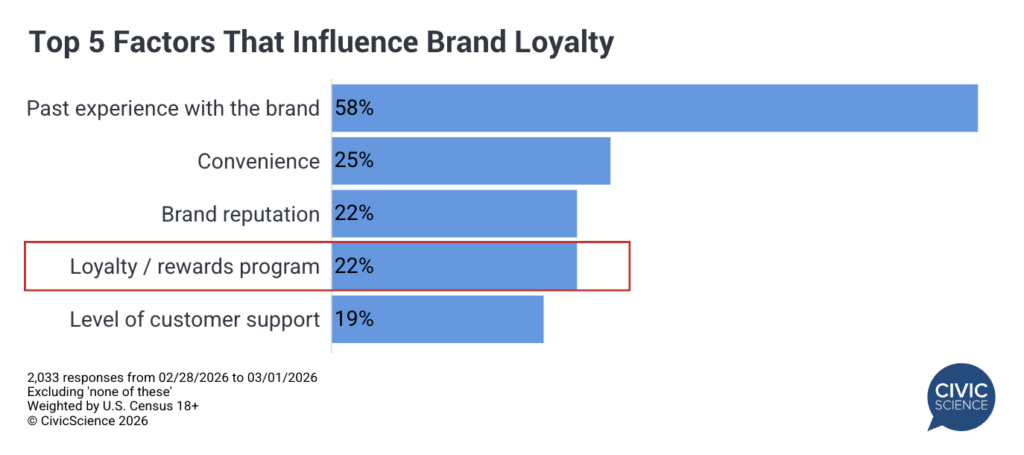
Customer loyalty programs are only part of the broader brand loyalty equation. When asked what most influences their loyalty to a brand, consumers are far more likely to point to past experience than loyalty rewards programs themselves. Nearly 6 in 10 U.S. adults (58%) cite past experience as the biggest driver of brand loyalty, far outpacing other factors like convenience (25%), brand reputation (22%), and loyalty rewards programs (22%).
The data suggest that while loyalty programs matter to consumers, they play a smaller role in shaping long-term loyalty than the overall customer experience itself.
Practical loyalty incentives lead over exclusives
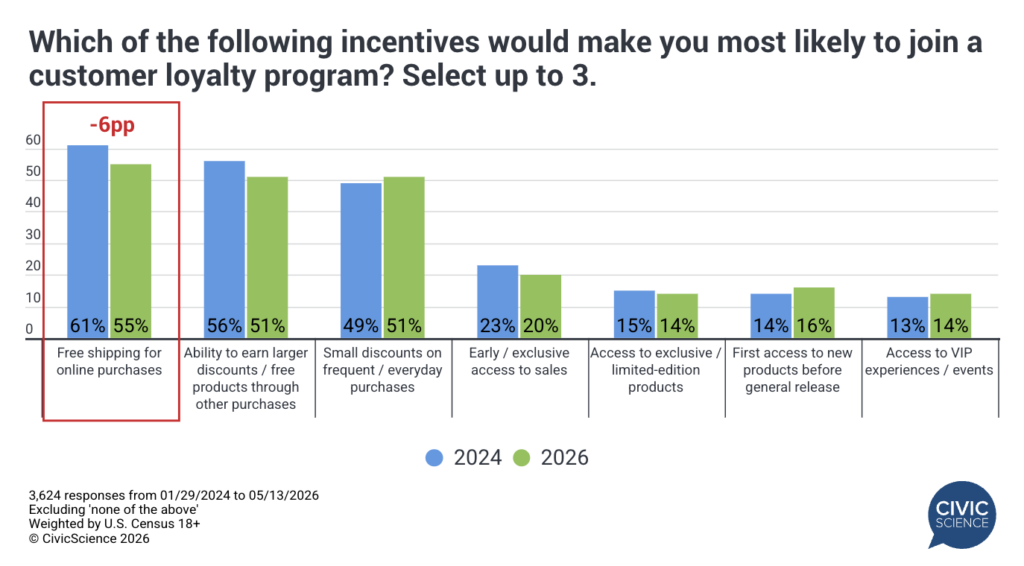
When it comes to the types of incentives that motivate consumers to join loyalty programs, practical savings continue to outweigh exclusivity-based perks by a wide margin. Free shipping for online purchases (55%), the ability to earn larger discounts or free products after making purchases (51%), and small discounts on everyday purchases (51%) rank as the top incentives consumers say would motivate them to join fa loyalty program.
However, interest in some of these traditional loyalty perks appears to be softening. The percentage who cite free shipping as a motivator declined six percentage points over the last two years, suggesting consumers may increasingly view it as a standard expectation rather than a differentiating reward.
Meanwhile, far fewer consumers say they are motivated by more exclusive or experiential perks. Just 20% cite early or exclusive access to sales, while even fewer point to first access to new products (16%), exclusive or limited-edition products (14%), or VIP experiences and events (14%).
Consumers remain hesitant about paid loyalty programs
Consumers appear far more receptive to loyalty models that provide value without requiring an additional financial commitment. Points-based programs that are free to join remain the most appealing type of loyalty program among U.S. adults, far outpacing paid monthly or annual membership models. Interest in paid loyalty memberships remains comparatively limited, even as brands across industries experiment with subscription-based rewards and premium membership offerings.
Those who use AI for shopping are also more likely to value loyalty programs
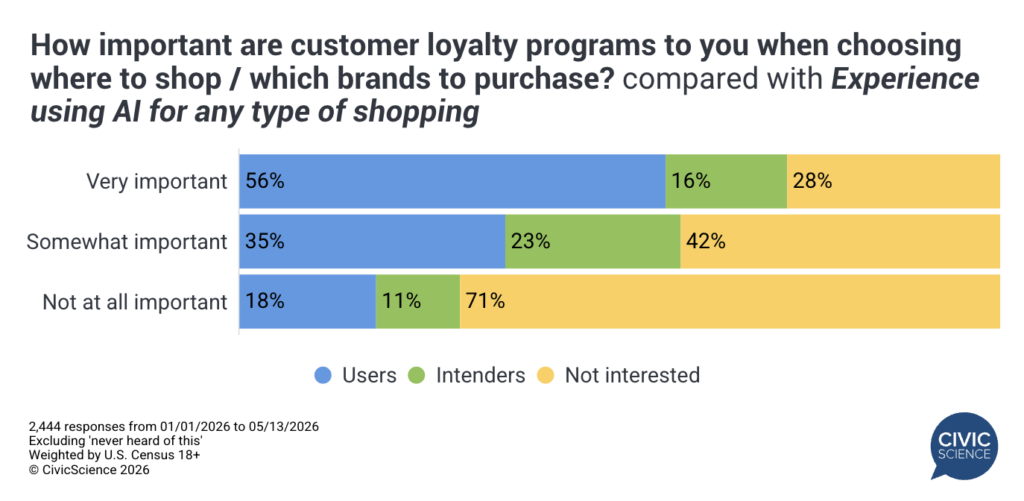
Shoppers who consider loyalty programs important when deciding where to shop are also far more likely to use AI for shopping-related activities. Among those who say loyalty programs are ‘very’ important, 56% report using AI for online shopping tasks such as product research or making purchases directly – compared to just 18% of those who say loyalty programs are ‘not at all’ important.
The overlap may reflect growing openness to personalized shopping experiences and rewards ecosystems, as brands increasingly incorporate AI into customer engagement and loyalty strategies.
Loyalty programs are becoming increasingly standard in the retail experience as more brands compete for repeat engagement and long-term customer retention. However, the data indicate that rewards programs alone may not be enough to drive lasting loyalty, with consumers continuing to prioritize convenience, value, and positive past experiences above loyalty perks alone. As loyalty offerings continue to expand, brands may face growing pressure to make these programs feel both differentiated and worthwhile, particularly as AI-driven personalization becomes a larger part of the shopping experience.