CivicScience has the world’s largest proprietary database of real-time declared intent, allowing brands to activate high-performing advertising that drives up to 80% better performance. See how our partners achieve superior marketing outcomes here.
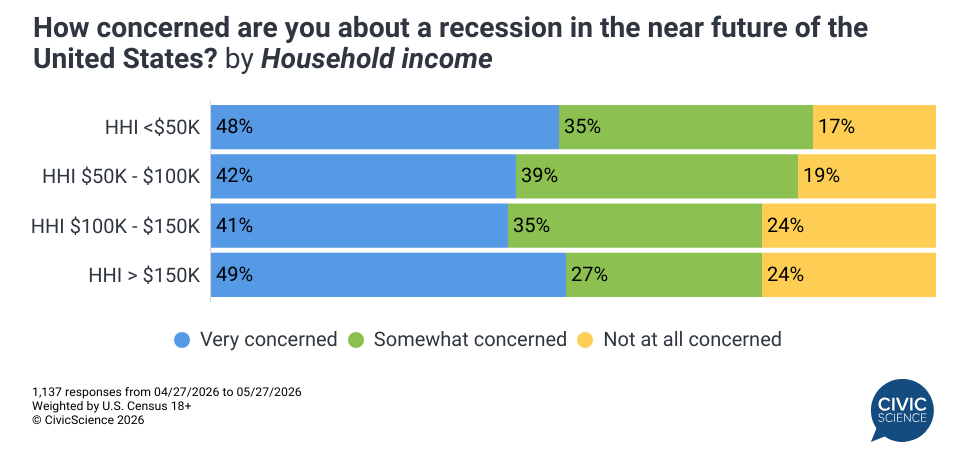
1. Nearly half of U.S. adults across income extremes are anxious about a recession, with top earners most likely to hold strong concern.
Public opinion on the U.S. economy shows interesting trends when broken down by household income. Notably, the highest earners ($150K+) and the lowest earners (under $50K) share almost identical levels of high anxiety about a near-term recession, with 49% and 48%, respectively, saying they are ‘very’ concerned. This strong concern among higher-income Americans is particularly noteworthy given that this demographic is a key driver of consumer spending, which could falter if their anxious outlook leads them to pull back.
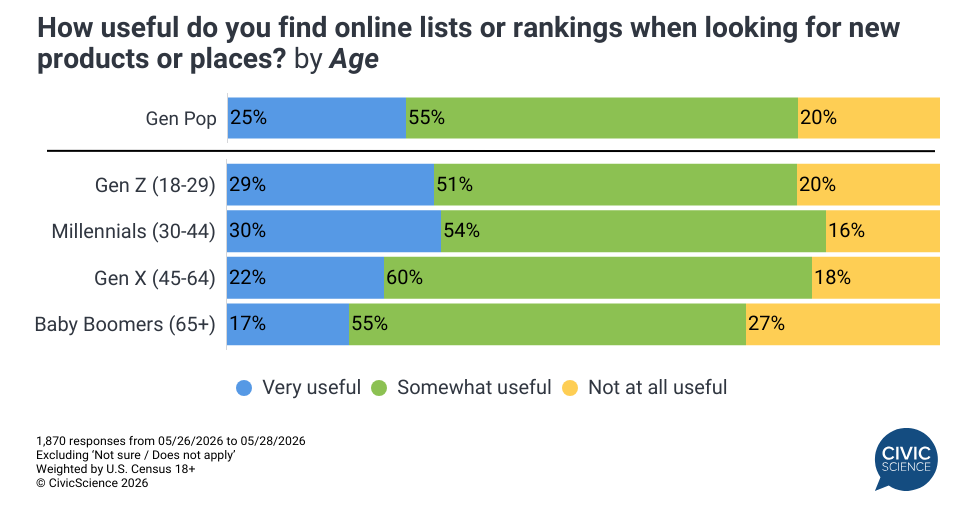
2. One-quarter of U.S. adults say online rankings and lists are ‘very’ useful when researching new products or places, with travel lists scoring the highest.
Online lists and rankings (such as those from U.S. News & World Report) are highly influential tools for U.S. consumers, with 80% of adults finding them either ‘very’ or ‘somewhat’ useful when evaluating new products or places (excluding ‘not sure / does not apply’). While this utility spans all demographics, younger generations and women rely on these curated guides the most. Specifically, women (27%) and Millennials (30%) find these lists ‘very’ useful, compared to 17% among those 65 and older.
When looking at specific industries, travel planning (destinations, hotels, and restaurants) stands out as the primary category where consumers seek lists, driven by older demographics such as Baby Boomers and Gen X. Conversely, younger consumers steer the utility of lists toward lifestyle and professional milestones; Gen Z and Millennials find online rankings more useful than their older counterparts when researching finances, career opportunities, and personal tech.
Let Us Know: Do rankings influence your living choice?
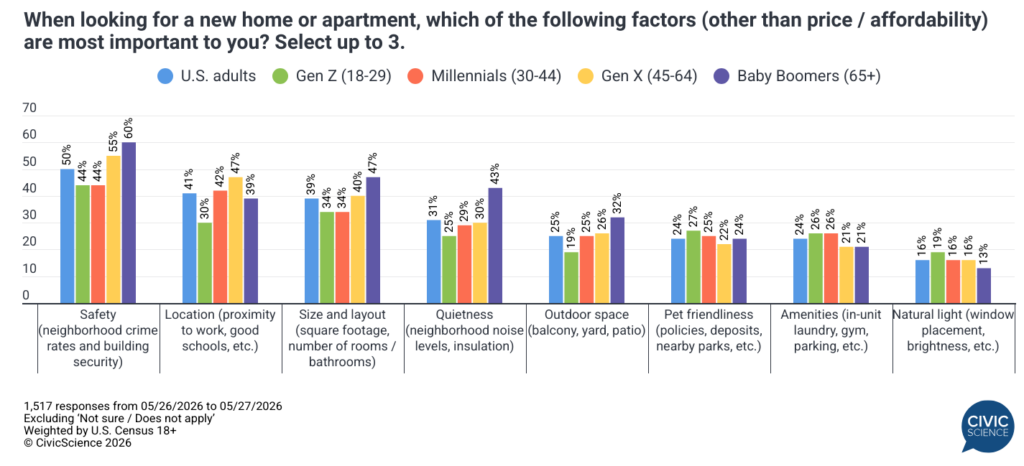
3. While safety is the top priority across all age groups, data show sharp generational differences in what Americans look for in a new apartment or home beyond price.
CivicScience recently explored American moving intent, finding that moving plans have hit a four-year high. This week, we take a deeper dive into what movers care about most (beyond price) when deciding on a new home or apartment. CivicScience data shows that different generations prioritize different things. Safety is the top concern among the Gen Pop at 50%, but it is much more important to Baby Boomers (60%) and Gen X (55%) than to younger movers. Older generations also care deeply about size and layout, which are top concerns for 47% of Baby Boomers and older. Meanwhile, younger adults focus more on lifestyle: Millennials and Gen Z show a stronger preference than other groups for pet-friendliness and amenities, while Gen Z leans most toward natural light (19%).
Take Our Poll: Would you prefer to live in the city or the country?