CivicScience has the world’s largest proprietary database of real-time declared intent, allowing brands to activate high-performing advertising that drives up to 80% better performance. See how our partners achieve superior marketing outcomes here.
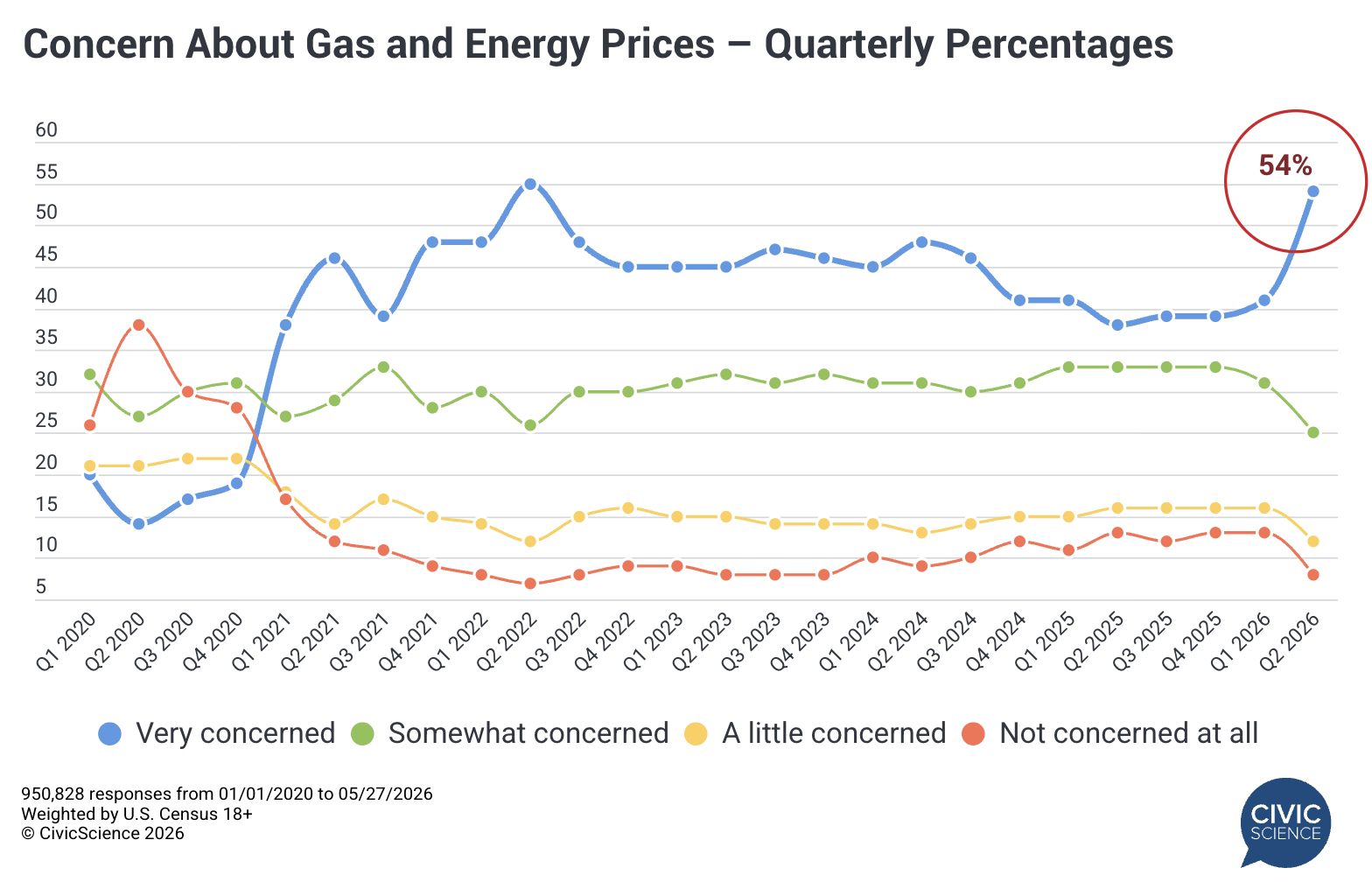
After a period of relative calm, anxiety over gas and energy prices is climbing again amid the ongoing war with Iran. The latest consumer-declared data from CivicScience shows the share of U.S. adults who say they’re ‘very’ concerned about gas and energy prices has surged back to its highest level since the 2022 spike; a sharp reversal from the general stability of the past two years.
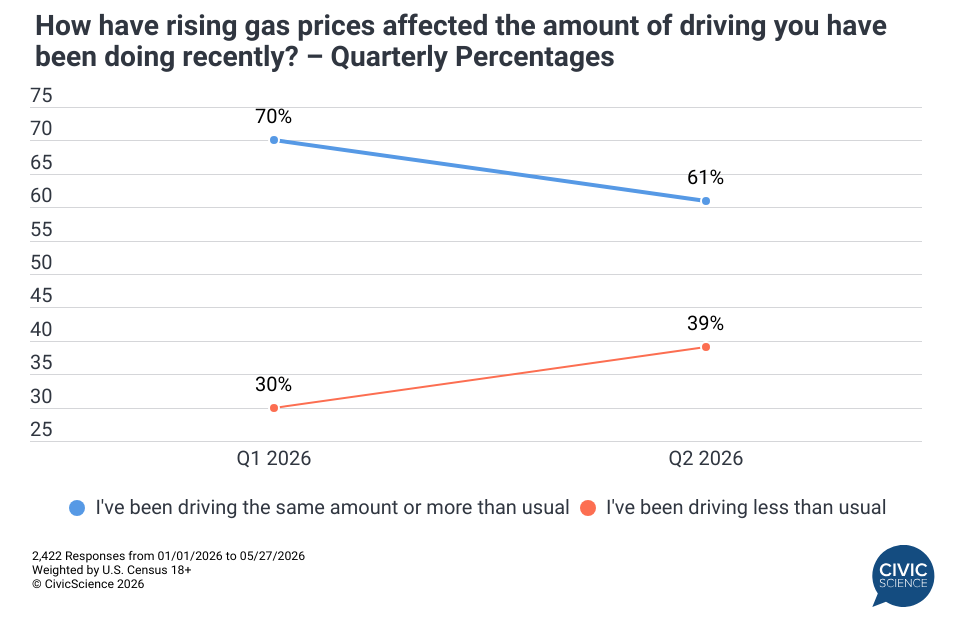
Behind the wheel, the shift is already visible. In Q1 2026, 70% of American adults said they were driving the same amount or more than usual despite rising gas costs. By Q2, that share has fallen, and the portion saying they’re actively driving less has climbed in parallel. While they’re driving less overall, when it comes time for a fill-up, a sizable share of Americans are willing to drive further in order to save even a little at the pump. Concern isn’t staying abstract; now is more important than ever to have a real-time pulse on the American consumer and how they’re navigating the current economic climate.
These concerns are also reshaping travel plans. When asked how rising prices and inflation have affected their spring and summer travel, more than half of U.S. adults report some form of pullback — canceling plans, downgrading to a shorter or cheaper trip, or forgoing travel entirely. Only 19% say their plans are unaffected.
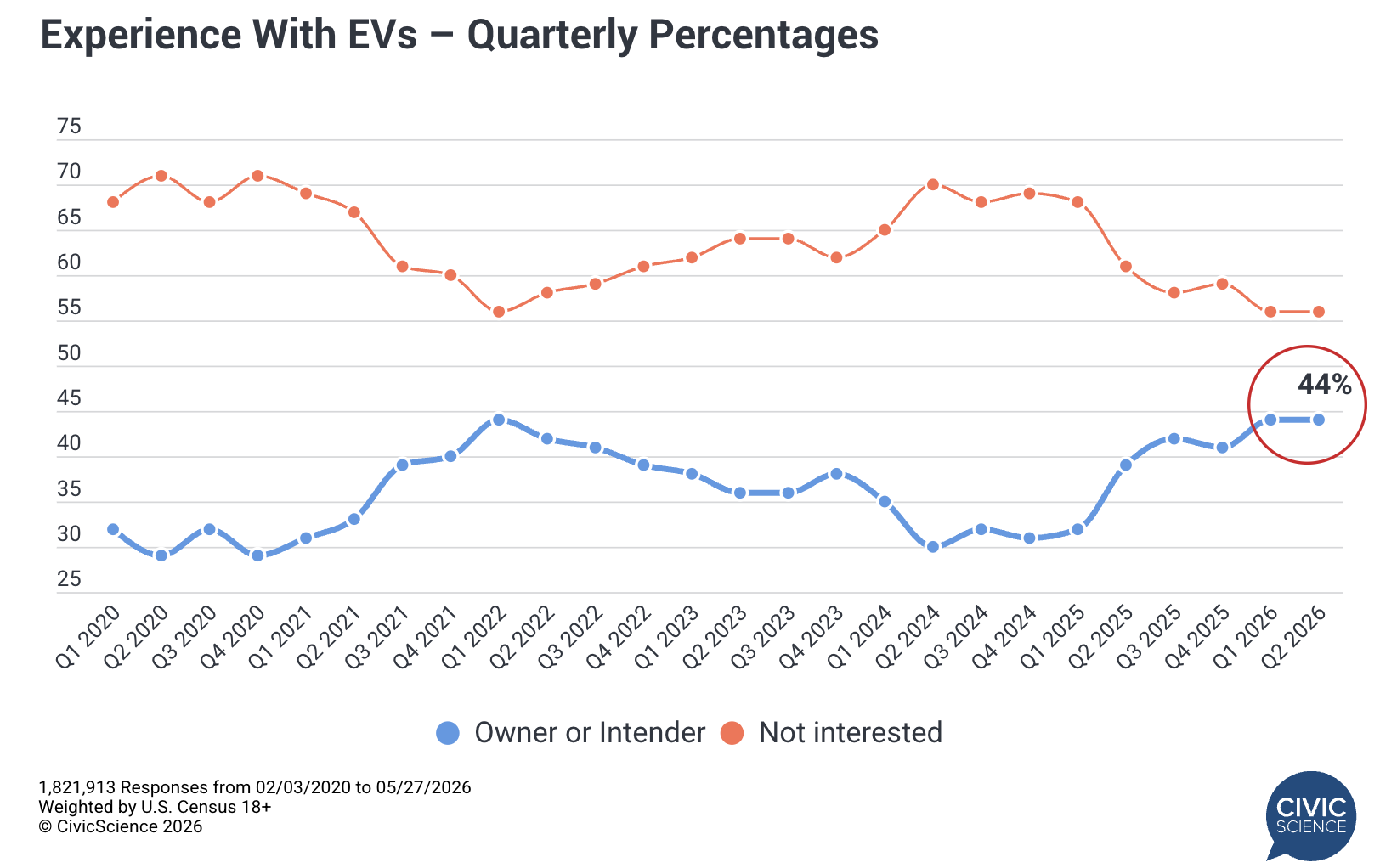
However, the most telling signal sits at the intersection of frustration and aspiration. EV disinterest just hit a multi-year low in CivicScience’s long-running tracker, while the share of Americans who own or intend to buy an electric vehicle has reached its highest point in over six years. When gas prices sting consistently enough, the calculus on alternatives may start to shift.
The data tells a familiar story with a new urgency: economic pain at the pump doesn’t just change how people drive today – it shapes the vehicles they consider tomorrow.