CivicScience has the world’s largest proprietary database of real-time declared intent, allowing brands to activate high-performing advertising that drives up to 80% better performance. See how our partners achieve superior marketing outcomes here.
It is officially Pride Month once again. While CivicScience has already examined how LGBTQ+ Americans feel about their well-being earlier this month, we’ll take a deeper dive into the latest consumer sentiment around brand engagement with Pride Month and explore how that aligns with Americans’ views on brands taking a stand on social and political issues overall.
Desire for brands to celebrate cultural months is on the rise, while consumers increasingly favor brands that actively participate in Pride Month celebrations.
The latest consumer-reported data shows growing support for brands celebrating cultural months (such as Black History Month, Asian American and Pacific Islander Heritage Month, and Pride Month). When asked whether they generally favor or oppose brands celebrating months like these, 47% of American adults said they favor it, up from 35% in 2024. Conversely, opposition to these efforts is weakening, with the percentage who say they’re against brands recognizing these culture months dropping from 31% in 2024 to 22% in 2026. Thirty-one percent remain neutral.
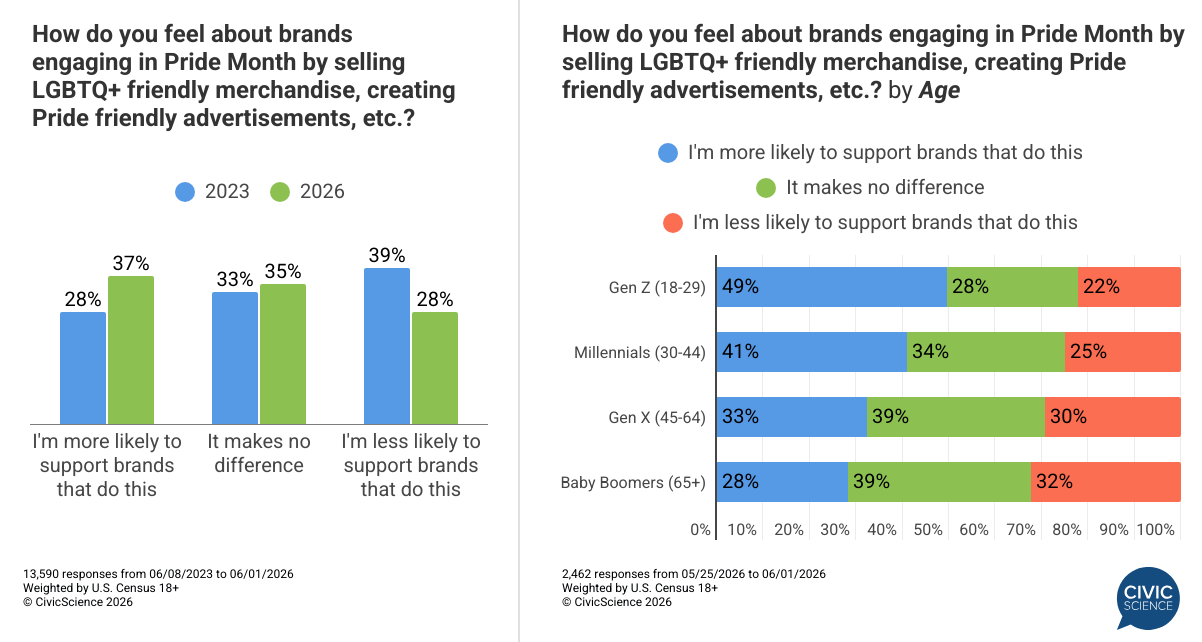
Looking specifically at Pride Month, data show a near-complete reversal from 2023 in how consumers feel about brands that actively engage with Pride. Thirty-seven percent of U.S. adults now say they are ‘more’ likely to support brands that actively partake (e.g., selling Pride merchandise, Pride-driven advertising, etc.) in celebrating Pride Month, up from 28% four years ago. Conversely, the share of consumers who are ‘less’ likely to support brands that participate in Pride Month fell by 11 points over the same period.
Consumer support is most concentrated among Americans under 45, led by Gen Z aged 18-29, but about 3 in 10 consumers aged 45-54 and 65+ also say they’re likely to be supportive.
What This Means for Brands: Additional consumer-reported data shows that participating in Pride Month can help retain consumers. More than one-third (35%) of consumers who would be more likely to support Pride-friendly brands say they’re ‘very’ loyal to their favorite brands in general, compared to just 24% of those who are less likely to support Pride-friendly initiatives.
Consumers point to several actions brands can take to make their Pride Month efforts more meaningful.
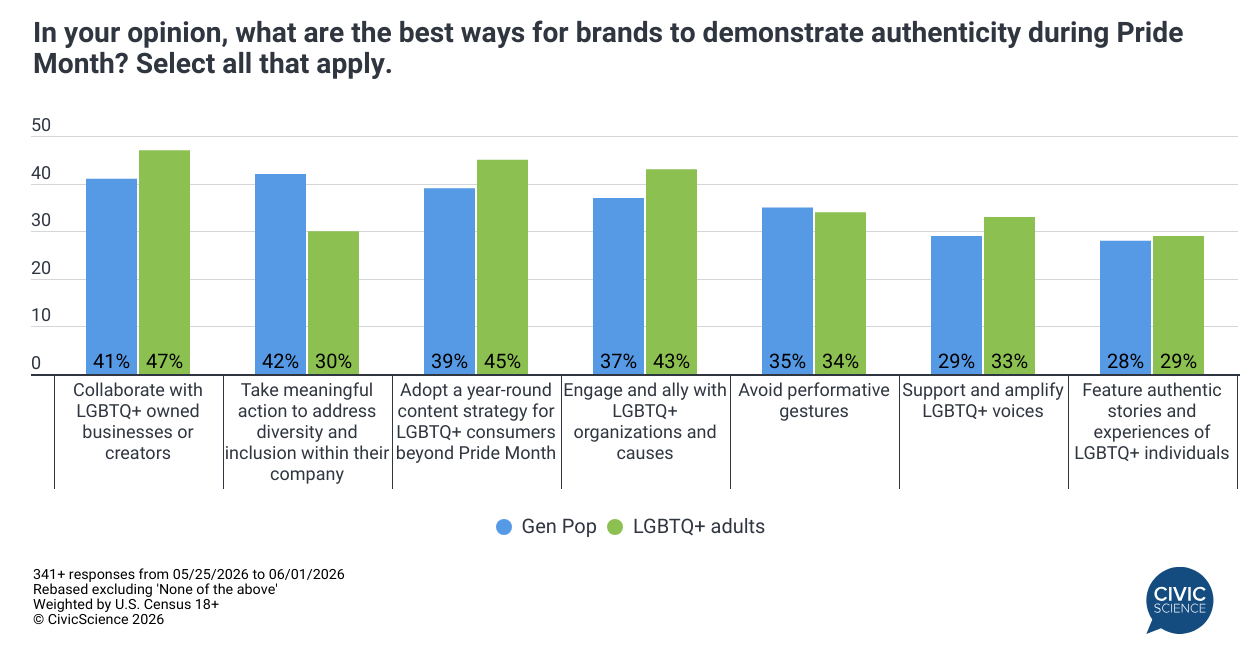
For brands to build a truly meaningful connection, CivicScience data show that consumers believe efforts should move beyond surface-level Pride Month campaigns. LGBTQ+ adults point to tangible business partnerships and long-term consistency as the best ways to be more authentic. To demonstrate true authenticity, 47% of LGBTQ+ adults state that brands should collaborate with LGBTQ-owned businesses or creators, and 45% want to see a year-round content strategy that extends well beyond June. Additionally, 43% say brands need to actively ally with LGBTQ+ organizations and causes.
Brand social consciousness and overall kindness are more important than ever for consumers.
Pride Month initiatives are just one piece of the pie that consumers use to evaluate what to buy and where to shop. Coinciding with this rising emphasis on cultural efforts like Pride Month, an increasing share of Americans think brands should take a stand on important social and political issues. Nearly half (48%) now hold this view, the highest such percentage since 2022.
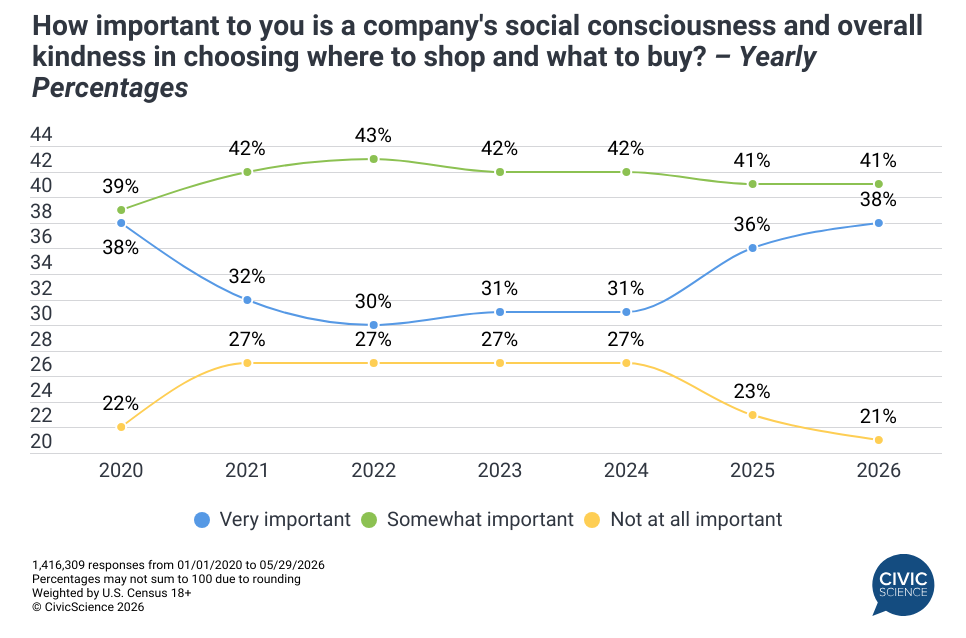
Additionally, more Americans than ever tell CivicScience that a company’s social consciousness and overall kindness is at least ‘somewhat’ important to them when deciding where to shop and what to buy – 79% now feel this way, which even outpaces the previous high of 77% observed in 2020.
The growing appetite for and appreciation of brands that actively and meaningfully engage with Pride Month is particularly significant in today’s polarized social and political climate. And the data also suggest it isn’t a one-off fad, with the share of Americans increasingly willing to vote with their wallets and lean toward supporting brands that take a stand and emphasize their moral compass. The brands that do this authentically have the inside track to a consumer base that’s as loyal as they come.