CivicScience has the world’s largest proprietary database of real-time declared intent, allowing brands to activate high-performing advertising that drives up to 80% better performance. See how CivicScience partners achieve superior marketing outcomes here.
Falling temperatures send many Americans digging out their warmer outerwear, and there’s a good chance it carries a North Face or Patagonia logo. The two brands may hang side by side on the rack, but new CivicScience data show the people who wear them differ in meaningful ways.
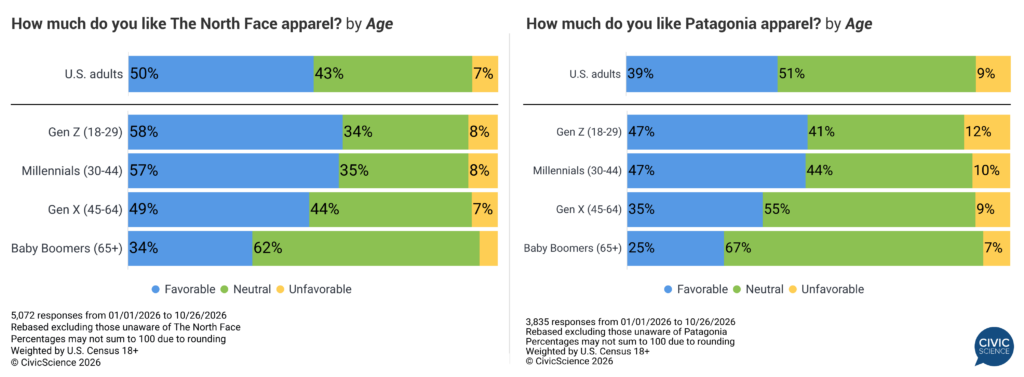
In the latest data, The North Face holds an 11-percentage-point lead over Patagonia in the share of U.S. adults who are favorable toward each brand (50% vs. 39%). Consumers under 45 are the most favorable toward both brands, though The North Face holds on to more of its appeal among Gen X. Baby Boomers (aged 65+) are also more likely to be favorable toward The North Face than Patagonia (34% vs. 25%).
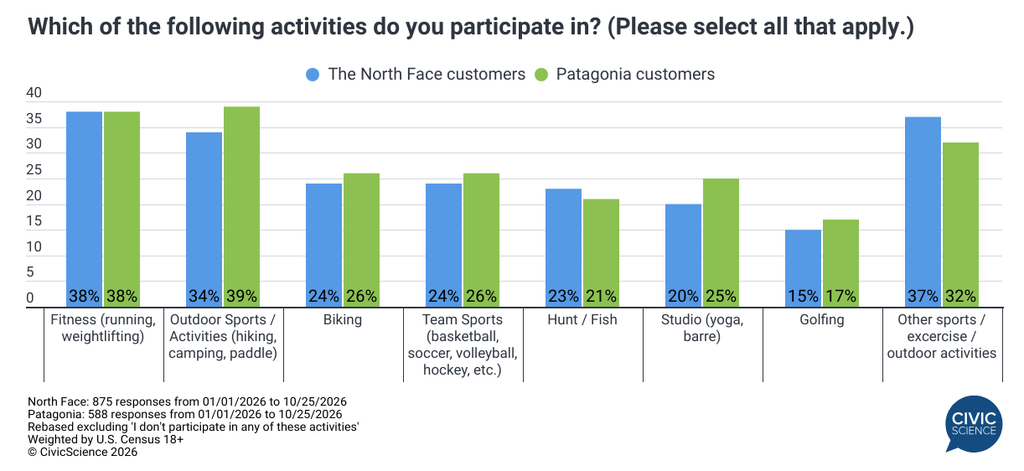
Unsurprisingly, both brands’ shoppers lead active lifestyles, though Patagonia customers are more likely to participate in at least one of the sports or activities studied below (85% vs. 78%). Fitness activities such as running and weightlifting are among the most common for both groups (38% each). Beyond that, Patagonia shoppers outpace The North Face shoppers in most activities studied, with the widest gaps in outdoor activities (e.g., hiking, camping, paddling) and studio activities (e.g., yoga, barre). The North Face customers are more likely to hunt or fish (23% vs. 21%) and to take part in ‘other’ sports or activities (37% vs. 32%).
These Consumers Feel Similarly About the Future, but Differ in Financial Outlook
In addition to living active lifestyles, these consumers share a similar outlook on the future: 39% of Patagonia fans and 38% of The North Face fans say they feel optimistic. Their financial expectations, however, contrast.
- Income outlook: Patagonia fans are more likely than The North Face fans to expect their income to increase in the next six months (57% vs. 48%).
- Debt expectations: Patagonia fans are also more likely to expect more debt six months from now (53% vs. 40%), while The North Face fans are more likely to expect less debt (27% vs. 18%).
- Price sensitivity: Nearly half of Patagonia fans (48%) say they’ve become ‘less’ price sensitive over the past year, compared with 35%. The North Face fans are more likely to say they’ve become ‘more’ price sensitive (38% vs. 30%).
Patagonia fans appear more comfortable spending and borrowing, alongside stronger income expectations, while The North Face fans are more focused on value and keeping their finances in check. That suggests promotions and value messaging may carry more weight with The North Face fans.
From Impulse Buys to Search Engines, These Shoppers Take Different Paths to Purchase
When it comes to their online retail shopping, a well-timed ad may be best for Patagonia shoppers, as 32% say their purchases are ‘mostly spontaneous’ (26% of The North Face shoppers say the same). Those who shop The North Face brand, on the other hand, are more likely to say their purchases are most often a mix of planned and spontaneous (33% vs. 25% among Patagonia shoppers).
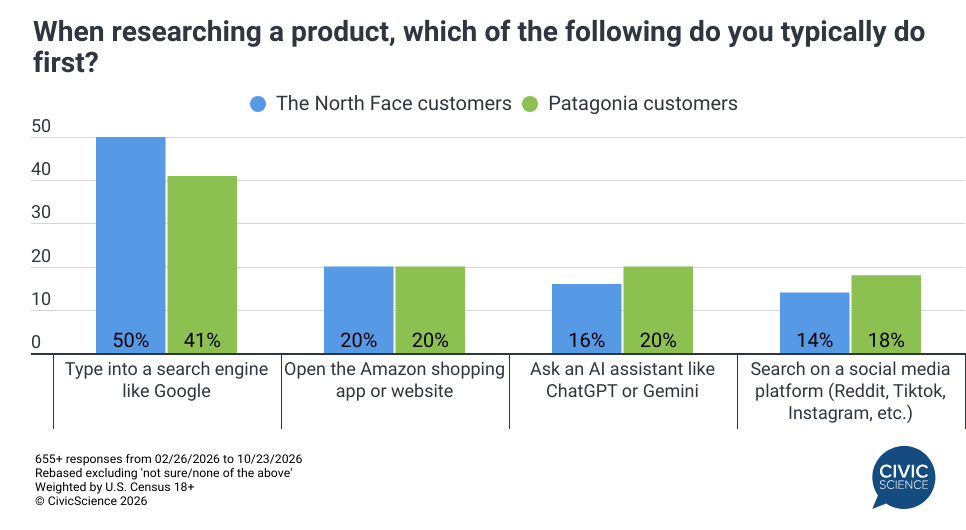
Honing in on when the purchases are planned, The North Face fans are far more likely to visit search engines first for product research. Search engine research is also common among Patagonia customers; however, they are more likely than their counterparts to consult AI or social media as a starting point.
Emotional Connection Drives Loyalty, but What Builds It Varies by Brand
Getting shoppers to check out is only a piece of the puzzle for brands and retailers; keeping them coming back is the other. CivicScience research shows brand loyalty is climbing again after nearly a decade of decline, and both The North Face and Patagonia shoppers sit above average: 44% of Patagonia fans and 39% of The North Face fans say they’re ‘very’ loyal to their favorite brands, compared with 36% of U.S. adults. Emotional connection is a key driver of brand loyalty today, especially in the clothing industry.
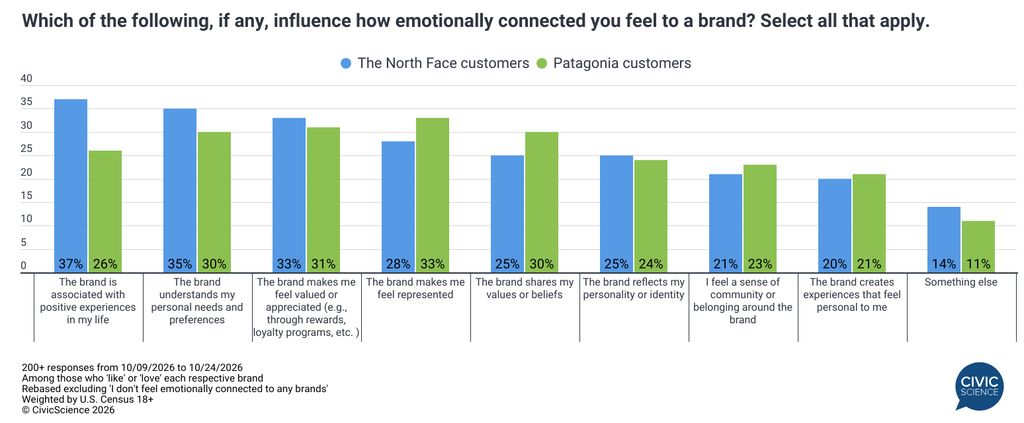
What builds that connection differs between the two fan bases. The North Face fans are more likely to point to a brand’s association with positive experiences in their lives (37% vs. 26%) and to feeling that a brand understands their needs (35% vs. 30%). Patagonia fans place more weight on feeling represented (33% vs. 28%) and on shared values (30% vs. 25%).
Similar loyalty levels can rest on different foundations. As loyalty continues to rebound, brands that understand what connects their fans will be better positioned to deepen those relationships.
Patagonia Fans Spread Holiday Budgets Beyond Big-Box Stores
Looking toward the holiday shopping season, 4-in-10 fans of The North Face expect to spend the most on holiday gifts at big-box stores like Walmart or Target, compared with 29% of Patagonia fans. Patagonia fans spread their gift budgets more evenly, with somewhat higher shares pointing to specialty or chain stores (17% vs. 12%) and small or locally owned businesses (19% vs. 16%). With so much of its fans’ gift spending headed to mass retailers, The North Face may need to reach shoppers earlier in the season, before those budgets land elsewhere. That wider mix gives Patagonia more room to reach fans through the specialty and local retailers that already carry the brand.
The two brands compete for the same spot in shoppers’ closets, yet their fans arrive by different routes. Patagonia fans tend to make spontaneous purchases and prefer brands that share their values, while The North Face fans plan ahead, research via search engines, and monitor their spending more closely. The timing, channel, and message that reach one audience may miss the other.