CivicScience has the world’s largest proprietary database of real-time declared intent, allowing brands to activate high-performing advertising that drives up to 80% better performance. See how CivicScience partners achieve superior marketing outcomes here.
While some Americans would rather head out for an evening with friends in their free time, others are happiest settling in at home. From how Americans spend their time in the evenings to the purchases they make to create a cozier home, these preferences offer a window into consumer habits across a variety of industries as we move deeper into Q4.
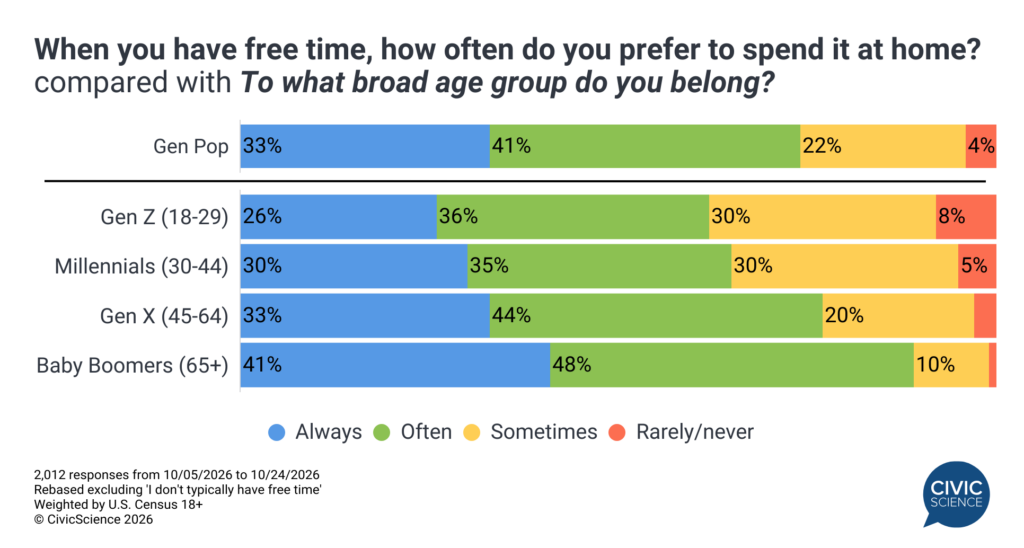
When Americans have free time, more than 2 in 5 (41%) say they ‘often’ prefer to spend it at home, while another third say they ‘always’ prefer to do so. Meanwhile, 22% express this preference ‘sometimes,’ and just 4% say ‘rarely or never.’ In other words, nearly three-quarters of respondents frequently prefer to spend their free time at home.
This preference varies by age and gender. Baby Boomers (65+) are 15 percentage points more likely than Gen Z (18-29) adults to say they always prefer to spend their free time at home (41% vs. 26%). Women also outpace men in this preference by six percentage points (36% vs. 30%).
While these differences offer clues about who is most inclined to stay in, the amount of free time Americans have and how they envision an ideal evening provide useful context for understanding trends in leisure preferences.
Home-Based Activities Outpace Going Out
On a typical weekday, half of Americans report having three or more hours of free time. Another 24% have one to two hours, while the remaining 26% report less than one hour or no free time.
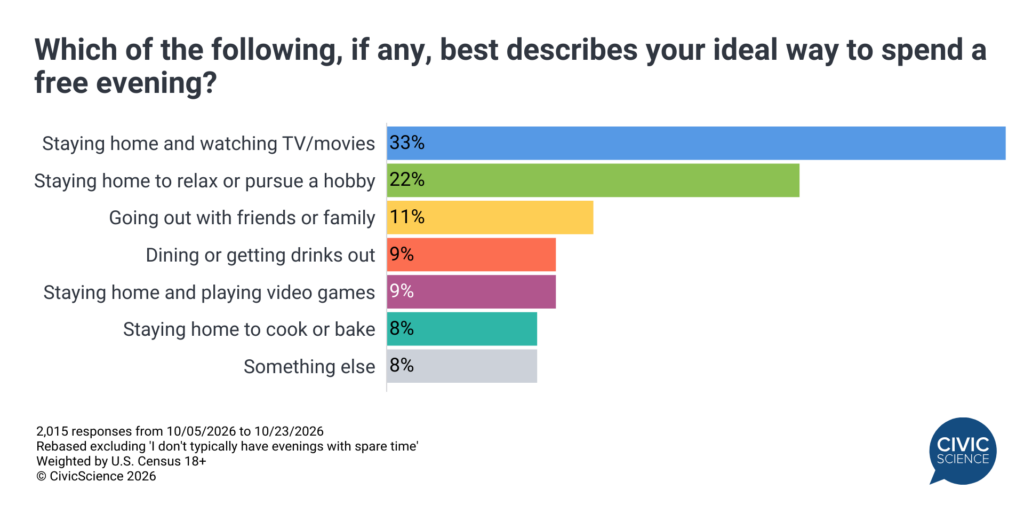
Staying home remains the clear favorite when it comes to filling that spare time. The most popular way to spend an ideal free evening is watching TV or movies at home, cited by 33% of Americans, while another 22% prefer to stay home and relax or pursue a hobby. Just 20% would rather spend the evening out, suggesting that the preference for staying in reflects choice more than a lack of time. Home-based activities also hold their own against more traditional nights out, with playing video games at home just as popular as dining out or getting drinks.
Age has a relatively modest effect on whether Americans would rather stay in. Even among adults ages 18 to 29, the group most likely to favor a night out, 62% prefer a home-based activity. The share who would choose to go out with friends or family also varies by just five percentage points across age groups. The larger differences show up in what Americans do once they’re home. Adults 65 and older overwhelmingly favor watching TV or movies (46%), while younger adults spread their evenings across a wider mix of activities, including playing video games (16%) and cooking or baking (12%).
Taken together, these findings point to the home as a central setting for leisure, offering brands across entertainment, food, and home goods an opportunity to connect with consumers where they already spend their evenings.
How Americans Create a Cozy Home
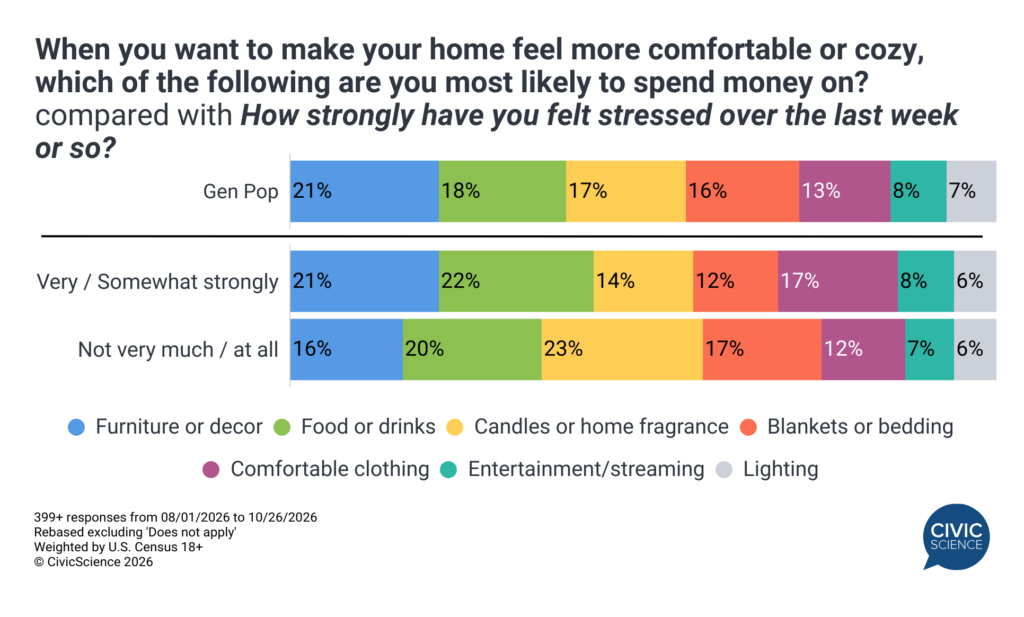
Alongside a strong preference for staying in, many Americans also know where they’d put their money to make their homes more comfortable. Furniture or decor tops the list, with 21% of Americans saying it’s what they’d be most likely to spend on. Food or drinks follow at 18%, while candles or home fragrance come in close behind at 17%.
Stress levels may also shape how Americans approach a cozier home. Those who haven’t felt stressed over the past week or so lean toward candles or home fragrance, with 23% choosing it as their top pick, compared with 14% of those who have. Stressed Americans, meanwhile, are more likely to say they’d spend on furniture or decor (21% vs. 16%) and comfortable clothing (17% vs. 12%).
For most Americans, making home feel cozy comes down to simple, everyday comforts, with about half (51%) choosing food or drinks, candles or home fragrance, or blankets or bedding. Which comfort comes first may depend on the week they’re having: stressed Americans lean toward cozy clothes and home updates, while those more at ease are more likely to reach for a candle.
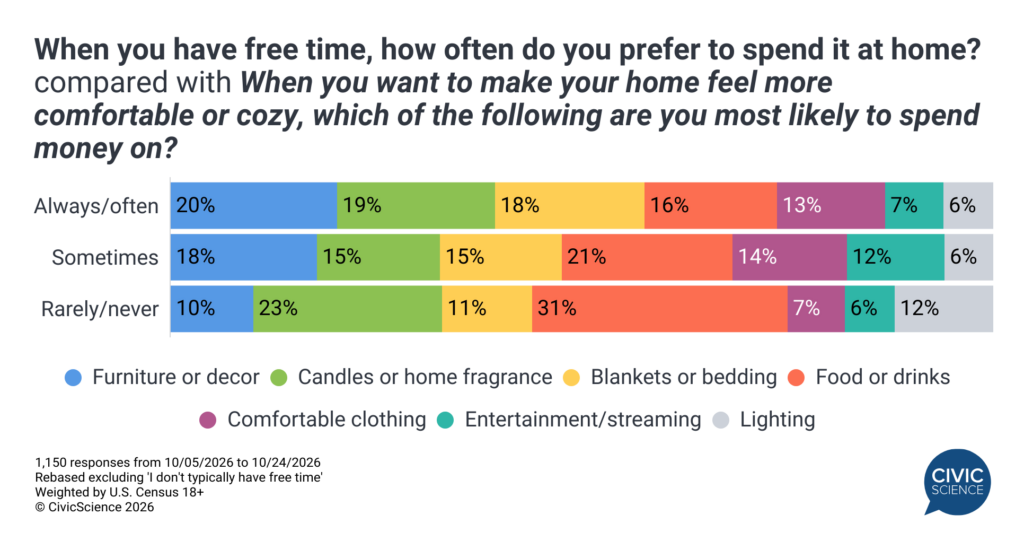
What Americans prioritize also varies depending on how often they prefer to spend their free time at home. Among those who prefer to stay home ‘always/often,’ furniture or decor is the leading category for cozy-home spending, cited by 20%, followed by candles or home fragrance (19%) and blankets or bedding (18%).
Those who ‘rarely/never’ stay home prioritize spending on food or drinks (31%), candles or home fragrance come in second (23%), and blankets or bedding come in third (11%), suggesting that a preference for leaving the house does not necessarily indicate less interest in a positive at-home sensory experience.
As Americans consider how to spend their free time — and their hard-earned cash — home remains a pivotal part of the equation. From pursuing hobbies to catching up on a TV show or simply relaxing, consumers are finding ways to make their home environments more comfortable. For brands looking to connect with homebodies, understanding how they prioritize their free time and what they’re willing to spend to enhance it can offer a valuable edge in an increasingly competitive consumer landscape.