This is just a tiny glimpse of the data available to CivicScience clients. Discover more data.
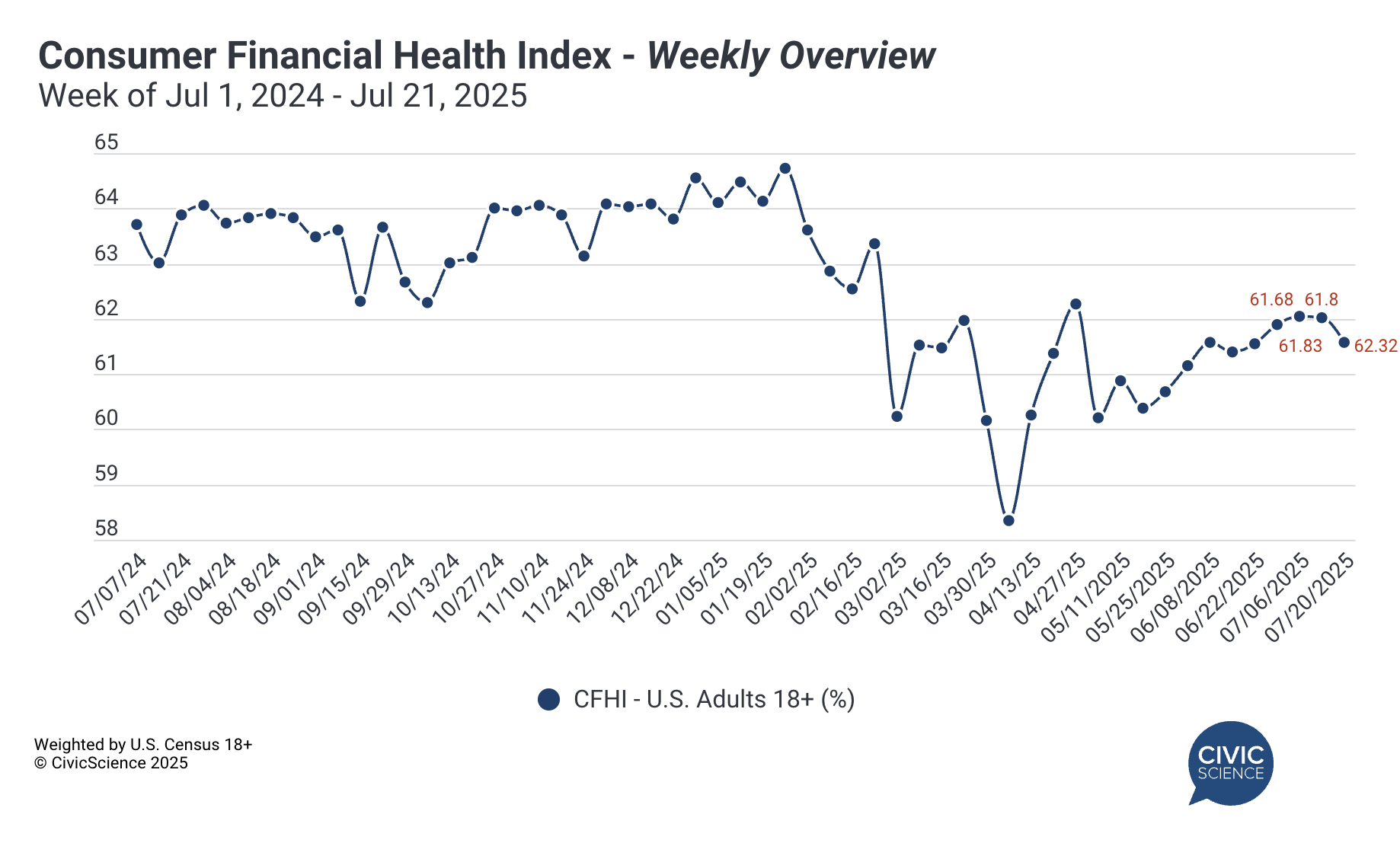
Economic uncertainty has been a common theme throughout 2025, largely driven by tariff policy and its residual impacts. While policies can change by the minute, recent CivicScience data is hinting that Americans are starting to feel at least some stability–rather than uncertainty—about the economy. Economic Sentiment is well above where it stood in the weeks following the “Liberation Day” tariffs. A fresh look at CivicScience’s Consumer Financial Health Index (CFHI) reveals a similar pattern in terms of how Americans feel about their personal financial situation.
From mid-May to late July, consumer financial health has shown slow but steady improvement, increasing from 60.04 to 62.32 as of July 22nd. This also marks an increase of four points (4.45) from the second week of April (57.87) in the immediate “Liberation Day” aftermath. However, despite this positive movement, financial health has not yet returned to the high point reached in January, following President Trump’s inauguration. And these gains, of course, can be susceptible to ever-evolving political developments or economic headlines, particularly as the prospect of further tariffs looms if trade deals aren’t reached.
Take our Poll: How concerned are you about your future retirement?
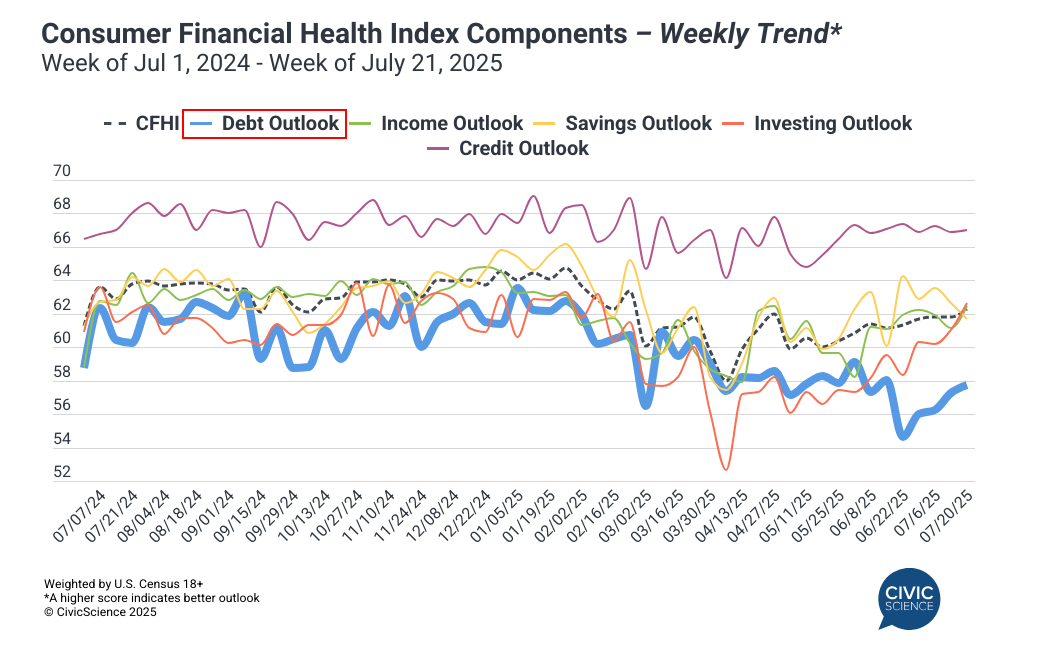
When it comes to the breakdown of the Consumer Financial Health Index components, the common thread throughout the past year has been the state of the American debt outlook (highlighted in blue below). For months, consumers have routinely felt the most pessimistic about their outlook on the amount of debt they expect to have in six months. That pattern continued throughout June, thanks to a steep 3.37 point drop in the final week of the month—around the time it was announced that Buy Now, Pay Later loans would soon impact credit. However, debt outlook has regained much of that lost ground since the first week of July, rising 3.08 points. Despite the positive movement in debt outlook, the component is still far below (-3.95) the next closest measure (savings outlook).
Data also reveal a big jump in investment outlook, which is also trending up with a big jump so far in July. This is unsurprising, given the current state of the stock market. Meanwhile, savings outlook has fallen over the past couple of weeks.
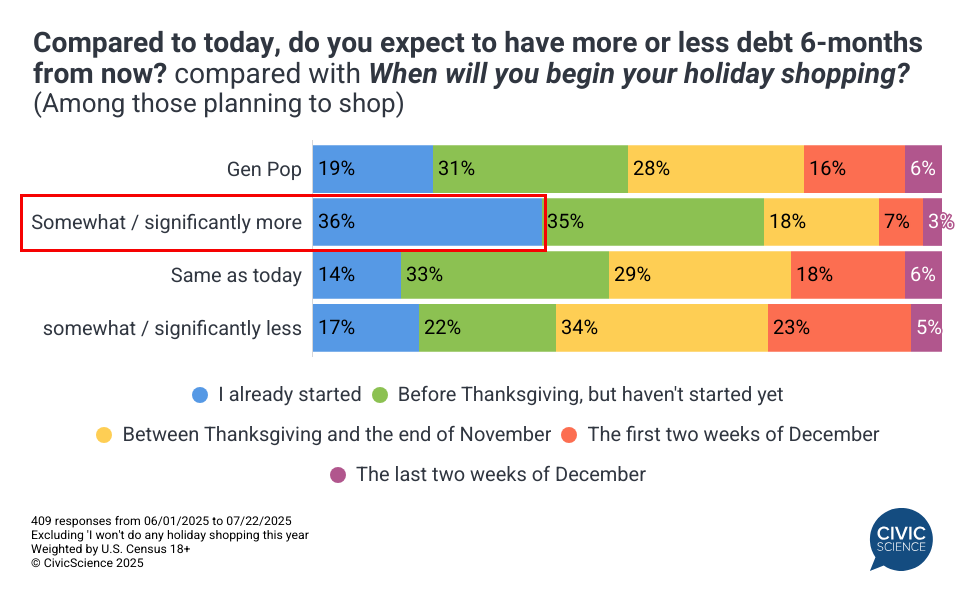
How is debt outlook impacting shopping plans for the upcoming winter holiday season? New data show consumers who expect to have at least ‘somewhat’ more debt in the next six months are more than twice as likely as those more optimistic about their debt to report they’ve already started their winter holiday shopping. They also outpace holiday shoppers in the Gen Pop overall. The added variable this year of potential tariff impacts appears to be playing a key role. Additional data show that those expecting ‘more’ debt are far more likely to report that tariff concerns are impacting their overall gift buying, beyond just the holidays. This includes 33% who say they’re buying gifts earlier to avoid price increases (among those aware of possible tariff impacts on gifts they buy).
Use this Data: CivicScience clients leverage real-time insights like these to predict consumer behavior changes, stay ahead of market disruptions, and identify opportunities for growth and retention, even as economic conditions shift rapidly.
Rising optimism in consumer financial health suggests Americans are cautiously adapting to ongoing economic volatility. But with the debt outlook still trailing significantly, it reveals a fragile foundation that may limit the durability of consumer confidence in the months ahead, particularly as they prioritize shopping for the winter holidays.