CivicScience has the world’s largest proprietary database of real-time declared intent, allowing brands to activate high-performing advertising that drives up to 80% better performance. See how our partners achieve superior marketing outcomes here.
Father’s Day is less than two weeks away, which means that for those choosing to celebrate Dad with a gift, the shopping countdown is on. This year, although many dads will insist they already have everything they need, 53% of American adults are buying a gift for their old man, a six percentage point increase since 2025. What does this shift in buying intent mean? And how is the pre-Father’s Day shopping scene shaping up? CivicScience has the latest insights on how consumers are planning–and spending.
Overall Spend Increases, Despite Ongoing Uncertainty
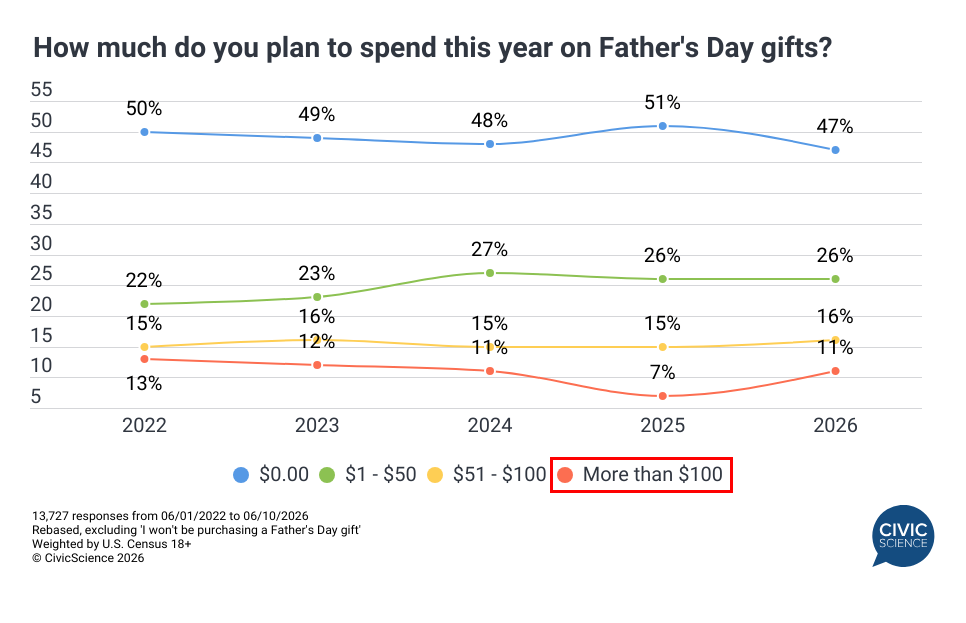
Despite ongoing economic uncertainty, Americans plan to spend more on Father’s Day gifts this year. Those not planning to spend anything dropped four percentage points down to 47%, while the highest spenders–those shelling out $100 or more–rose from 7% in 2025 to 11% in 2026. Although the outliers on the spending spectrum shifted, those spending $1 to $100 held relatively stable.
The rebound in spending echoes a similar trend in Mother’s Day spending last month, a common occurrence for shoppers prepping for these particular holidays. Among those who are spending, women are the most likely to spend more overall on their Father’s Day gifts this year.
What Dad Wants is Priceless, But Will He Get It?
Dad may say he has everything he needs, but the data show that nearly half of fathers (46%) would like to celebrate Father’s Day by spending quality time with their children and/or partner–a four percentage point increase since last year. Second place remains firm with 24% preferring to go out for a meal, while ‘doing something for myself,’ the third pick, has dropped by three percentage points, underscoring the shift towards togetherness.
It’s worth noting that while overall spending has increased, what Dad really wants costs nothing at all–time spent in good company. However, the gift most likely to create a moment of togetherness — a meal out or something food-related — fell by three percentage points year over year.
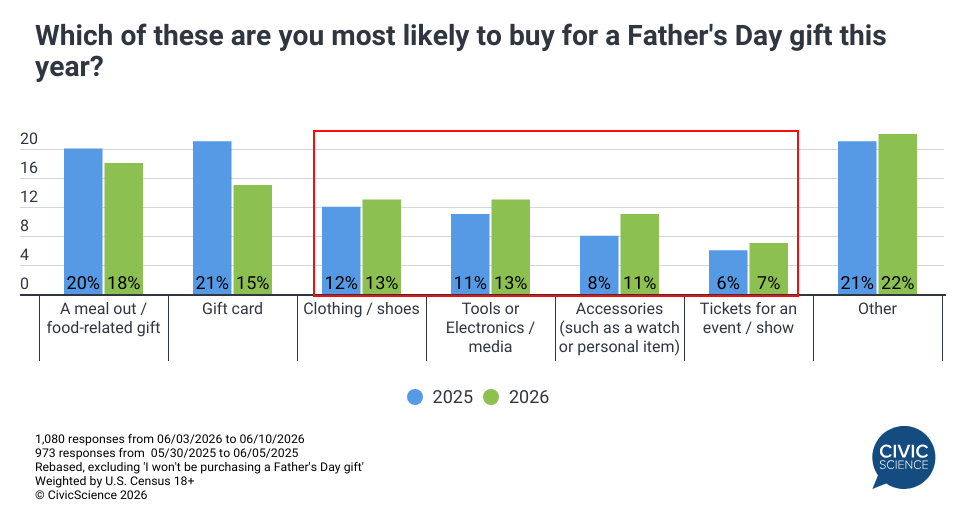
Beyond meal time, consumer gift-purchasing intent shows a distinct shift away from passive options like gift cards—which fell by six percentage points to 15%—and toward tangible goods and activities. Leading this upward momentum are clothing and shoes, as well as tools and electronics, both of which grew to 13% of planned purchases. These are joined by other rising categories, including a three-point jump in accessories such as watches (up from 8% to 11%) and experiential gifts like event tickets (up to 7%).
Local Spending Remains Top Priority for Shoppers
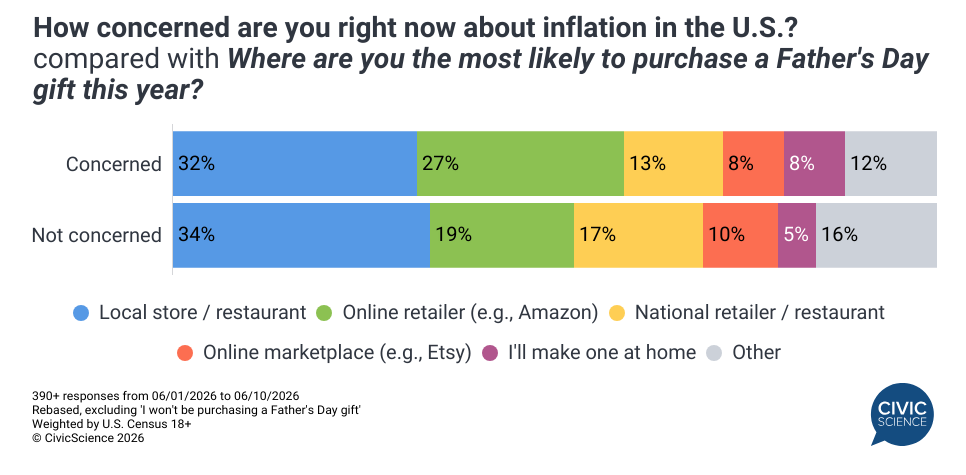
Those shopping for Father’s Day gifts this year will continue to prioritize local businesses; roughly 3 in 10 gift purchasers will buy from a local store or restaurant. But feelings about inflation play a key role in where gifters plan to shop. As the data show, while local establishments lead, those concerned about inflation are notably more likely to shop at online retailers (such as Amazon). They are also slightly more likely to say they will make their own gift. Those unconcerned about inflation right now, meanwhile, set the pace at a national store or restaurant and are slightly more likely to lean local or towards an online marketplace like Etsy.
This year, the overall increase in Father’s Day spend is just the beginning of the story. Despite a desire to spend on Dad, the big guy himself primarily wants quality time with the people he loves. Yet, with shoppers intent upon not showing up to the day empty-handed, plans have shifted slightly away from the dinner table and towards tangible presents and experiences. Fortunately for Main Street economies, the desire to shop local remains strong. However, only time will tell when and where consumers will ultimately open their wallets to make Dad smile.