CivicScience engages directly with consumers, collecting over one million survey responses daily, to turn real-time insights into high-performing advertising campaigns. See how leading brands use CivicScience to drive campaign performance here.
In 2025, when much of daily life takes place online and a plethora of information is stored digitally, cybersecurity is one topic that remains top of mind. While not a direct cybersecurity issue, the recent AWS outage served as a stark reminder that even the most trusted digital infrastructures are vulnerable, whether from cyber threats or system failures.
As Cybersecurity Awareness Month draws to a close, consumer skepticism about the security of their online data is on the rise. With consumer trust, loyalty, and longevity potentially at stake, savvy brands, advertisers, and media companies will have their ears primed to better understand how consumers feel about protecting their data – and what it could mean for reaching the right audience at the right time.
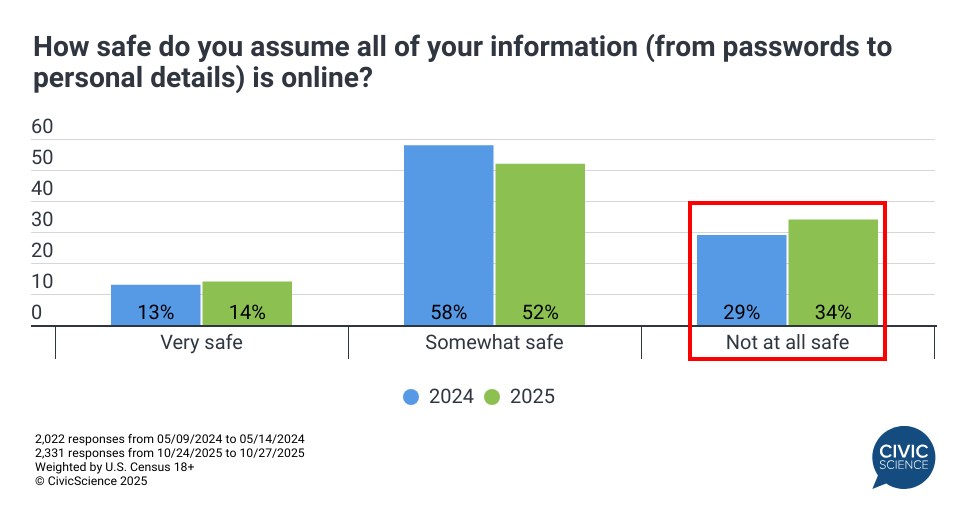
While the majority assume their online information is at least ‘somewhat’ safe, just 14% feel it is ‘very’ safe. Meanwhile, confidence in the safety of online data is falling, with the percentage of those who assume their online information is ‘not at all’ safe increasing by 17% from last year.
Answer our Poll: How generally concerned are you about cybersecurity threats?
Nearly Half of Americans Say Their Personal Data Has Been Compromised, Financial Data Leaks are the Top Concern
Why are so few Americans feeling secure about their online data? Data hacks aren’t helping: Fresh CivicScience data find that nearly half of U.S. adult respondents (46%) report that their personally identifiable information has been compromised through a major hack (excluding those unsure).
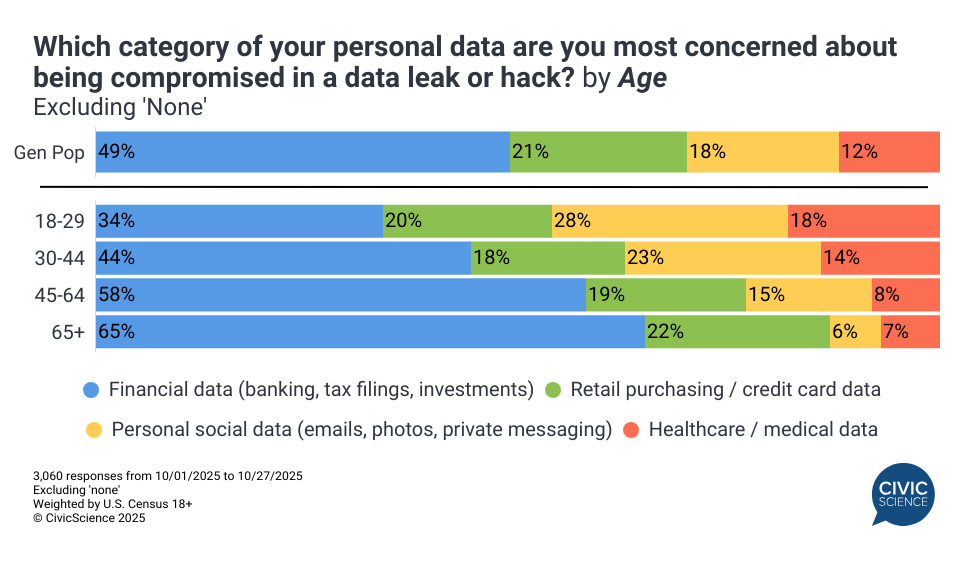
Speaking of data hacks, when asked what type of data consumers are most concerned about being compromised, financial data is the leading category (among those concerned). This outpaces other areas, such as retail purchasing or personal social data, by at least 29 percentage points.
Age also plays a key role in shaping these concerns. For example, Gen Z adults lead in being concerned about the potential compromise of both their social data and medical data. Those aged 65+, meanwhile, express the strongest concerns in retail and financial data.
Weigh In: How concerned are you about cybersecurity risks to government systems?
Trust Wavers Post Data Breach, Consumers Willing to Pay for Data Security
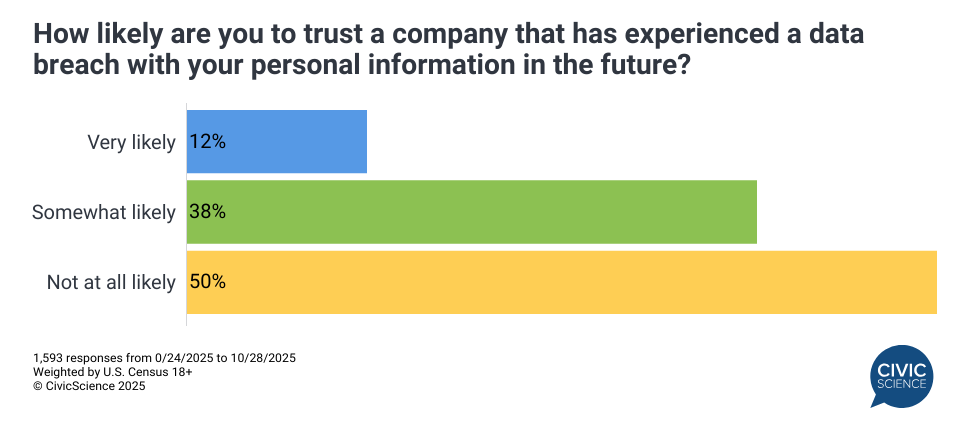
These concerns extend to brand trust. Half of respondents say they’re ‘not at all’ likely to trust a company after a data breach, highlighting the importance of proper data handling and transparency in maintaining long-term loyalty. With concerns over data leaks running high, 64% of consumers say they’d be at least ‘somewhat’ or ‘very’ willing to pay a premium for products or services from companies with stronger data protection.
Secure Data Streamlines Consumer Comfort
Cybersecurity concerns aren’t just a technical issue—they’re a behavioral one. Understanding how these anxieties impact consumer trust and spending is critical as tightening budgets drive consumers to favor brands they perceive as safer and more responsible with their data. With CivicScience’s consumer-reported intent data, brands can reach the right consumers, on the right channels, before they spend.