CivicScience has the world’s largest proprietary database of real-time declared intent, allowing brands to activate high-performing advertising that drives up to 80% better performance. See how our partners achieve superior marketing outcomes here.
GLP-1 medications have evolved far beyond a fleeting trend, moving toward widespread, everyday adoption across the American consumer landscape. With 22% of U.S. adults now using or considering these treatments specifically for weight loss, the market’s impact is rippling across every corner of the economy. The latest CivicScience GLP-1 Consumer Tracker identifies specific, actionable shifts in dining, retail, and lifestyle behaviors that are no longer just emerging but are likely here to stay. For brands looking to stay ahead of this volatility, these four takeaways offer a roadmap to navigating the GLP-1 era.
1. New Obstacles Emerge for GLP-1 Users, but Pill Options May Boost Usage
Although the tension between cost and insurance coverage remains the top reason former users stopped taking a GLP-1 for weight loss, that may not be the only obstacle for those looking to experience the benefits of the medication. In the last month, the percentage of those who said they stopped losing weight on the medication increased, as did the percentage of those who reported a shortage or difficulty accessing the medication.
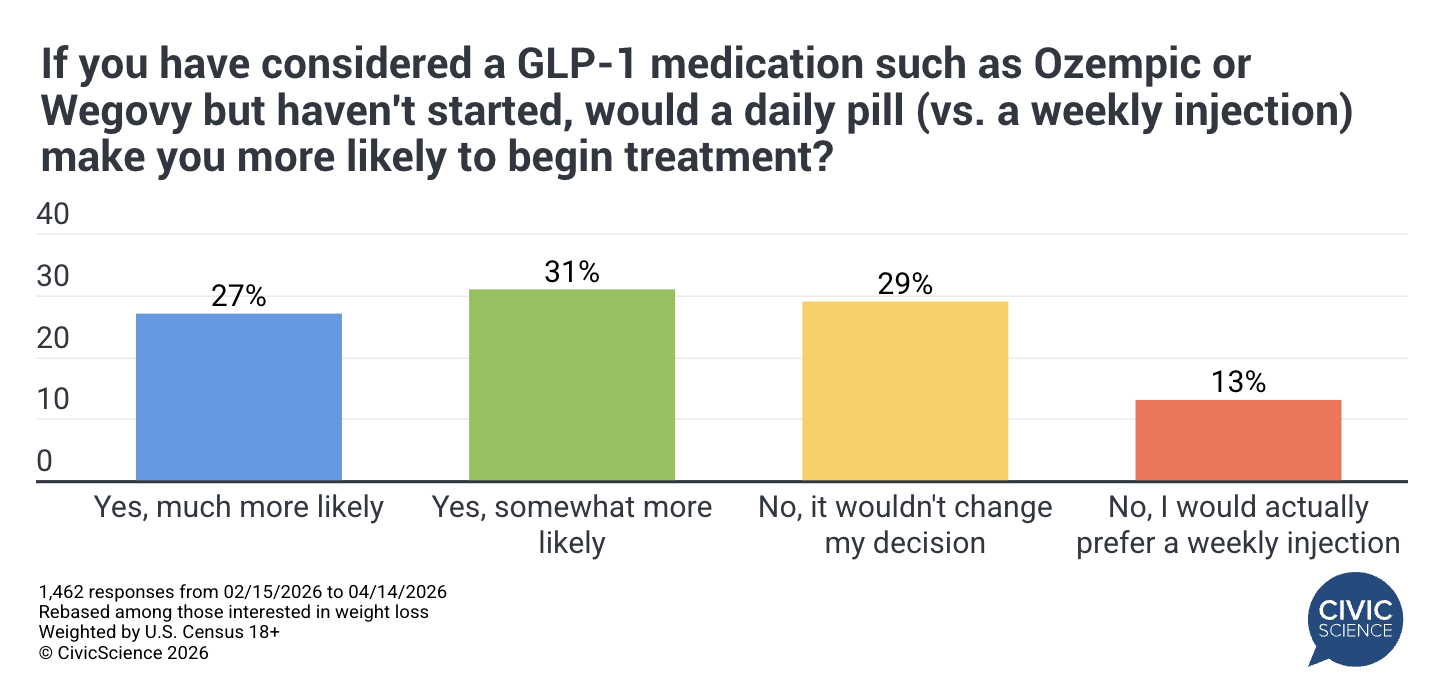
However, the format itself–a weekly injection–may also play a role, as nearly 6 in 10 consumers interested in weight loss drugs say the availability of a GLP-1 pill would make them more likely to begin treatment. Such an option was on display in Super Bowl LX, which may have contributed to this strong interest.
2. Dining Out Is About More Than Just the Food
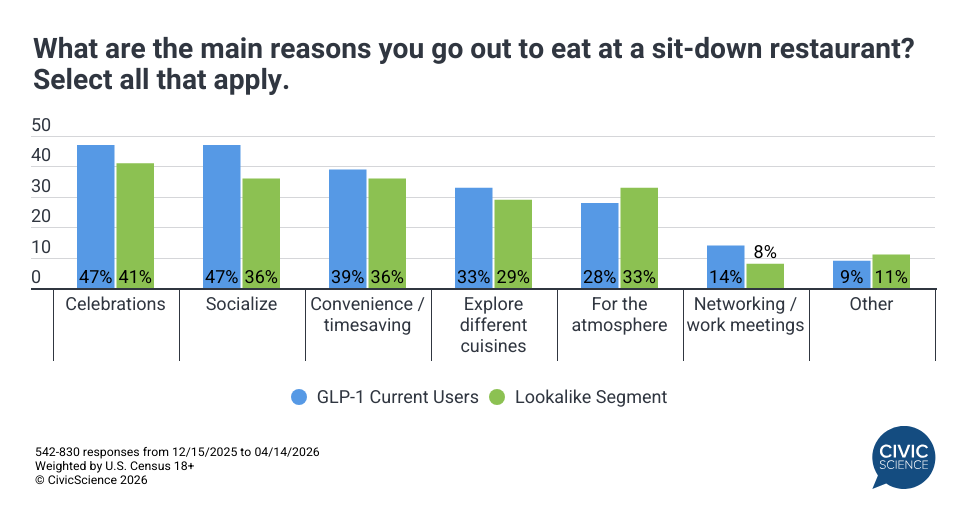
GLP-1 users are no strangers to eating out. Whether for celebrations or exploring different cuisines, these consumers enjoy a sit-down dining experience. However, among all reasons for dining out, those who use GLP-1 medications for weight loss are 11 percentage points more likely than lookalike respondents (defined as U.S. adults with the same age and gender distribution as GLP-1 users, who consider themselves overweight and are not currently using a GLP-1 medication) to go out to eat to socialize specifically, suggesting that users of the medication see the experience as one that isn’t just about the food.
3. GLP-1 Users Enjoy Solo Dining
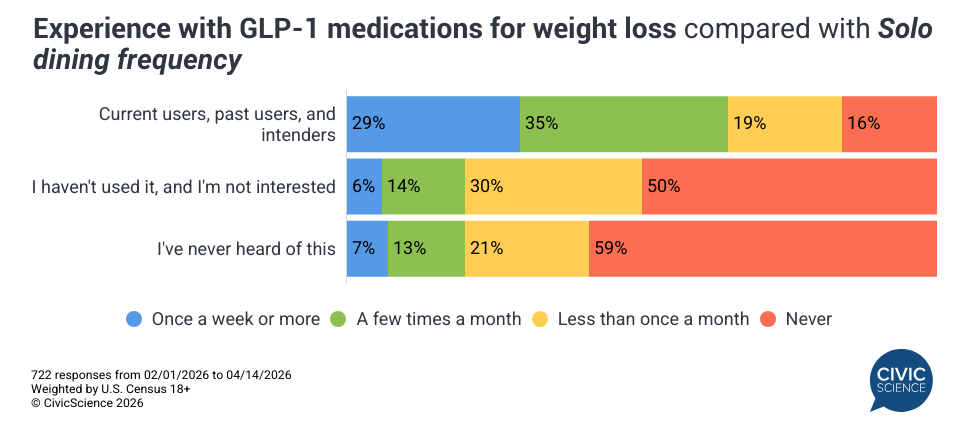
However, those with current, past, or intended experience using GLP-1 medications for weight loss are more than four times as likely as those who have never tried GLP-1s to say they dine in at restaurants by themselves at least weekly. So while some GLP-1 users see restaurants as an opportunity to socialize, others prefer to take themselves out for some peace and quiet.
4. GLP-1 Users Note Shifting Grocery Store Preferences
Grocery shopping is another one of the many activities that are evolving for GLP-1 users. The latest data show that one in four report having started shopping at a different grocery store since starting the medication. This marks the highest percentage since mid-November 2025.
The data from the CivicScience GLP-1 Consumer Tracker provides key insights into the impact these weight-loss medications are having on consumer behavior across a wide range of industries. For decision-makers looking to come out ahead in a volatile market, access to this data can be the difference between success and stagnation.