CivicScience has the world’s largest proprietary database of real-time declared intent, allowing brands to activate high-performing advertising that drives up to 80% better performance. See how our partners achieve superior marketing outcomes here.
Among yearly casual celebrations, April 20th—known as 4/20 Day—stands out for its counterculture origins. Celebrated as a day to both honor marijuana use and advocate for its legalization—particularly as current CivicScience data show that 66% of Americans 18+ support legalization (matching the percentage observed in 2025)—it also provides a timely opportunity to explore the latest consumer-declared data on cannabis use in the U.S. and how it influences intended spending across various aspects of consumers’ lives.
Weekly and Monthly Cannabis Use Increase, With Traditional Smoking Gaining Ground
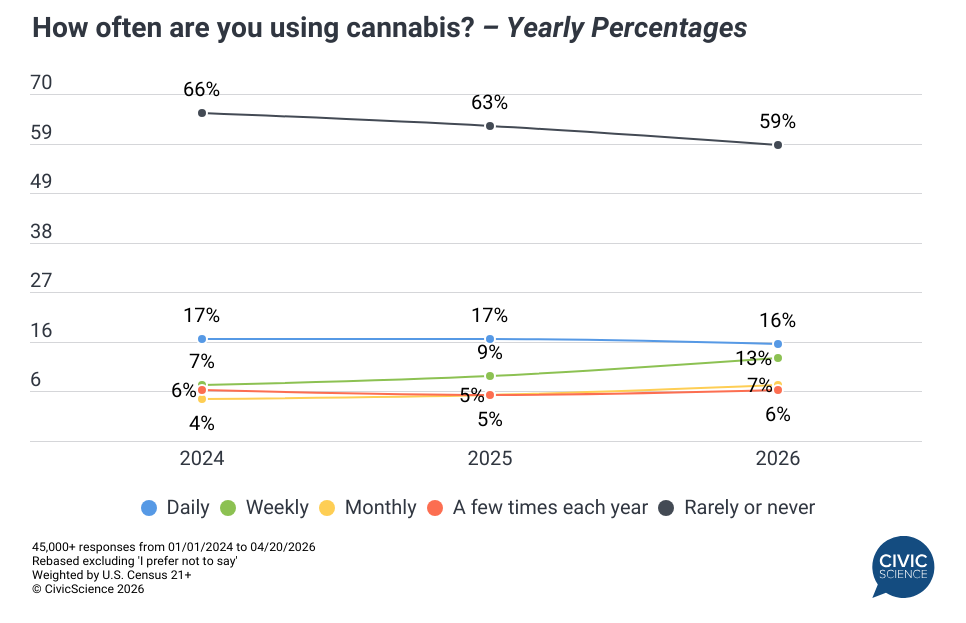
As the latest data show, 41% of U.S. adults 21+ now use cannabis for either medicinal or recreational purposes with at least some frequency throughout the year, marking an increase of four points from 37% in 2025 (excluding those who prefer not to say). While daily usage has remained fairly consistent at around 16%, the real growth is happening among more casual users; those who consume cannabis weekly saw a significant four-point jump year-over-year (to 13%), while monthly users also increased by two points. This shift indicates that cannabis is becoming a more frequent fixture in the routines of occasional consumers, even as the core daily-user segment stays level.
Traditional smoking methods remain the most popular form of cannabis consumption (35%), followed by edibles (28%), with the percentage turning to vaporizers falling to third (24%) after a five-point drop from 2025. Additionally, in the last year, those who consume cannabis in other forms, such as tinctures and balms, have increased slightly, rising from 11% in 2025 to 13% so far this year.
THC Beverage Consumption Doubles as Americans Look for Alcohol Replacements
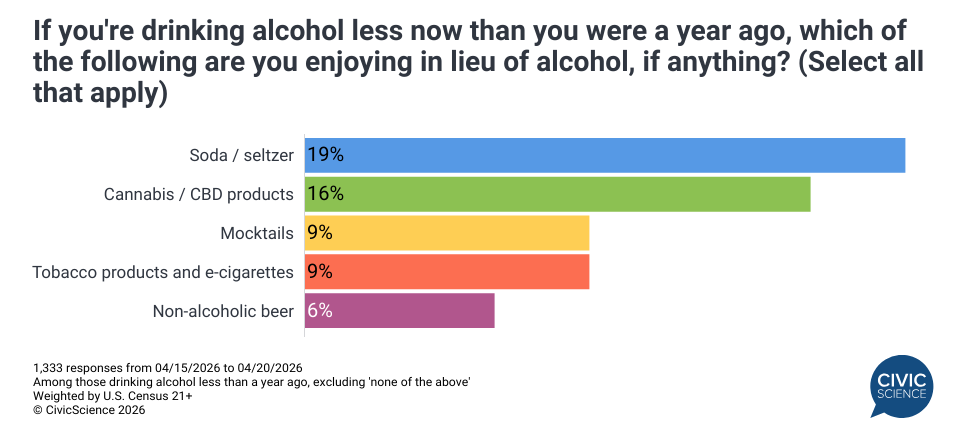
A key driver behind the rise of new consumption methods is the shifting relationship between Americans and alcohol. Among those who are drinking less alcohol now than they were a year ago, soda and seltzer are the top choices in lieu of a drink (19%), followed closely by cannabis and CBD products (16%). Notably, cannabis use as an alternative outpaces other growing categories such as mocktails (9%) and non-alcoholic beer (6%).
This willingness to swap alcohol for cannabis has created a natural opening for the growth of THC-infused beverages. Among those aware of these products, frequent consumption has doubled from 6% in 2025 to 12% this year, while occasional consumption has increased from 10% to 14%. As consumers increasingly look for social alternatives to traditional drinking that still offer a “sippable” experience, the doubling of frequent beverage use suggests that THC drinks are successfully moving from a novelty item to a staple of the social ritual.
The Well-Being Divide Between Cannabis Users and Non-Users
Beyond serving as a potential substitute for alcohol, cannabis remains a critical tool for navigating well-being in an increasingly stressful world. While overall American well-being has seen a slight upward trend of late, the data reveal a stark contrast for cannabis users.
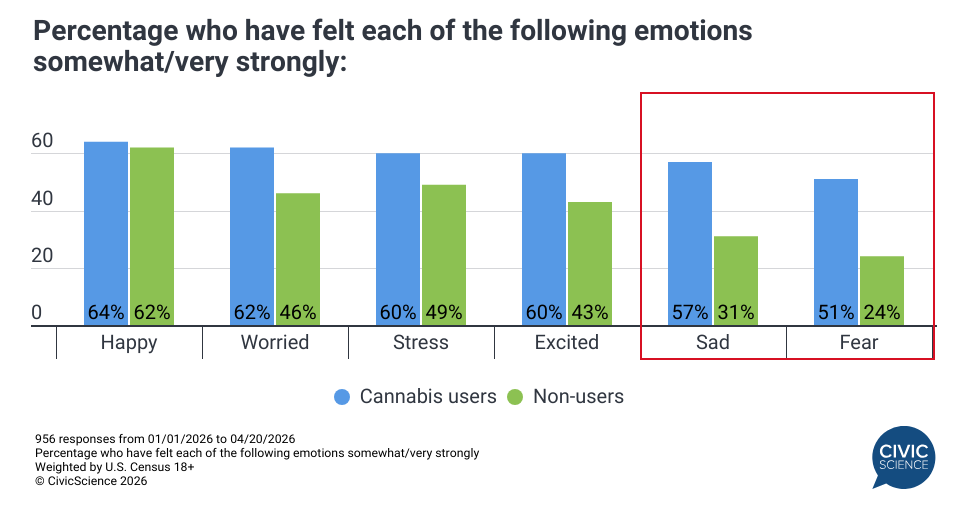
Cannabis users are more likely to report stronger emotions overall—both positive and negative—but they far outpace non-users in feelings of sadness and fear. In fact, users are more than 25 percentage points more likely than non-users to say they experience these emotions to some extent. While cannabis users are also the most likely to report happiness, the gap between users and non-users is notably smaller. These insights suggest that although the general population may be reaching a degree of emotional equilibrium as the weather improves, cannabis users appear to be managing a comparatively heavier emotional load.
The Realities of Global Events Hit Cannabis Users Harder, Too
Beyond the elements of relaxation and stress relief that cannabis can bring, users also demonstrate unique perspectives on the broader economy. For instance, in terms of the impact of trade and tariff policies on household expenses, those who use cannabis are nine percentage points more likely than non-users to be concerned. Additionally, cannabis users are six percentage points more likely than non-users to be at least ‘somewhat’ concerned about gas and energy prices, echoing the above data on worry and underscoring why Americans may be turning to cannabis on a more frequent basis.
While the growth in casual usage points to a wider social acceptance, the underlying data reveal that cannabis has become a vital coping mechanism for those hit hardest by modern life. The significant “worry gap” and broader economic concerns among users suggest that cannabis is far from a source for recreation, but rather a necessary buffer against the compounding emotional and economic stressors of 2026.