CivicScience has the world’s largest proprietary database of real-time declared intent, allowing brands to activate high-performing advertising that drives up to 80% better performance. See how our partners achieve superior marketing outcomes here.
We are only a little more than two months removed from Super Bowl LX, but the seeds for capturing a Super Bowl LXI title in 2027 could be sown next week at the NFL Draft in Pittsburgh, PA. However, the three-day NFL Draft is much more of an experience than just teams filling out their rosters, and a notable share of Americans say they’ll be tuning in as a result this year.
Understanding this audience requires moving beyond assumptions and third-party inferences. Using consumer-declared data, CivicScience identifies who is watching, why, and where they are engaging with draft content.
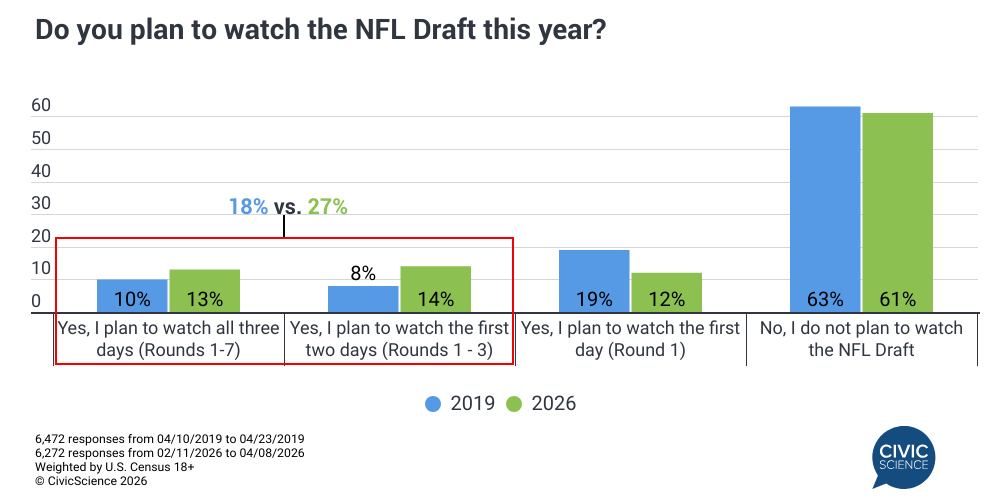
New CivicScience data show 39% of U.S. adults plan to watch at least some of the NFL Draft this year. While this percentage is only up slightly from pre-pandemic levels, Americans are notably much more likely to watch at least the first two days of the draft compared to the 2019 NFL draft: 27% now say they will watch at least the first two days of the draft, up from 18% back in 2019. This percentage jumps significantly among Hispanic Americans (34%), Black Americans (39%), and Gen Z adults aged 18-29 (45%).
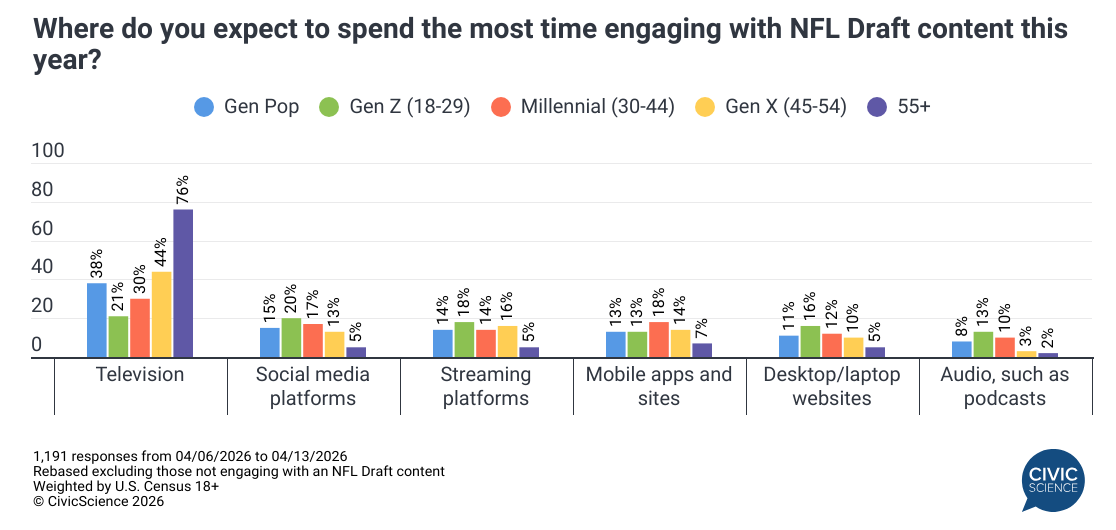
As CivicScience has recently highlighted, “watching” doesn’t mean the same thing to everyone – this is also ringing true for NFL Draft content. While TV will be the leading medium for consuming draft content, usage of the television screen still varies along expected generational lines, with those 55+ leading the way. Fragmentation abounds beyond TV, notably led by social media, which narrowly outpaces streaming as the second-most common place to consume and share draft content. When it comes to mobile app and site content (non-social media), Millennials aged 30-44 lead the way, while Gen Z sets the pace in all other non-TV content types, namely social media.
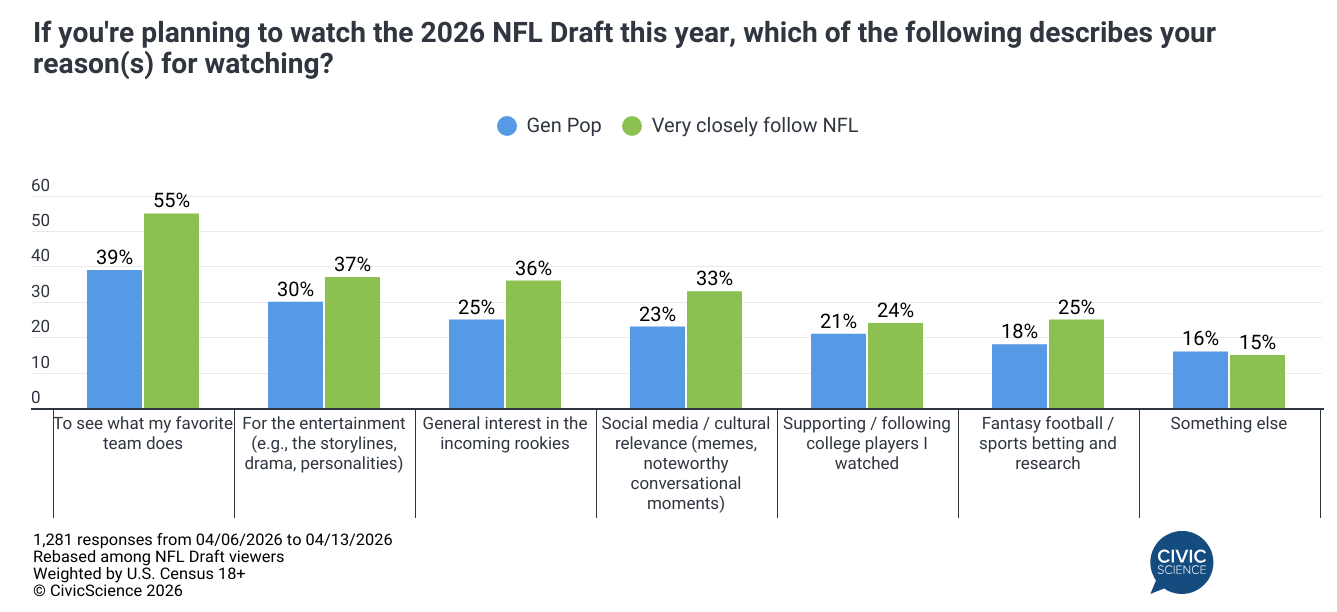
Speaking of fragmentation, reasons for watching the draft extend well beyond team performance. While the sport-driven motivations are well represented, entertainment and social media relevance each rank high among an audience with a broader range of investment than pure fandom. That’s true even among those who very closely follow the NFL, among whom 37% cite entertainment, and 33% cite social media and cultural relevance, suggesting the draft’s cultural pull isn’t just a casual-fan phenomenon.
The NFL Draft has transformed into a multifaceted cultural event where social media relevance and entertainment value now rival traditional fandom. These shifting dynamics underscore the importance of declared data in capturing how different demographics truly engage with the sport beyond the TV screen.