A version of this article originally appeared in ROAR Forward as part of a collaboration with their quarterly ROAR Report. CivicScience has the world’s largest proprietary database of real-time declared intent, allowing brands to activate high-performing advertising that drives up to 80% better performance. See how our partners achieve superior marketing outcomes here.
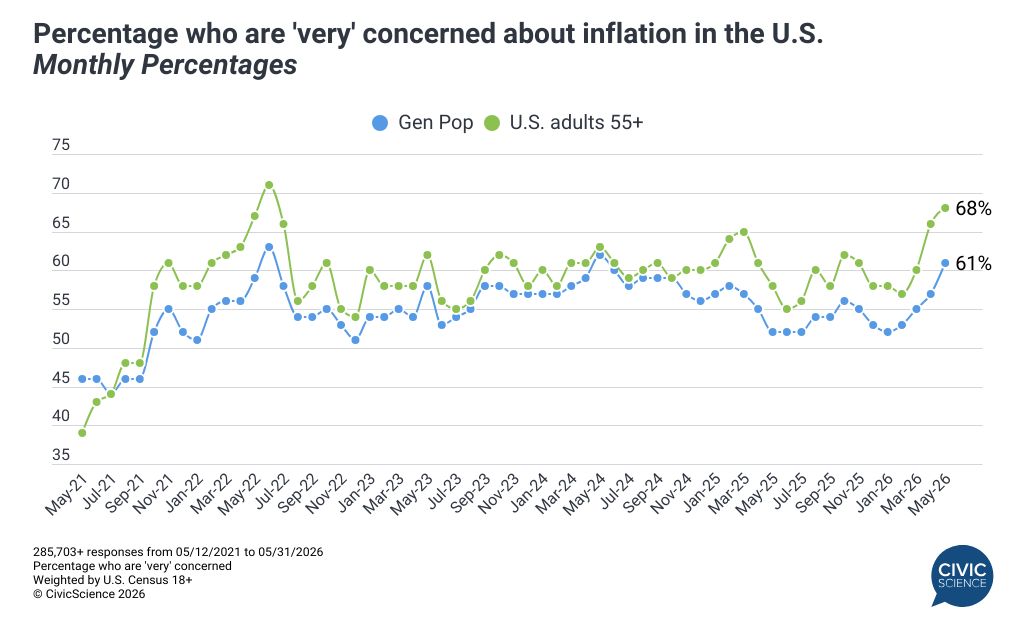
As CivicScience data has shown lately, elevated gas prices have been a renewed source of stress for the average American. But it’s not just gas prices that are causing uneasiness among Americans – 61% of U.S. adults tell CivicScience they are ‘very’ concerned about inflation overall. This severe concern is even more pronounced among Americans aged 55 and older, with two-thirds reporting severe concern through the end of May. While this heightened anxiety has fluctuated over the past several years, the gap between older Americans and the broader public has persisted, suggesting that this demographic is absorbing the current economic climate with particular intensity.
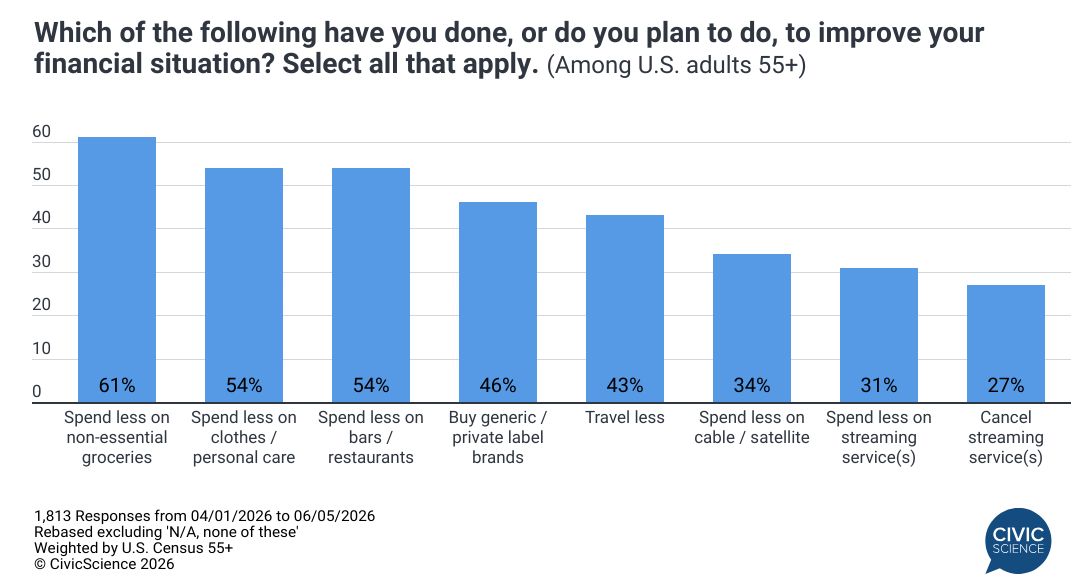
That heightened concern is translating into tangible changes in household spending. When asked about the actions they have taken or plan to take to improve their financial situation, spending less on non-essential groceries, restaurant dining, and clothes and personal care lead as the top three areas Americans 55+ prioritize for spending cuts in Q2 2026. Generic and private-label brands are poised for higher demand as well, with nearly half reporting they’re opting for these options at the store. Streaming and cable fall toward the lower-priority areas for reductions, though even those figures reflect a broad appetite for trimming costs where possible.
Personal Financial Health Outlook Trends Up Slightly, Led By Resurgence in Savings Optimism
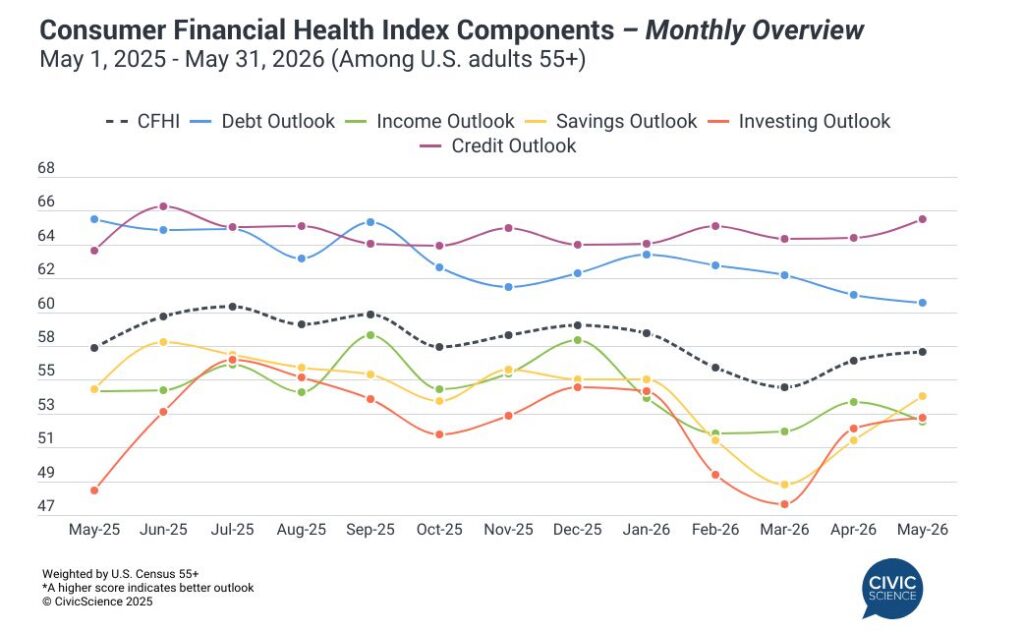
A look at the CivicScience Consumer Financial Health Index (CFHI), which measures the six-month outlook for personal financial health, reveals a mixed, but telling story. After a dip at the beginning of the war with Iran in late February, Americans 55+ are in the midst of a two-month upswing.
Debt outlook, routinely among the leading components of the CFHI in terms of positive outlook among Americans 55+, is on a slow but steady downward trend that’s been ongoing since the start of the year. After a bump in April, income outlook retreated once again in May.
One of the most dynamic movements in financial outlook YTD so far is how the 55 and older American views their savings outlook. After a drastic fall of 6.56 points early in the year, likely exasperated by geopolitics and inflation, optimism for savings is on a dramatic upswing and is only 1.13 points away from its 2026 high point in January.
As this sentiment around savings evolves, some older Americans are considering changing who handles their banking. Recent CivicScience data show 15% of U.S. adults 55 and over are at least ‘somewhat’ likely to open a new bank account at a physical branch or with an online provider this year. But that’s not all: when asked about their likelihood of switching banks within the next three months, 12% reported being at least somewhat likely to do so. While these actions aren’t being undertaken by an overwhelming majority, they are important trends happening beneath the surface as economic volatility persists.
Where 55+ Still Plans to Spend
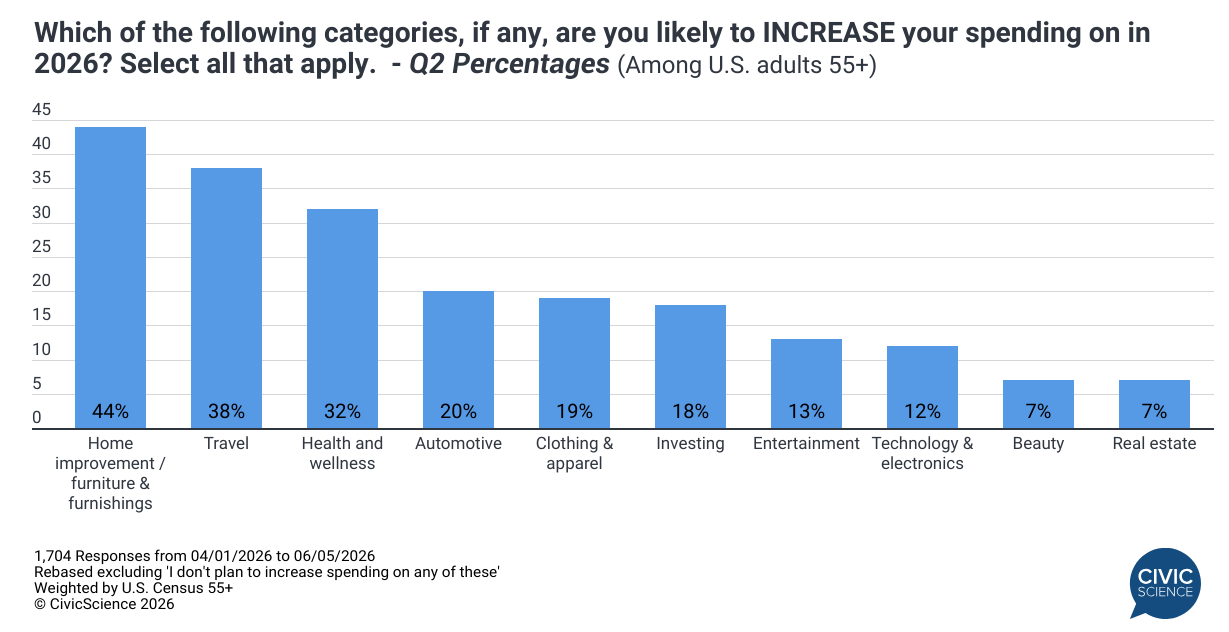
Despite inflationary pressures, cutbacks, and a declining debt outlook, well-being among older Americans spiked significantly in May, with summer travel plans on the horizon. This typically bodes well for near-term spending, as positive well-being tends to correlate with higher spending. A look at spending priorities for 2026 in Q2 reveals that home improvement, travel, and health and wellness are the key areas of emphasis for the 55+ crowd in the months ahead. It’s also worth noting that the majority (52%) of those 55 and older plan to increase spending in at least one of the categories studied in the chart below.
Summer Travel: Purposeful and People-Focused
Speaking of travel, specifically summer travel, CivicScience data show that 30% of U.S. adults 55+ say they plan to travel this summer, with another 13% not yet sure of their plans. Notably, for brands and advertisers in the travel industry, 54% of Americans 55 and older who plan to travel this summer still need to complete at least some of their travel bookings, leaving a window for persuasion.
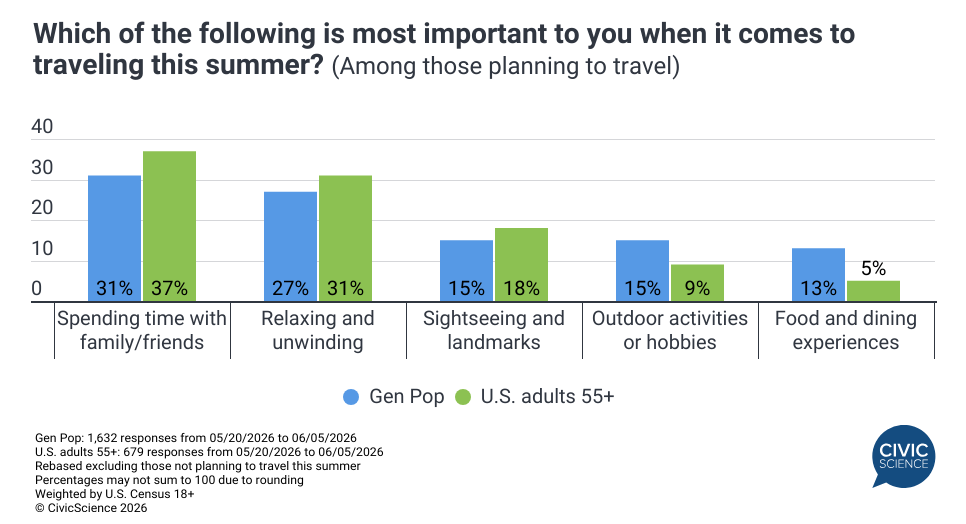
When looking at what drives these summer plans, older Americans are more motivated by relational and restorative travel than by experiential ones. Spending time with family and friends ranks as the top priority for 37% of adults aged 55+, outstripping the general population by six points. Relaxing and unwinding is a close second at 31%, also pacing ahead of the general public (27%). Conversely, the 55+ crowd shows far less appetite for active or consumer-heavy travel, with outdoor activities and food experiences trailing significantly behind the average American traveler.
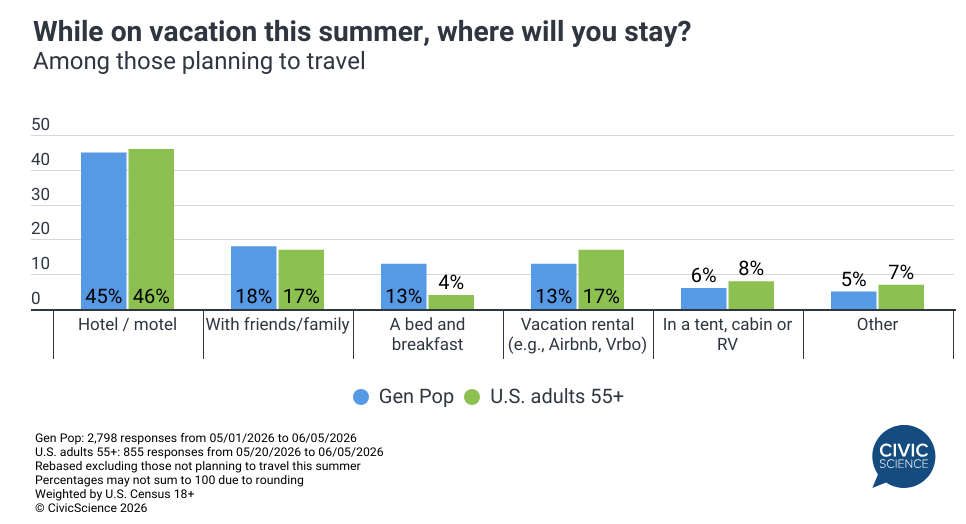
Hotels and motels are the clear top choice for travelers aged 55+, aligning closely with general population trends, followed by staying with friends and family. When opting for alternative lodging, older adults show a distinct preference for vacation rentals such as Airbnb and Vrbo, while traditional bed-and-breakfasts see minimal interest from this demographic this summer.
Spending cuts and savings optimism may seem like contradictory signals, but for Americans 55 and older, they reflect two sides of the same impulse: worried, but determined to stay in control of their financial lives. Travel, home improvement, and well-being remain spending priorities, not just in spite of economic pressure but because this group is making deliberate trade-offs. That combination of caution and intention is worth watching closely as the second half of the year approaches.