CivicScience engages directly with consumers, collecting over one million survey responses daily, to turn real-time insights into high-performing advertising campaigns. See how leading brands use CivicScience to drive campaign performance here.
The alcohol industry continues to face significant turbulence as Americans are increasingly open to a sober lifestyle and participate in events like Sober October. That said, one alcoholic beverage category in particular appears well-positioned with strong consumer purchasing intent in the coming weeks: Wine.
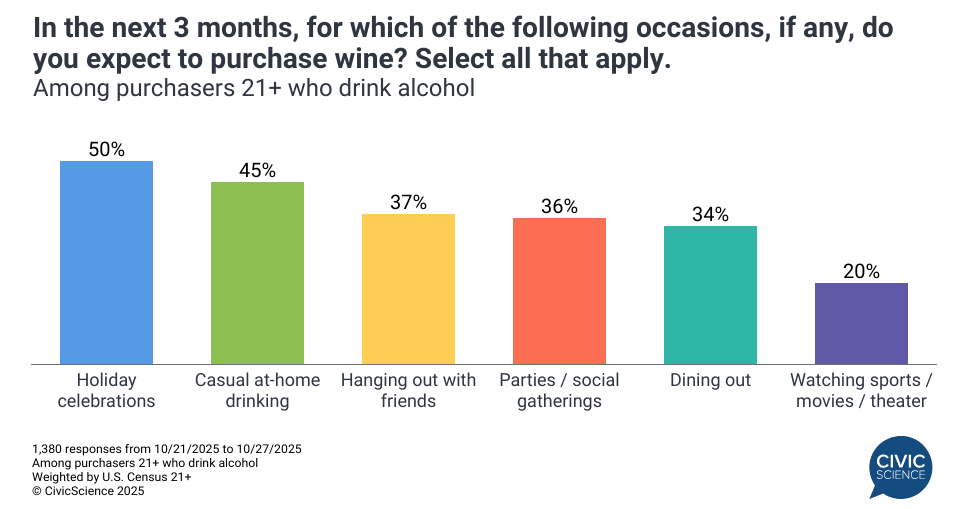
Real-time survey data finds 72% of U.S. adults 21+ who drink alcohol say they intend to purchase wine in the next three months. Declared intent among these consumers suggests wine could feature prominently in the upcoming holiday season. Near-term wine buyers also lean toward wine consumption for casual, at-home drinking. Hanging out with friends, something an additional survey found 52% of these upcoming wine buyers report they do in person at least weekly, is also a key motivator for near-term wine demand.
Weigh In: What is your favorite wine-making region of the world?
What Near-Term Wine Purchase Intenders Say About Their Wine Preferences
Diving deeper into the first-party audience insights available through CivicScience’s millions of daily responses, consumers planning to buy wine within the next 90 days also reveal a few characteristics that will shape intent:
- Wine preferences: Upcoming wine buyers are most likely to say they prefer to drink red wines, outpacing other types of wine by at least 16 percentage points. Additionally, in a separate survey specifically about natural wine, 17% of near-term wine buyers say they’ve ‘tried and like it’, while another 20% say they haven’t tried a natural wine, but intend to try one.
- Holiday wine serving: When asked what they are most likely to serve with holiday meals this year, red and white wines are only separated by five points (35% vs. 30%, respectively), indicating holiday occasions will be more balanced than their preferences indicate. Sparkling wine, meanwhile, is a distant third in both preference and in holiday serving plans.
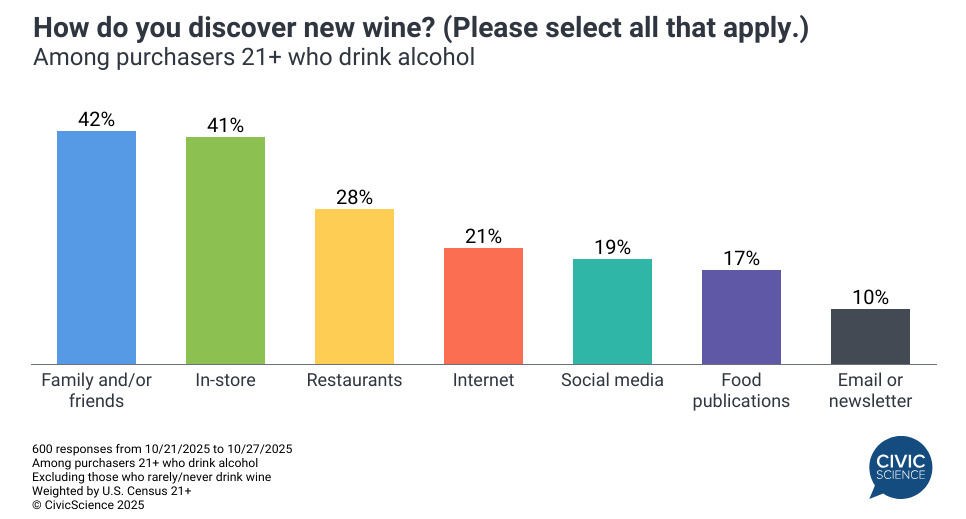
- Discovering new wine: Near-term wine buyers are notably adventurous in terms of trying new food and drinks, with a majority saying they ‘almost always’ or ‘usually’ keep up with new food and beverage trends. When specifically asked how they discover new wines, word of mouth from friends and family, in-store browsing, and restaurant offerings were most common. Additionally, beyond price, flavor profile descriptions are the leading driver for these consumers when they’re choosing a new wine to purchase, followed by an interesting name or label—each outpacing other factors (such as brand and age of the wine) by at least five points.
Wine Buyers Are Also…
Spend-ready: More than three-quarters of near-term wine buyers say their spending over the past week is the same (41%) or higher than usual (37%). This looks to extend to holiday shopping as more than one-third will spend ‘more’ on holiday this year (among holiday shoppers), highlighting their elevated buying power heading into the high-volume retail buying season.
Planning travel: Cross-promotions related to travel appear wise, as more than 8 in 10 have travel planned in the next six months. Holiday travel intent also appears strong among these consumers, as 44% are planning holiday-related trips this year.
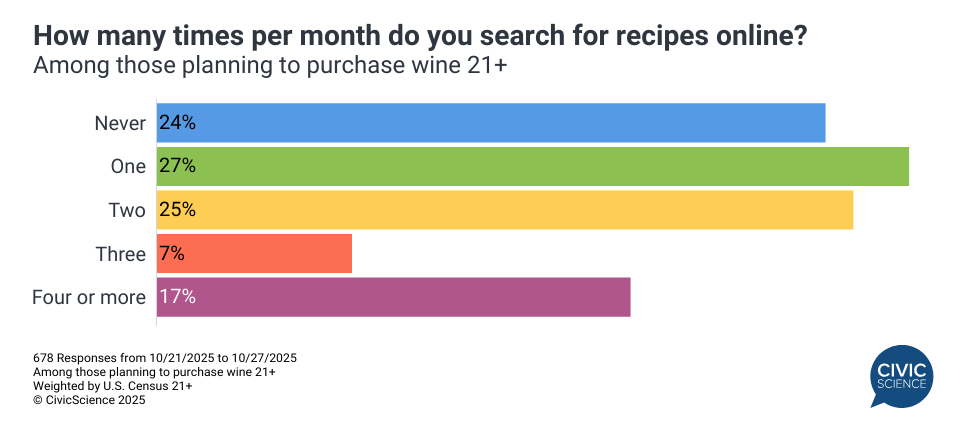
Cooking content and recipes: One in five say they watch 5+ hours of travel/home/cooking content on TV per week. But they’re also actively seeking recipes themselves online–49% search for recipes online multiple times per month, including 24% who do this 3+ times per month.
Take the Poll: What do you typically do with wine that you discover you don’t like once you’ve opened it?
Over the next 90 days, wine buyers show readiness to spend, interest in trying new things, and engagement in social and seasonal experiences. These declared behaviors highlight opportunities for brands to align with the consumers leading wine demand this holiday season.
Create dynamic audience segments
Build and monitor segments grounded in what consumers report themselves. With CivicScience’s consumer-reported intent data, brands can find and engage the right consumers at the right time, on the right channels.