Maybe a recession wouldn’t be such a bad thing.
I say that against my own selfish interests. Whether it would be good or bad for our business is a coin flip. Personally, Tara and I have a non-trivial amount of money tied up in the markets and a home we may want to sell in the next five or so years. A sustained economic downturn would not bode well for those things.
But that’s also kind of my point.
An economist friend of mine recently told me that he believes the U.S. population is split – financially speaking –into two diametric cohorts: people who owned a home before COVID and people who didn’t. You could nitpick over the timeline (the housing barriers started a few years prior to the pandemic) or the obtuseness (not everyone who owns a home right now is flourishing or vice versa) of that statement, but it’s generally spot on.
The growing gap between the haves and have-nots in our country is arguably the biggest secular crisis we face. It’s not only me saying that, either. Even in our survey data, as concerns over racial and gender inequality have fallen broadly out of vogue, concerns over income inequality keep climbing – across political lines.
While so many of us have benefited from a decade-and-a-half of almost-uninterrupted U.S. economic growth, rising home values, historically low interest rates (until a couple of years ago), and a booming stock market, it has conversely priced out huge swaths of the population from the same financial opportunity. As wealthy homeowners and investors dine gleefully in their Michelin-starred restaurant, the others – especially Millennials and older Gen Zs – are shivering on the sidewalk, face pressed against the window.
Meanwhile, as the marvel of resilient consumer spending keeps markets afloat, an eventual reckoning is inevitable. Younger consumers, still in a post-pandemic YOLO emotional state, are racking up unsustainable credit card and BNPL bills, while foregoing any kind of appreciable savings. They’re paying rent instead of mortgages (notwithstanding the alarming number still living with their parents), which simply transfers more wealth from the bottom to the top.
Since our Baby Boomer political leaders appear to completely lack the morals, wisdom, selflessness, or fortitude to do anything but exacerbate this economic chasm, we may have no choice but to let the market correct itself. It likely won’t happen without pain and extraordinary collateral damage for people my age, but it might be the only way to the other side.
One way or another, it looks like Gen X will have to be the martyrs.
Because of course we do.
Here’s what we’re seeing:
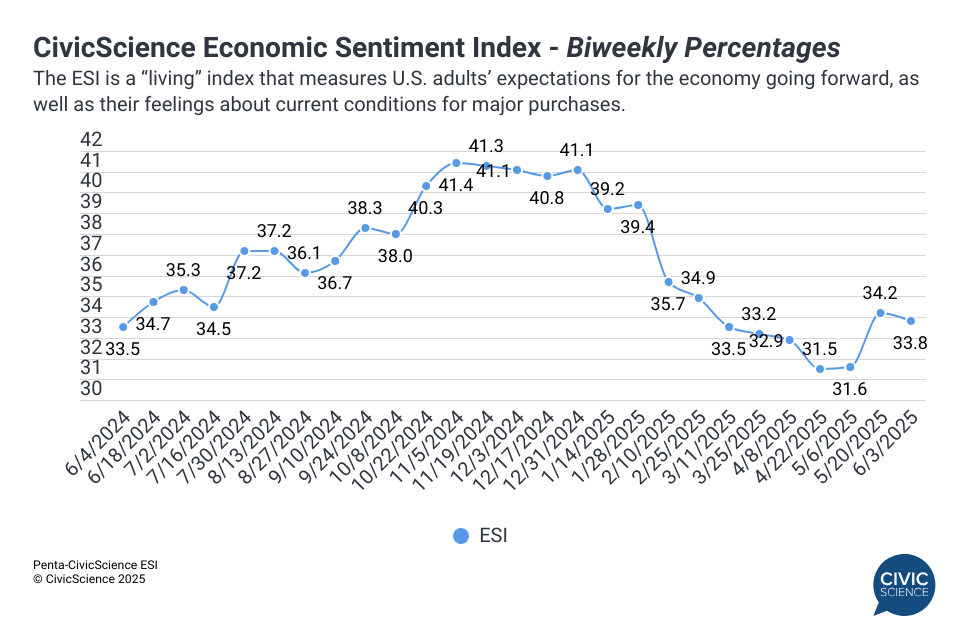
Consumer confidence could not sustain its ascent. Hopes of an enduring rebound were dashed this week, as our Economic Sentiment Index fell slightly on the heels of a big upward surge in the last reading. The biggest drag on the index came from American workers’ particularly sour outlook for the job market, as hiring slowed to a two-year low in May. On the flip side, people are feeling a bit better about their current personal financial situation, perhaps thanks to tax refund checks arriving, continued delays on tariff decisions, or steps they’ve taken to manage spending. It’s hard to tell.
Two-thirds of Gen Zs are delaying one or more life events because of financial worry. Apropos of today’s intro, which I wrote before knowing this study was being published, we’re seeing growing trepidation among America’s youngest adults when it comes to big life changes. Whether it’s moving out of their parents’ homes, getting married, or having children, Gen Z is reporting significant and growing intent to postpone those decisions. Notably (and also on trend with my prologue), they aren’t, on the other hand, delaying travel plans, splurging on themselves, or crypto investments (ie, gambling). We’ll be studying the long-term implications of these things for generations.

eBay is still king, but its kingdom is shrinking. While our typical 3 Things to Know covers a hodge-podge of random topics, this week’s installment covered a triad of trends related to the second-hand retail market. For starters, interest in second-hand luxury items is rising among higher-income consumers (while falling among lower-income consumers), which makes perfect sense. Meanwhile, nearly half of U.S. adults (and both my kids) report some likelihood of shopping for second-hand goods in the next month, whether it be at a thrift store, antique shop, yard sale, or online. Lastly, as the headline suggests, eBay continues to dominate second-hand e-comm, but they’re steadily losing share to an array of upstarts.

Our collective emotional well-being improved a smidge in May, but the gap between straight and LGBTQIA+ Americans is still a problem. The latest reading of our Emotional Well-Being Index – for all U.S. adults – showed its second consecutive monthly gain, albeit far below its level from this time last year. As Pride Month kicks off, we took a deeper look at well-being among America’s LGBTQIA+ community, only to find that a continued (12+-point) deficit persists from those who don’t identify as LGBTQIA+. What’s also interesting (and sad) is that, historically, older LGBTQIA+ folks have reported higher states of well-being – at least until late Q3 of last year. Now they’re on par with other age groups.

The good news is that the thing your dad most wants for Father’s Day doesn’t cost any money. For the first time (I think) ever, I’ll be separated from my family on Father’s Day, as I travel to Cannes for a week of “work.” That leaves Tara and the kids off the hook, as they travel Europe without me, raising the likelihood they won’t even remember it. Anyway, as you might expect, America’s daughters, sons, and spouses are planning to spend less money on gifts this year than they did last year. That’s okay, because the majority of dads simply want to spend time with their family (watching the U.S. Open, probably) or doing something special for/by themselves (watching or attending the U.S. Open, probably). We’re simple creatures, it turns out.

More awesomeness from the InsightStore™:
- How tariff fears (and realities) are driving changes in appliance purchases, including a jump in refurbished and second-hand replacements.
The most popular questions this week:
What’s your favorite summer food?
Do you typically mow your own lawn or hire someone to do it?
Would you say you’re someone with a ‘finger on the pulse’ of the entertainment industry?
How often do you send drunk texts?
Do you think financial literacy is an important skill for high school students to learn?
How likely is it that you will take a vacation in the next 12 months?
Answer Key: Barbecue; We pay someone for the grass, I do the trimming; I thought so until I sat next to some super-famous YouTube star on the plane the other day and had no idea; Never on purpose; Extremely important; 100% likely that I’ll be taking a vacation on Monday.
And on that note, don’t expect to hear from me next week. I’ll be in Paris with the girls. My next dispatch will be from Cannes.
Hoping you’re well.