Trying to predict the future is a fool’s errand.
Yes, I frequently brag about our predictive abilities. It’s usually tongue-in-cheek. Truth is, our superpower isn’t about soothsaying. It’s about spotting trends before most people do, trends that have a certain velocity toward a highly likely outcome.
Most often, our predictions are directional, rather than binary — like, say, sports betting or calling super close elections. You could get rich picking sports games against the spread by being right barely more than half the time. You could become a famous political pundit for calling razor-thin elections seven times out of ten.
Don’t get me started on the recession that’s been a quarter away for the past six years. We’ve gotten that wrong here, too.
The AI prognosticators are now in the same trap. First, AI’s future likely isn’t binary — either creating a mass extinction event or Shangri-La. Those predictions simply grab headlines and mainstage speaking slots. The spectrum of unpredictable outcomes is miles wide.
Even AI (as smart as it is) can’t foretell its own future. I recently asked Claude, Gemini, and ChatGPT the following question: “If left unchecked, does AI pose an existential threat to humanity?” I got three different answers.
The first word of ChatGPT’s response was “Yes,” before offering all kinds of points to hedge its position. Gemini didn’t really answer, instead regurgitating what were effectively search results of all the arguments for and against it. Claude gave the most measured reply, though it went so far as to say: “I don’t think doom is the default outcome.”
If all-knowing AI can’t answer the question, how are we lowly humans supposed to do it?
The short answer is: we can’t. As with any prediction where the future is so murky, all we can do is plan for the contingencies. Leaving AI completely unregulated, given the non-zero existential risks, is obviously stupid. Overly throttling it during what amounts to a global arms race is also stupid. The solution is one of balance, a virtue in meek supply in our current socio-cultural landscape.
Sadly and probably inevitably, the whole debate over AI has fallen into the pit of tribal politics, a place where compromise and nuance disappeared a decade ago. We’re arguing over binary solutions to a non-binary problem. We’re dismissing experts when they break from our tribe’s adopted position, blaming biases and ulterior motives. The policy pendulum will swing violently from one side to the other, every time the parties in power flip-flop. It’s another sequel to a mind-numbing, formulaic movie.
I don’t know how we break the cycle this time. But, if we don’t, something bad will do it for us.
That’s one thing I’m willing to predict.
Here’s what we’re seeing:
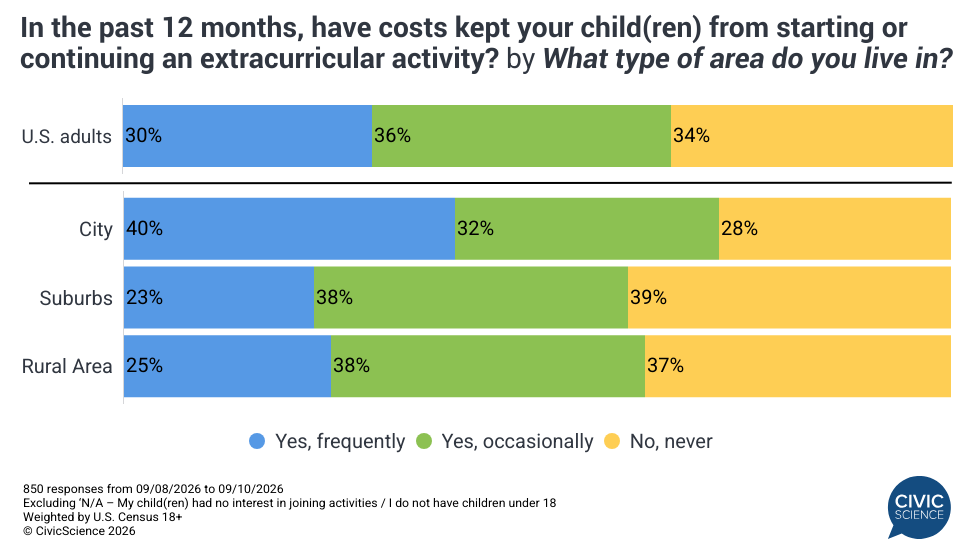
The growing wealth gap in our country — and the skyrocketing costs of youth sports and extracurricular activities — could have long-term implications. In our 3 Things to Know this week, we found that two-thirds of U.S. parents reported keeping their kids from starting or continuing an extracurricular activity due to costs in the past 12 months. There are notable regional differences, with urban families cutting back the most. We also looked at the growing levels of concern in America over how we care for our active military and veterans — 80% of respondents are unhappy about it. Lastly, we examined how our collective trust in local news extends to weather coverage.
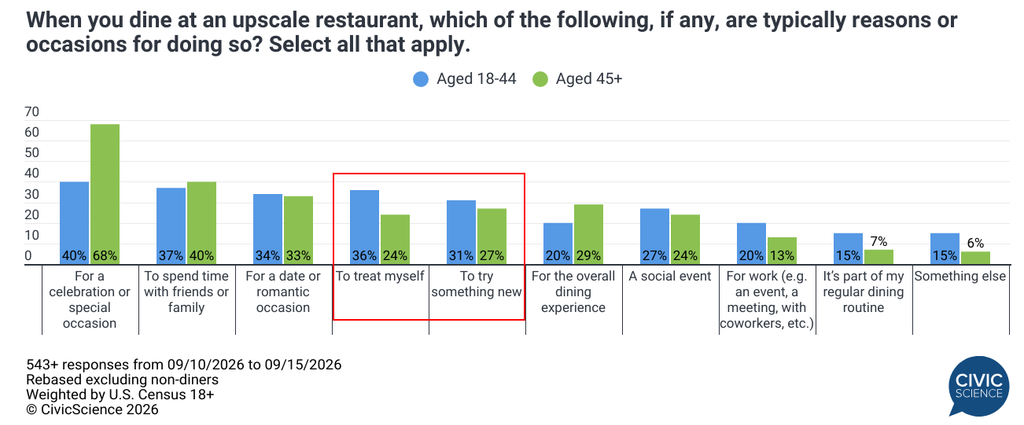
Upscale dining has completely bucked economic logic. I’m old enough to remember when things like high gas prices, inflation, and tenuous macroeconomic circumstances wreaked havoc on fine dining establishments. Those days seem to be over, for now, as consumers increasingly treat posh restaurants as a lifestyle fundamental, more so than a luxury. Not only has the percentage of Americans who report dining at upscale restaurants at least a couple times a month climbed steadily since the end of the pandemic, it now sits at the highest level we’ve seen — nearly three times higher than pre-pandemic levels. While certainly the T. Rex (not K-shaped) economy explains a lot of it, even younger consumers are prioritizing fancy dining (at the expense of spending in other categories) as a means of self-care.
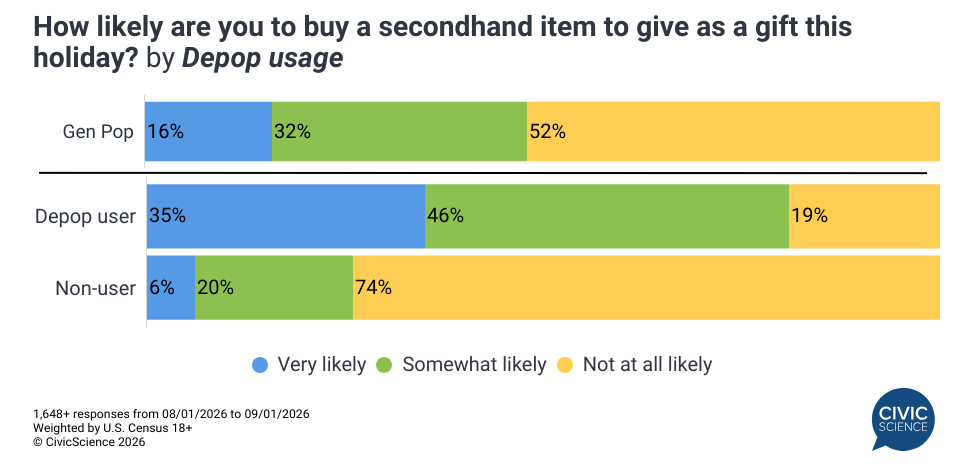
Perhaps to offset those hefty upscale restaurant checks, secondhand clothing retailers keep gaining momentum. Following its recent acquisition by eBay, we took a closer look at the impressive growth of the secondhand apparel website, Depop, where nearly one in four Americans report browsing at least once a month. Usage is correlated with income, but not nearly as much as you might suspect — many secondhand apparel buyers cite eco-friendly reasons for shopping. We should expect secondhand gifts to again play a role in the upcoming holiday retail season.
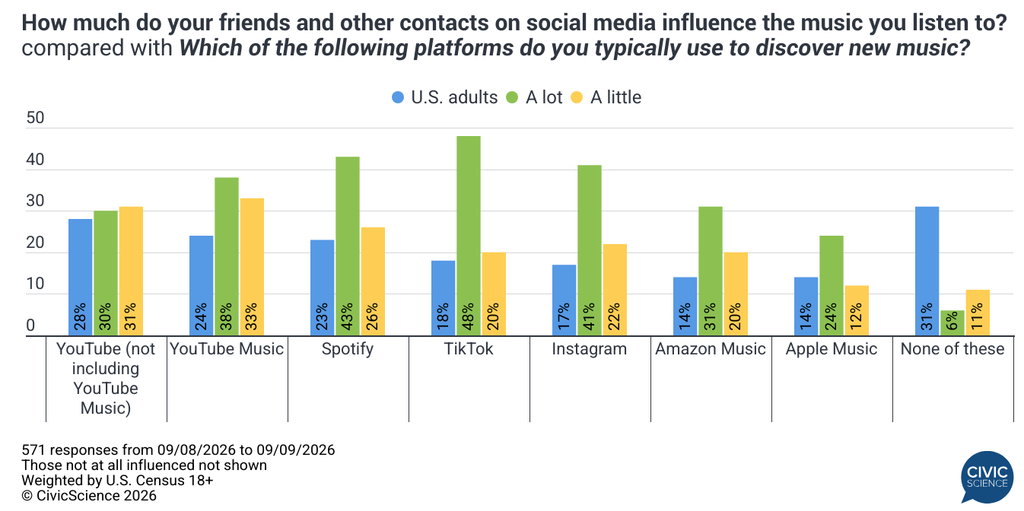
Gen X is driving the growth in streaming music. While younger consumers still stream music more than older generations, my fellow Xers are gaining on them fast. Forty-two percent of Gen Xers now listen to two or more hours of streaming music in a given day, as we quickly shift our listening habits away from terrestrial radio and, perhaps, CDs. I view it more as a technology adoption insight than anything notable about the popularity of music. In other words: It was only a matter of time considering the last great music was made during our heyday. What also stood out to me in this study, is the powerful role social media plays in music discovery today.
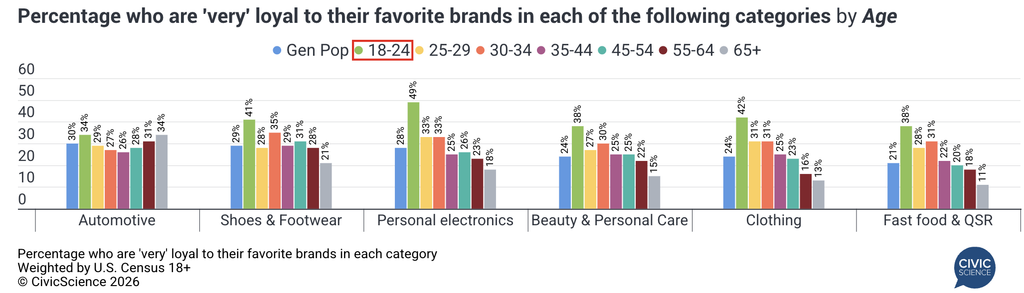
Brand loyalty is way stronger in some categories than others. Building on the paper we published last week, we’re digging deeper into the rising state of allegiance among consumers and the brands they love. Nowhere is loyalty stronger than the personal electronics category (see: Apple vs Android) — although Millennials and Gen Xers are diehards when it comes to their shoes and cars.
The most popular questions this week:
Is high school football a cultural cornerstone of your community?
Have you ever considered writing a book about the adversities in your life?
How often do you go outside to connect with nature?
Do you feel personally driven to live a more sustainable lifestyle?
How often do you intentionally unplug from digital devices?
Answer Key: Not so much in our little town because the team usually sucks, but definitely in the Pittsburgh area; I’ll write a book someday, but it won’t be about my adversities; San Francisco, next week; Most days; Probably not as much as I should; Probably not as much as I should.
Hoping you’re well.
JD