I don’t know who needs to hear this, but things resonate with people. People don’t resonate with things.
I’ve heard this grammatical atrocity a lot lately – “I resonate with [that].” Up there with abominations like “irregardless,” “for all intensive purposes,” “I could care less,” “Chipolte,” and people who pronounce the word “processes” with a hard ‘e’ at the end, it sends my linguistic snobbery through the roof.
Sadly, butchered phrases do have a way of earning acceptability – even Webster’s endorsement – if used frequently enough. “Chomping at the bit” is a perfect example. Or, the expression, “flush out,” which traces its lineage back centuries. Sometime in the 20th century, “flesh out” – a bastardization of the former – became so common that eventually the people who decide these things manufactured a different meaning for it. Bending inconvenient rules is a uniquely American tradition.
I know I’m unreasonably obsessed – nobody likes grammar snobs. Seriously, why should I care?
Well, my grandmother did.
If you’ve spent time in Western Pennsylvania, you’re no doubt familiar with its unique (and unattractive, IMO) accent and dialect. My grandma, despite being born and raised here, was having none of it. Eradicating ‘Pittsburghese’ from my speech was among her life’s missions – perhaps because she regretted not doing the same with my dad and his sister. If even a hint of local brogue or colloquialism came out of my mouth, I was (figuratively) smacked on the hand with a ruler.
We also played endless hours of Boggle together, where she would regularly pull out her dictionary to teach me unfamiliar words she found. She gave me books well beyond my reading level, less for the challenging subject matter (which was often over my head) and more, simply, to broaden my vocabulary. I’m not complaining. I made beer money in college, editing my fraternity brothers’ papers. I take pride in my etymological elitism.
This rant likely won’t age well. Many of you have been all too kind over the years in calling out my rare typo or grammatical error. I’m not impervious. I take frequent intentional liberties with punctuation, sentence structure, and fragments. Mostly because I’m trying to control the rhythm and flow of what you’re reading. For effect.
By all means, rub my nose in it when you catch me red-handed. The grammar police need to be held accountable.
In a world where there are so many serious and even existential things to worry about, maybe being deeply annoyed when others mangle our beautiful language – or kicking myself for ending a phrase in a preposition – is simply a welcome distraction.
Thanks Grandma.
Here’s what we’re seeing:
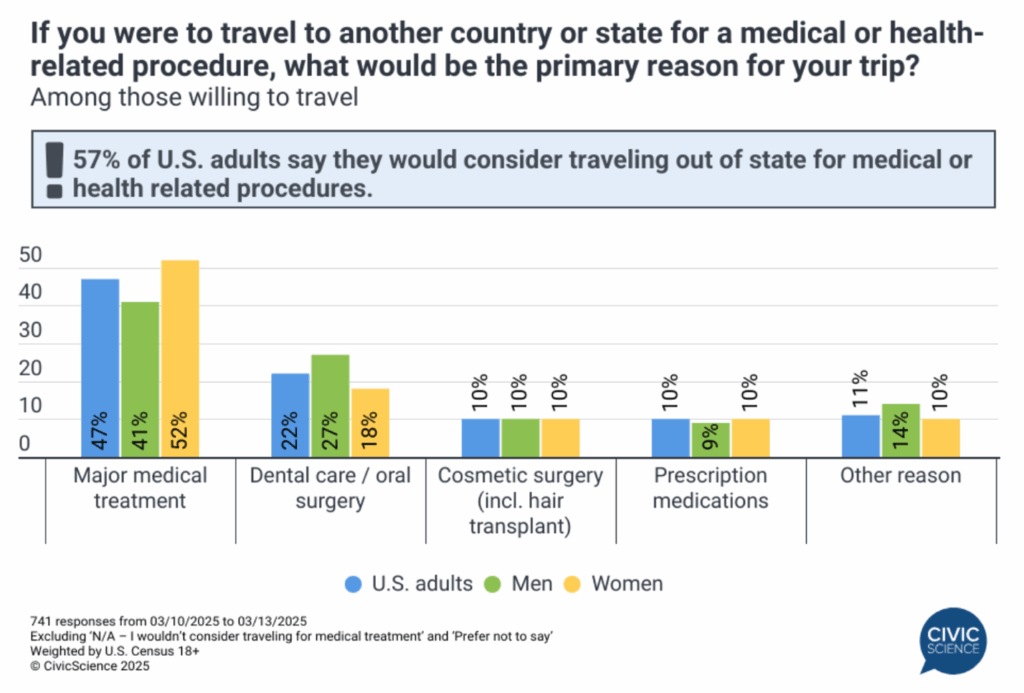
Consumerism is burning people out. As if we don’t have enough things causing stress in our lives, as detailed in our 3 Things to Know this week, over 1 in 4 Americans report feeling fatigue from the pressures and complexities of our consumer culture. From the constant onslaught of ads (most bothersome to Boomers) to the sheer multitude of choices (most bothersome to Gen Z) to the mountain of subscription services to manage (most bothersome to Millennials), people are overwhelmed. We also looked at the continued growth of retailer loyalty apps and what’s driving Americans to travel out of state for healthcare.
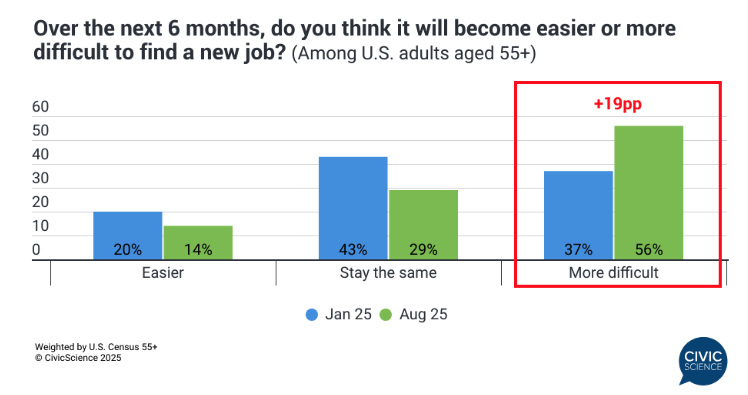
The challenging economic climate could delay retirement for millions of Americans. In the latest collaboration with our friends at ROAR Forward, we delved into the mindset of today’s Americans aged 55 and up as it relates to their retirement expectations. Twenty-nine percent of currently unretired people in that cohort now believe they will “definitely” need to work beyond the typical retirement age of 65, not including those who are already over 65 and still working (11%). While financial constraints are a big reason why, it’s worth noting that 1/3rd of the 55+ crowd who expect to work past 65 will do so with a smile on their face – citing mental fitness, new interests, and socialization/community as reasons why. At the same time, these older workers aren’t immune to the job concerns plaguing all Americans, from the general state of the employment market to the potential impact of AI on their careers.
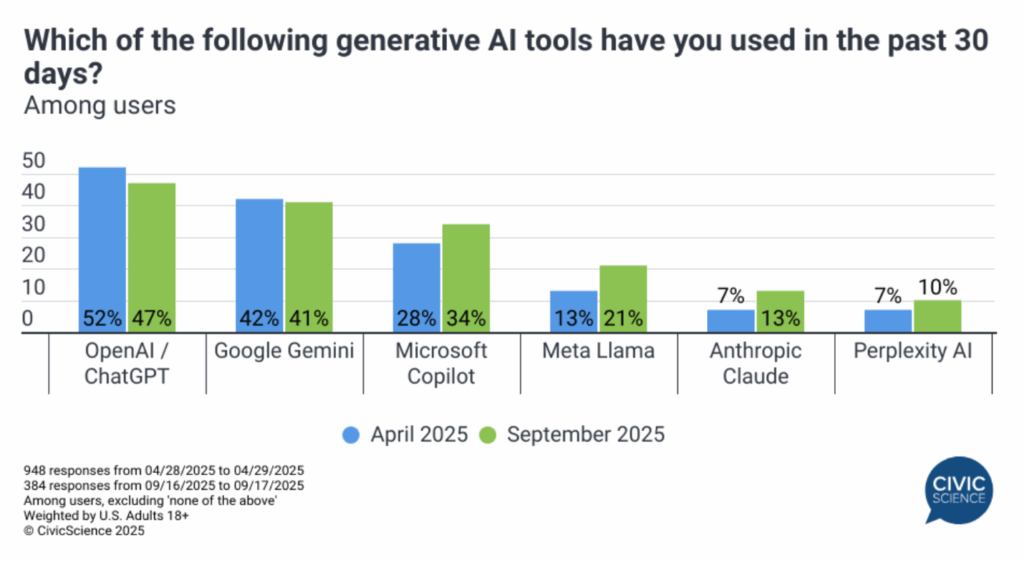
ChatGPT is ceding share to an array of competitors. In an insights-packed study we published this week on the current state of consumer (and worker) AI, a number of headlines stood out. The use of AI tools continues to increase, with nearly 1 in 4 U.S. adults using them at least “a few times a week.” Boomers notwithstanding, the disparity in usage across age groups (Gen Z, Gen X) is smaller than I expected. Of the biggest brand-name tools, ChatGPT has lost considerable (relative) share since April, while Meta’s Llama, Claude, and Copilot all saw appreciable share gains. Notably, even as usage increases, a growing percentage of Americans believe AI’s net impact on their quality of life will be negative. I blame the job market.
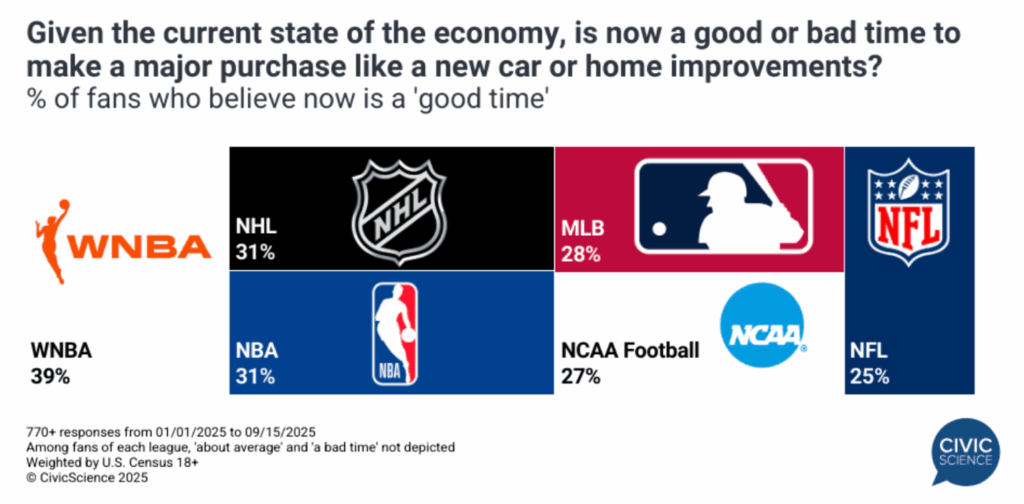
Even with Caitlin Clark shut down for the season with injury, the WNBA and its fans are still a marketer’s dream. After a record year for attendance and TV ratings in 2024 – due to what most people attributed to the Caitlin Clark Effect – WNBA eyeballs grew another 6% this season, making it the most-watched league campaign ever. We took a closer look at the profile of this growing fan base, finding that its increases are happening across age and gender groups. But that’s only part of the story. WNBA fans over-index, compared to fans of other sports, in their likelihood to buy a home or other major purchase in the near future, switch banks or mobile carriers, and pay for health-related content online. We even provided a blueprint for advertisers on where and how to win these consumers.
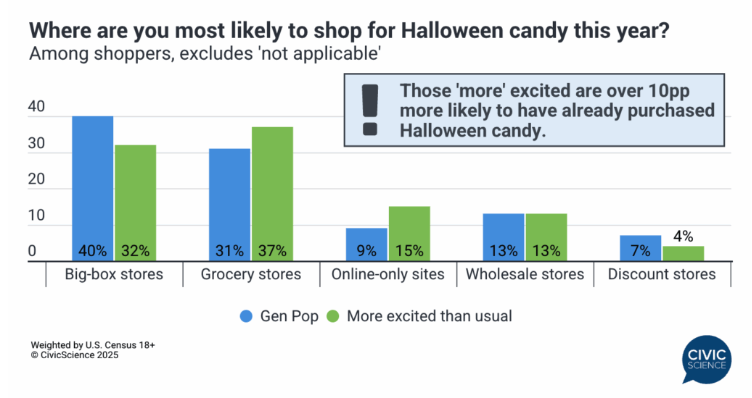
Not all Halloween shoppers are created equal. We’re paying extra close attention to the upcoming Halloween holiday, as it will provide us a glimpse into how consumers will approach the much larger holiday retail season beyond it. Not unlike winter holiday shoppers, we saw a pull-forward in Halloween spending beginning in July this year, as consumers tried to get ahead of potential tariff price increases or otherwise take advantage of deals. But the bulk of the money will be spent over the next five weeks. For our friends in the advertising world, we profiled the most likely Halloween big spenders at different retailers (grocery stores attract the most excited Halloween fans), where to reach them (they significantly over-index as people who pay for local news subscriptions), and what kinds of ads resonate with them the most (emotional ones).
More Awesomeness from the InsightStore:
- Here’s how retailers can reach (and win) holiday shoppers exactly when they’re ready to buy.
The most popular questions this week:
Do you typically prefer to eat at newer or more historic restaurants?
Are you personally affected by the decreasing sunlight in fall?
Do you think your current job will exist 10 years from now?
How much would you be willing to pay for one perfect night of sleep?
Answer Key: It’s close, but newer if I have to choose; Yes, I hate it; God, I hope not; Hundreds; Absolutely not.
Hoping you’re well.
JD