CivicScience has the world’s largest proprietary database of real-time declared intent, allowing brands to activate high-performing advertising that drives up to 80% better performance. See how our partners achieve superior marketing outcomes here.
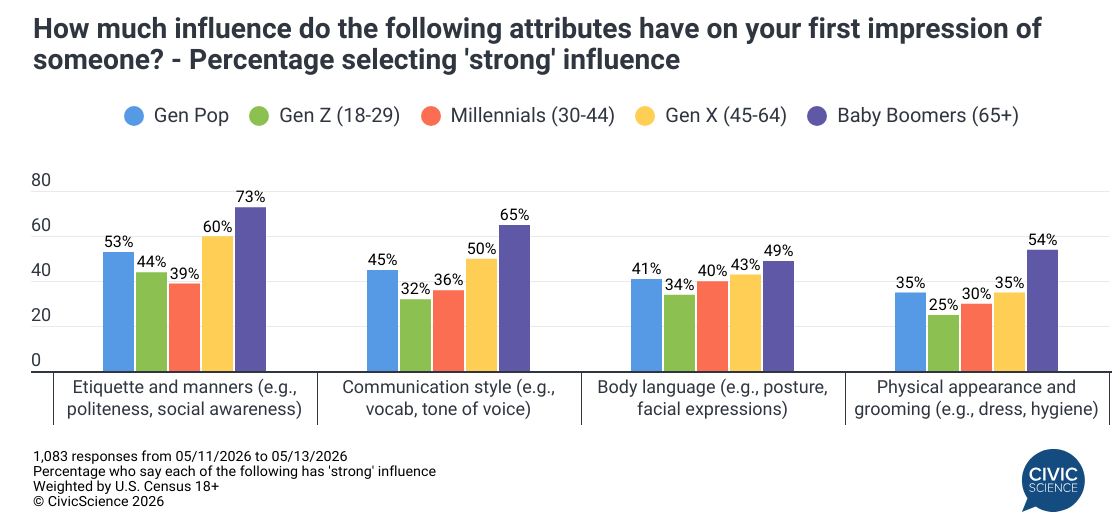
1. Etiquette and manners have the greatest influence on shaping first impressions among Americans overall, but not all generations agree.
When forming a first impression, U.S. adults overall place the highest premium on interpersonal conduct. CivicScience data show that etiquette and manners make the biggest impact, with 53% of the Gen Pop identifying them as a ‘strong’ influence. Communication style accounts for 45%, while body language (41%) and physical appearance (35%) are slightly less influential for the average American.
However, stark generational divides exist over what has the greatest influence on shaping first impressions. While etiquette and manners peak at 73% ‘strong’ influence among Baby Boomers, Millennials (30-44) show the lowest sensitivity at just 39%. A similar trend persists for communication style, which is a strong driver for 65% of Boomers but only 32% of Gen Z aged 18-29. Across all categories, younger cohorts are significantly less likely to report a strong influence, suggesting a more flexible approach to first impressions than older demographics, who rely heavily on formal social standards.
Let Us Know: How concerned are you about first impressions?
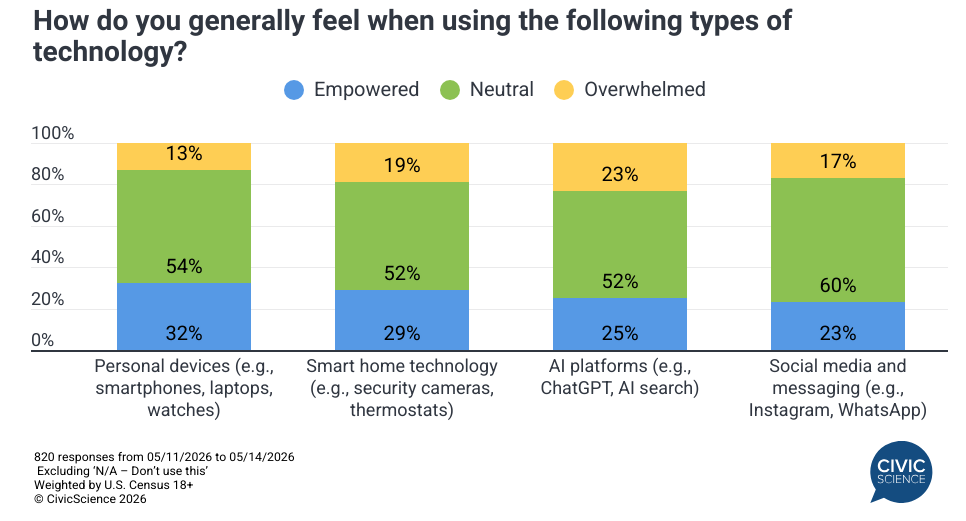
2. The emotional impact of technology depends heavily on the specific platform, as newer digital tools create more user friction.
While everyday digital tools are firmly integrated into daily life, different types of technology evoke sharply contrasting emotional responses. CivicScience data show that personal devices like smartphones and laptops generate the highest positive sentiment, with 32% of U.S. adults feeling ‘empowered.’ Smart home technology follows closely behind, with 29% of respondents expressing a sense of capability from their connected household systems.
In contrast, newer, more open-ended digital environments create more unease. AI platforms like ChatGPT and AI search tools trigger the highest level of anxiety, with 23% of users reporting feeling ‘overwhelmed’ by the technology. Social media and messaging platforms also lag behind in positive impact, ranking lowest overall for user empowerment at just 23%.
Take Our Poll: Do you feel like you generally benefit from advances in technology?
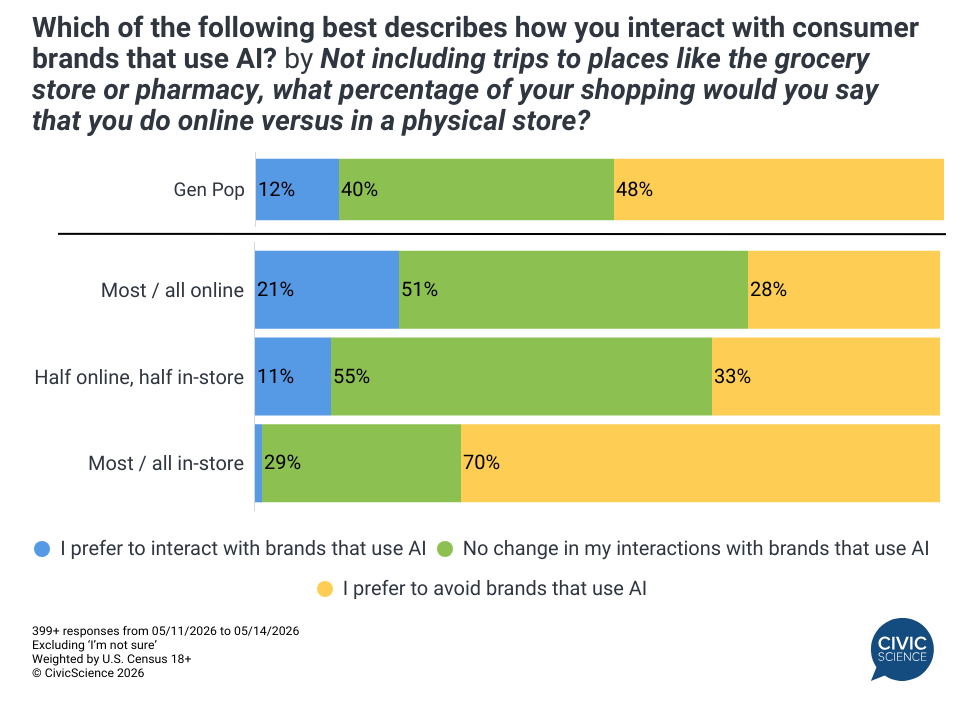
3. While skepticism toward consumer brands using AI is strong, Americans who frequently shop online are the most open to companies that embrace AI.
Given the sentiments on AI above, it’s unsurprising to see additional data showing that nearly half of U.S. adults actively prefer to avoid consumer brands that use AI. Meanwhile, 52% are either indifferent (40%) or prefer engaging specifically with brands that use AI (12%).
There are some encouraging signals in the data for retailers who are leaning into AI/agentic shopping – consumers who shop primarily online are much more likely to embrace or remain neutral toward AI (72% combined), whereas 70% of traditional in-store shoppers express a clear desire to avoid companies using the technology.