CivicScience engages directly with consumers, collecting over one million survey responses daily, to turn real-time insights into high-performing advertising campaigns. See how leading brands use CivicScience to drive campaign performance here.
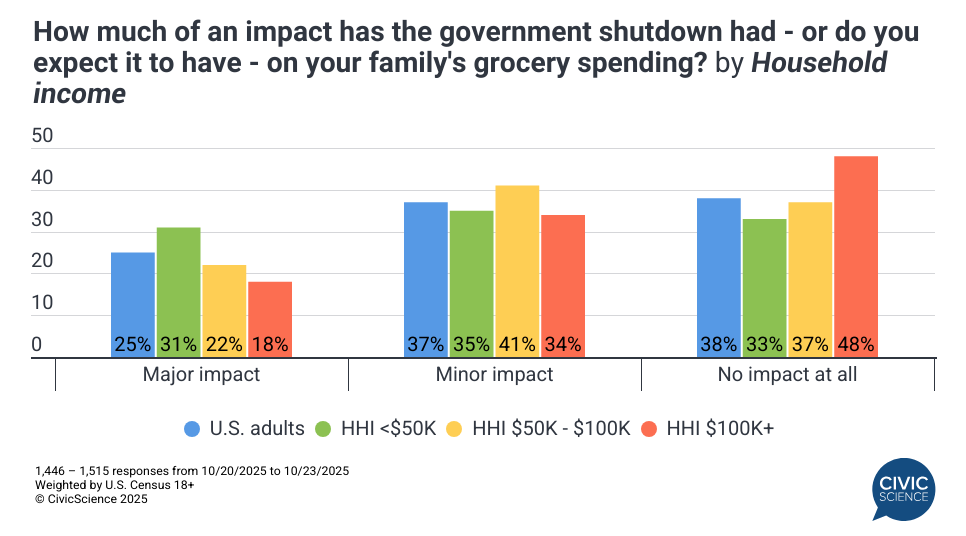
1. One in four Americans say the government shutdown is currently having or will have a ‘major’ impact on their grocery spending.
As the government shutdown enters a new week, approximately 25% of U.S. adults tell CivicScience that the shutdown has either already or will impact their household grocery spending in a ‘major’ way. Unsurprisingly, this financial impact is disproportionately felt among lower-income individuals, particularly those earning under $50,000 annually. This comes as millions of lower-income Americans are slated to lose Supplemental Nutrition Assistance Program (SNAP) benefits, should the shutdown carry into November. Although they may have more breathing room in budgets than their lower-income counterparts, even 18% of households earning $100K+ report a significant impact on their grocery spending as well.
Weigh In: How favorable or unfavorable is your overall opinion of the US federal government right now?
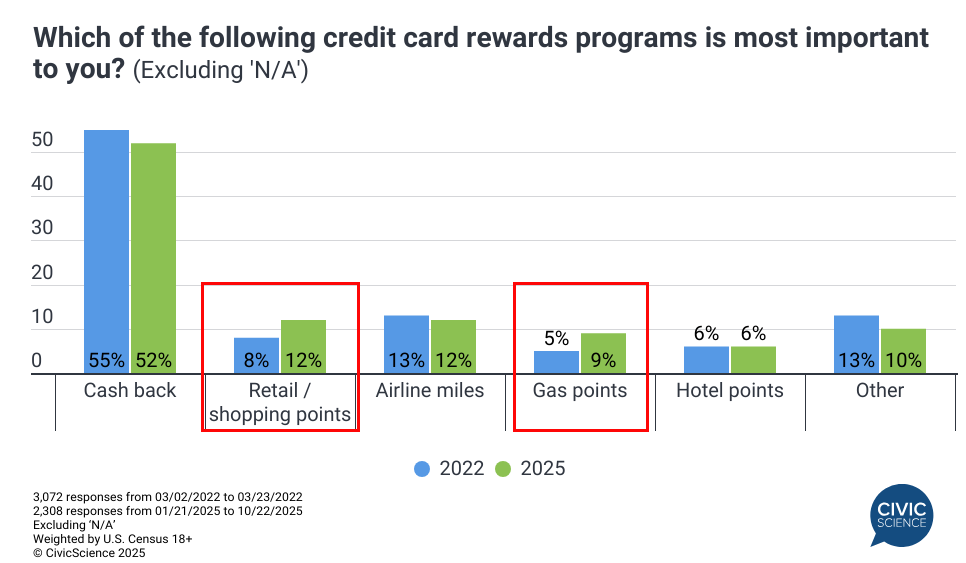
2. Credit card reward preferences shift as Americans are slightly less likely to pay by credit card.
Credit cards are losing ground as a primary payment method, with the percentage of Americans who use them to pay most often down two percentage points from last year. Today, cash, debit cards, and mobile pay are all used more frequently. Overall usage isn’t the only area associated with credit cards that has changed over time recently. One of the key draws for using credit cards is the rewards programs that often accompany them. Additional survey data finds that the credit card rewards that consumers find most important have also shifted over the last few years. While cash back remains the top reward perk, its appeal has dipped slightly, whereas retail shopping and gas points have each risen by four percentage points respectively. Reward redemption overall, however, is limited, with less than half of cardholders redeeming every few months, and most redeeming once or twice per year—or less often.
Let Us Know: How many credit cards do you currently have?
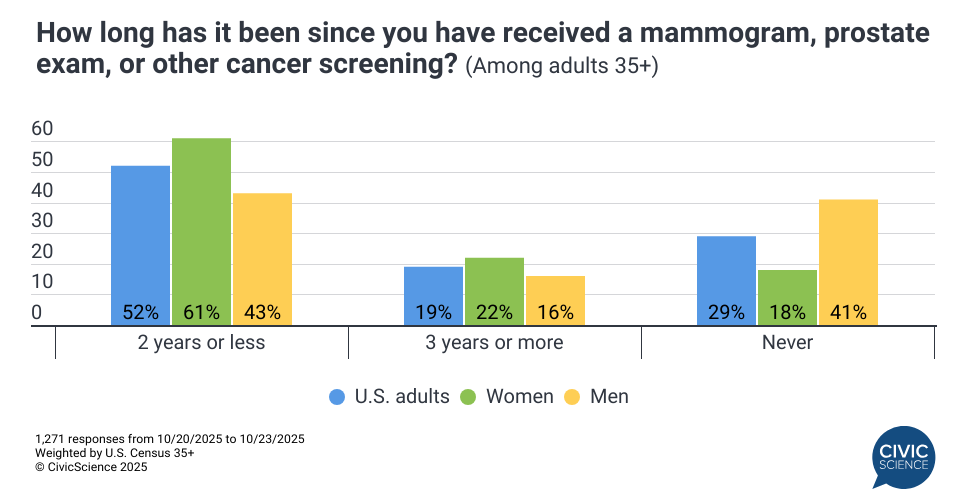
3. As Breast Cancer Awareness Month ends, nearly 3 in 10 Americans 35 and older say they have never had a cancer screening of any kind, led by men.
While cancer screening remains a central aspect of proactive health care, nearly three in ten adults 35+ have never undergone one. Among those who do get screened, just over half (52%) have had a mammogram, prostate exam, or similar test within the past two years. Women continue to lead men in recent screenings, a gap likely influenced by public health efforts and heightened awareness of breast and other cancer prevention efforts.