CivicScience has the world’s largest proprietary database of real-time declared intent, allowing brands to activate high-performing advertising that drives up to 80% better performance. See how our partners achieve superior marketing outcomes here.
1. Public concern regarding the financial solvency of the USPS remains widespread despite notable demographic and partisan divides.
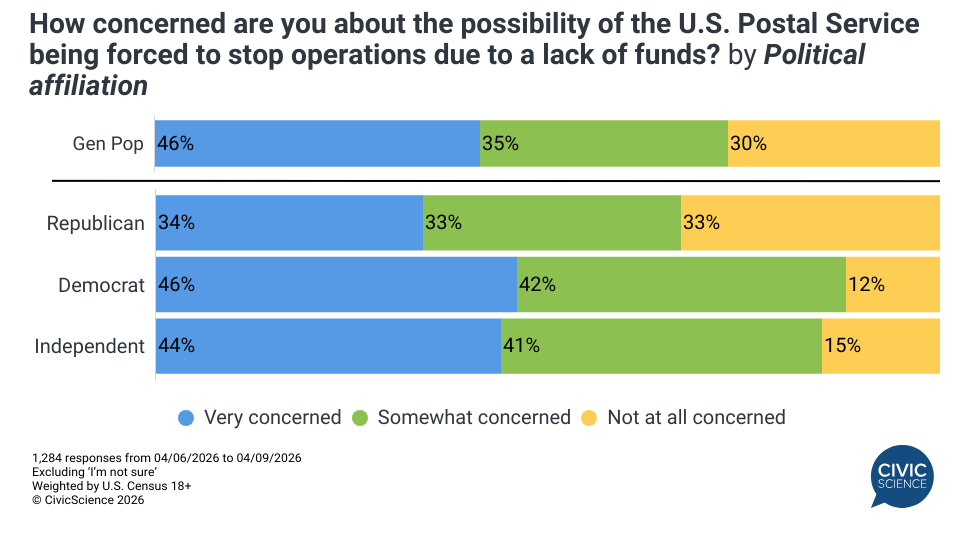
According to a recent warning from the Postmaster General, the United States Postal Service (USPS) may exhaust its funding within the next year. Nearly half of U.S. adults tell CivicScience they are ‘very’ concerned about this possibility (excluding those unsure), though levels of concern vary across different age groups and demographics. Baby Boomers emerged as the age group most likely to be worried, with approximately two-thirds strongly concerned about the USPS’s future. While Republicans generally express the lowest levels of concern, at least one in three respondents across all political parties remain ‘very’ concerned about the agency’s financial solvency.
Take Our Poll: How frequently do you use the USPS?
2. When it comes to mobile gaming, Americans are playing more frequently and seeking out games that offer casual, low-stress gameplay.
CivicScience longitudinal data highlight a notable shift in player priorities in gaming (including console, PC, and mobile games) over the past five years: the rise of “cozy games.” Consumer interest in action and strategy games spiked in 2024 and 2025 but has since retreated to 14% and 20%, respectively. Interest in casual/low-stress gameplay, meanwhile, has continued to grow, rising from 23% in 2021 to 31% in 2026.
Coinciding with this growth is the percentage of Americans who say they play mobile games at least weekly. More than half of U.S. adults now say they play a mobile game at least once a week, up seven percentage points from 2024. One-third, meanwhile, say they never play mobile games, down from 41% in 2024. As the ‘non-gamer’ demographic continues to shrink, it’s clear that the mobile screen has become a universal tool for accessible, low-pressure, and low-stress downtime.

Let Us Know: How much time would you say you spend playing mobile games on your smartphone on an average day?
3. Receptivity to digital price tags has strengthened among consumers as Walmart prepares full integration by the end of 2026.
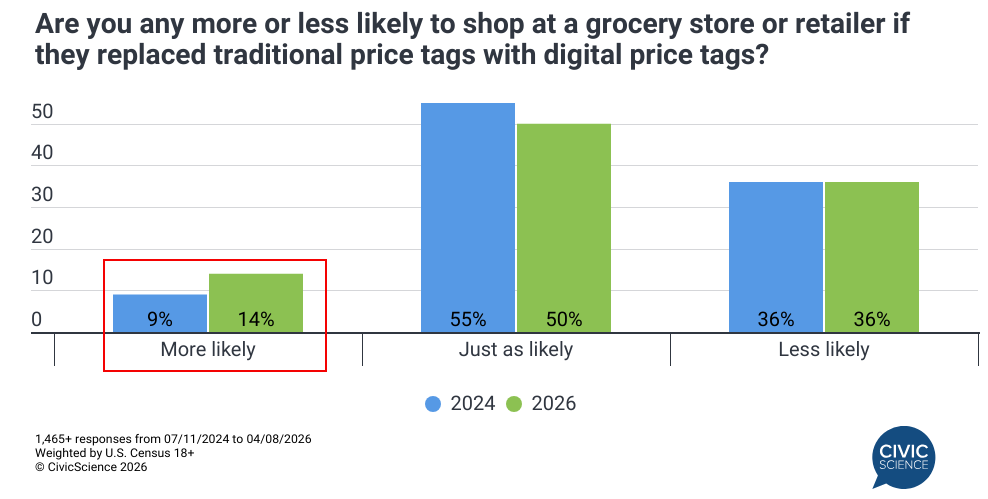
Walmart will make a full transition to digital shelf labels (DSLs) this year, noting that the change will improve price accuracy and allow store staff to spend more time helping customers. The data suggest that Americans are becoming a bit more receptive to the new DSL system. Since the initial announcement back in 2024, the share of consumers who say they are more likely to shop at a retailer that uses digital pricing has increased by five points to 14% (19% among Walmart shoppers). Additionally, the percentage who say DSLs would have a positive impact on their shopping experience has also increased by five points since 2024, reaching 20% (and 22% among Walmart shoppers). Still, nearly two in five (38%) expect a negative impact, suggesting that consumers still have a ways to go before being fully comfortable with DSL technology.