CivicScience has the world’s largest proprietary database of real-time declared intent, allowing brands to activate high-performing advertising that drives up to 80% better performance. See how our partners achieve superior marketing outcomes here.
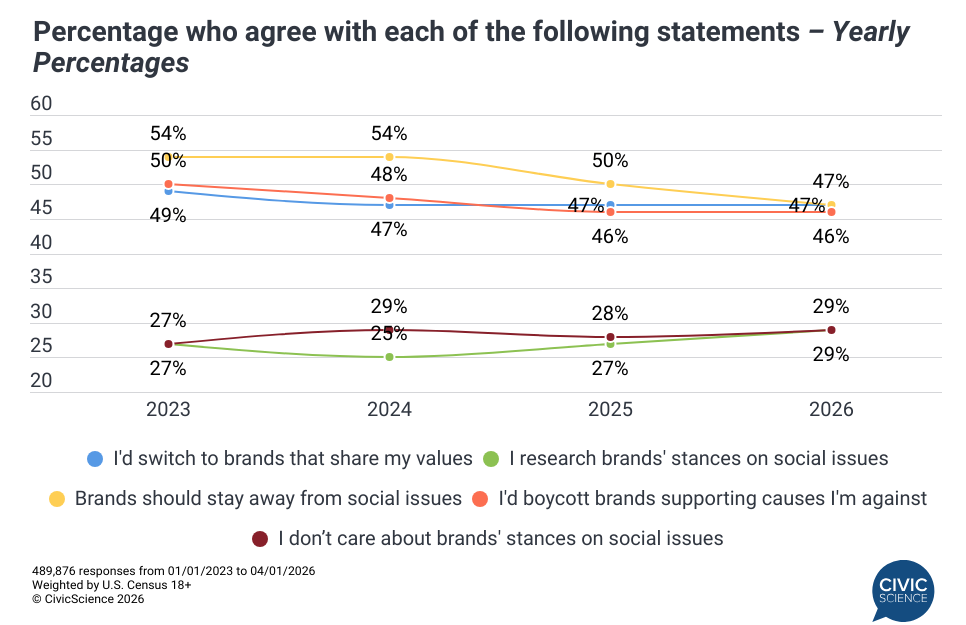
1. Consumers hold mixed expectations on brand activism, with Democrats more likely to switch or boycott based on personal values, while Republicans are more likely to feel indifferent about a company’s social stance.
In the evolving landscape of brand activism, nearly half of U.S. adults (47%) believe companies should remain neutral on social issues, yet a similar portion expresses a willingness to boycott brands that support causes they oppose (46%) or switch to brands that align with their personal values (47%). This reflects a broader pattern in which Americans hold mixed and conditional views—many say brands should stay out of politics, yet still report a willingness to reward or punish them based on their positions.
These sentiments are heavily influenced by political affiliation: Democrats are significantly more likely to act on shared values by switching or boycotting, while Republicans are more likely to prefer neutrality and express indifference toward a company’s social stance.
Weigh In: How important is a brand’s social consciousness to you as a consumer?
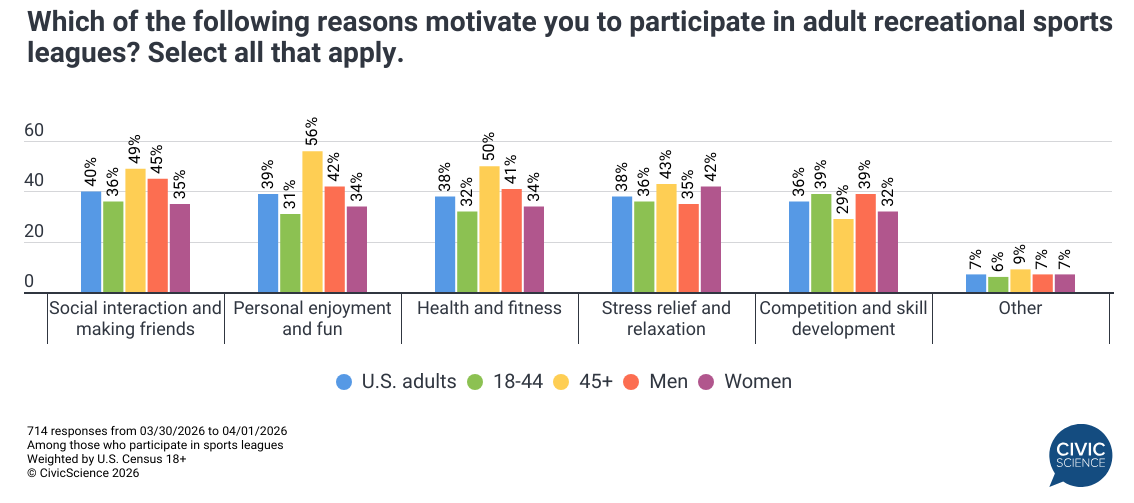
2. Adult recreational sports league interest and participation rebound from last year, driven by the desire for social interaction and personal enjoyment.
With the weather getting warmer and more people getting outdoors, new CivicScience data show that 10% of U.S. adults are currently participating in an adult recreational sports league, up from 6% in 2025, but in line with 2023 and 2024 participation levels. Another 13% are not currently playing, but plan to.
The top motivations for playing in adult sports leagues are fairly evenly distributed, with social interaction, personal enjoyment, health and fitness, and stress relief all clustered around 40%. But the generational divide is notable: adults 45+ are far more likely to play for personal enjoyment and health and fitness, while younger players lean into competition and skill development. Men follow a similar pattern, while also prioritizing social interaction and competition, whereas women are more likely to cite stress relief as a key motivator.
Take Our Poll: Which of these team sports is the most fun to play?
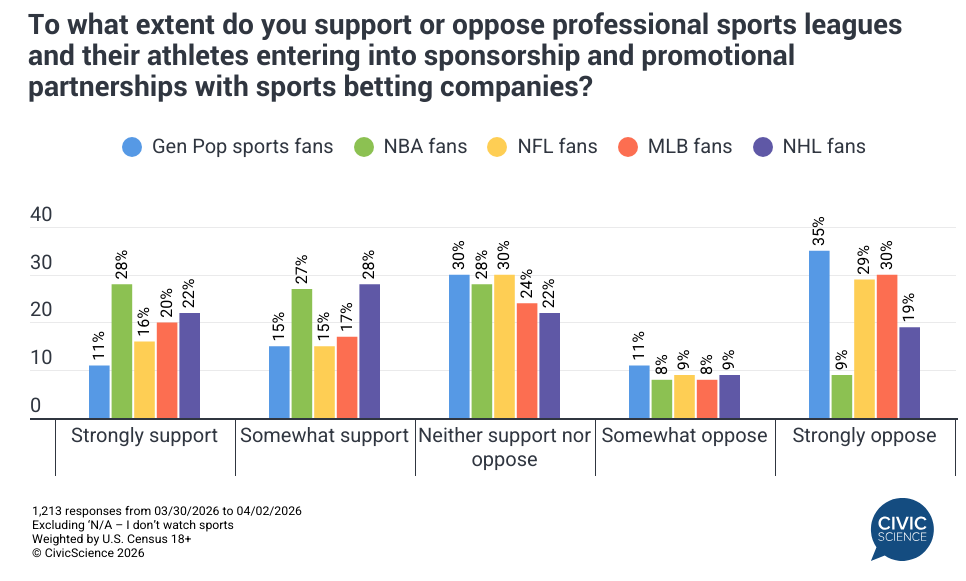
3. Growing gambling ties in professional sports are receiving mixed reactions, with support concentrated among Gen Z and NBA fans.
As sports gambling partnerships with professional athletes and/or teams become increasingly prevalent, public opinion remains divided: slightly more than one-quarter of U.S. adults support these alliances, while roughly half oppose them. Gen Z, in particular, reflects the highest level of support for sports gambling partnerships, whereas Baby Boomers are the most likely to oppose them. These preferences also vary by sports league, as NBA and NHL fans tend to favor such partnerships, while NFL and MLB fans lean toward opposition.