CivicScience has the world’s largest proprietary database of real-time declared intent, allowing brands to activate high-performing advertising that drives up to 80% better performance. See how CivicScience partners achieve superior marketing outcomes here.
Everybody eats. That means a trip to the grocery store is baked into the routine of most Americans. But while grocery shopping may be a universal necessity, the way consumers approach those trips can vary widely – from how often they shop to how much they buy and where they choose to spend their money. Understanding these behaviors can give brands and advertisers a clearer picture of the priorities shaping consumers’ everyday shopping decisions.
Where Americans Shop for Groceries Is Shifting
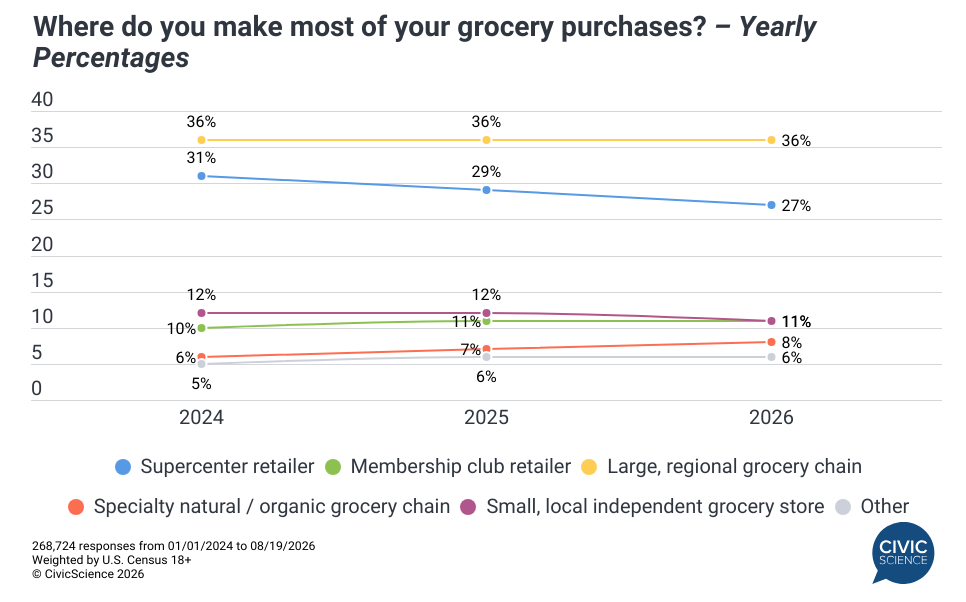
Large regional grocery chains and supercenter retailers have long held the top two spots among American grocery shoppers. However, since 2024, the share of shoppers who use supercenters has slowly but steadily declined, falling from 31% to 27% today. Meanwhile, membership club retailers and specialty natural and organic grocery chains have each seen modest increases in the percentage of shoppers they attract.
Beyond where Americans shop, the data also reveal how frequently they make the trip. For the strong majority (71%), grocery shopping is a weekly habit, with nearly half (46%) visiting the store about once a week and another 25% going multiple times per week. Just under 1 in 5 (19%), meanwhile, handle their grocery shopping every two to three weeks, leaving just 10% who go monthly or less.
A once-a-week trip is the go-to standard for about 52% of Millennials (30–44), Gen X (45–64), and Americans 65+. Gen Z (18–29) breaks the pattern, with only 40% sticking to a weekly schedule. Still, Gen Z and seniors 65+ are tied as the most frequent shoppers, with 27% making multiple store runs each week, up from about 22% among Millennials and Gen Xers.
One-Third of Grocery Store Shoppers Are Open to Switching Where They Shop
In times of economic uncertainty and inflation, consumer switching behavior often enters the spotlight, especially as Americans navigate the Cyclospora outbreak and other food recalls. And while the majority of Americans aren’t looking to change where they shop for groceries right now, roughly one-third (34%) of grocery shoppers are ‘somewhat’ (22%) or ‘very’ (12%) likely to switch stores within the next three months. Notably, interest in switching is much stronger among the most frequent of shoppers – who make multiple grocery trips per week – 26% of whom say they’re ‘very’ likely to switch grocery stores within the next 90 days (18% are ‘somewhat’ likely).
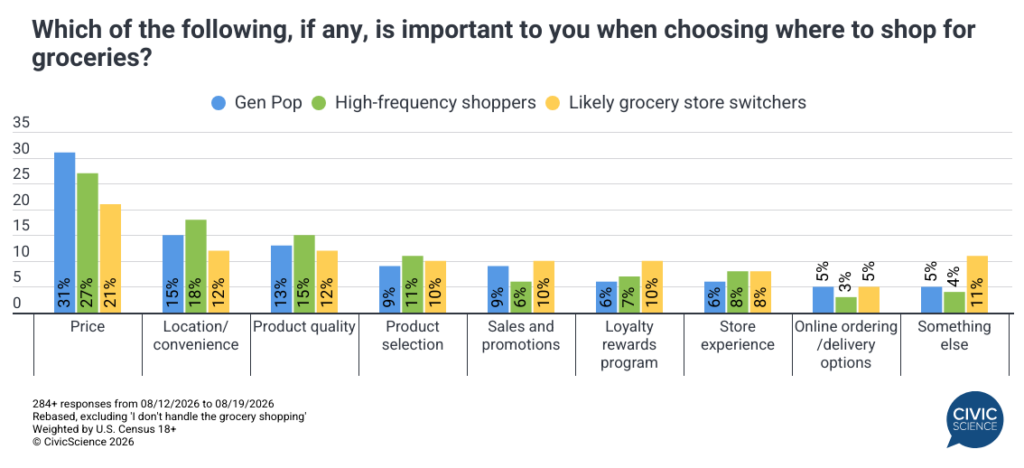
What can grocers emphasize to capture market share as consumers consider switching to a new store? Additional consumer-reported data show that price is the unsurprising leading factor among Gen Pop when choosing a new store, with location/convenience and product quality each in a distant second.
A look at two key grocery audiences, high-frequency shoppers (those who grocery shop multiple times per week), and likely grocery store switchers, reveals the nuances beneath the surface beyond price. Frequent grocery shoppers are most likely to prioritize convenience, product quality, and product selection, whereas switchers lean slightly more toward sales and loyalty rewards.
Amazon Grocery Shopping Draws a Crowd
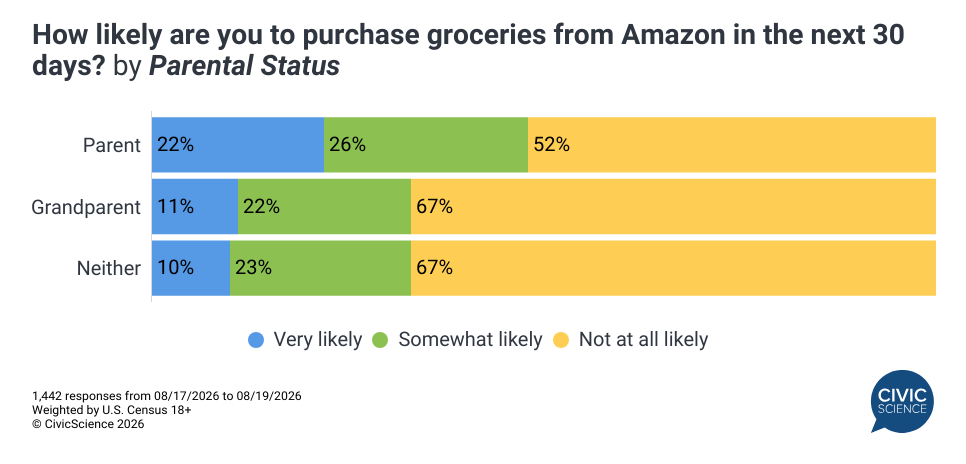
In recent years, Amazon has revamped its efforts in the grocery space, offering consumers a convenient alternative to the traditional grocery trip. And as the data show, there’s meaningful consumer interest in the near-term: 37% of grocery shoppers are at least ‘somewhat’ likely to purchase groceries from Amazon in the next 30 days.
As the quest to save and manage budgets amid persistent inflation continues, CivicScience survey data suggest a particularly strong interest among parents in using Amazon for grocery shopping within the next month. The data underscore two priorities shaping grocery decisions: price and convenience — factors that may increasingly influence not only what consumers buy, but where they choose to shop.
Taken together, the data paint a picture of a grocery landscape in which consumers balance frequency, convenience, and price in different ways. And highlights one that may soon undergo change as the desire to switch intensifies. For grocers and brands, understanding these differences can offer valuable insight into what motivates consumers to choose where they shop — and where opportunities exist to win them over.