CivicScience has the world’s largest proprietary database of real-time declared intent, allowing brands to activate high-performing advertising that drives up to 80% better performance. See how CivicScience partners achieve superior marketing outcomes here.
1. Americans are reaching the end of their rope when it comes to tipping culture.
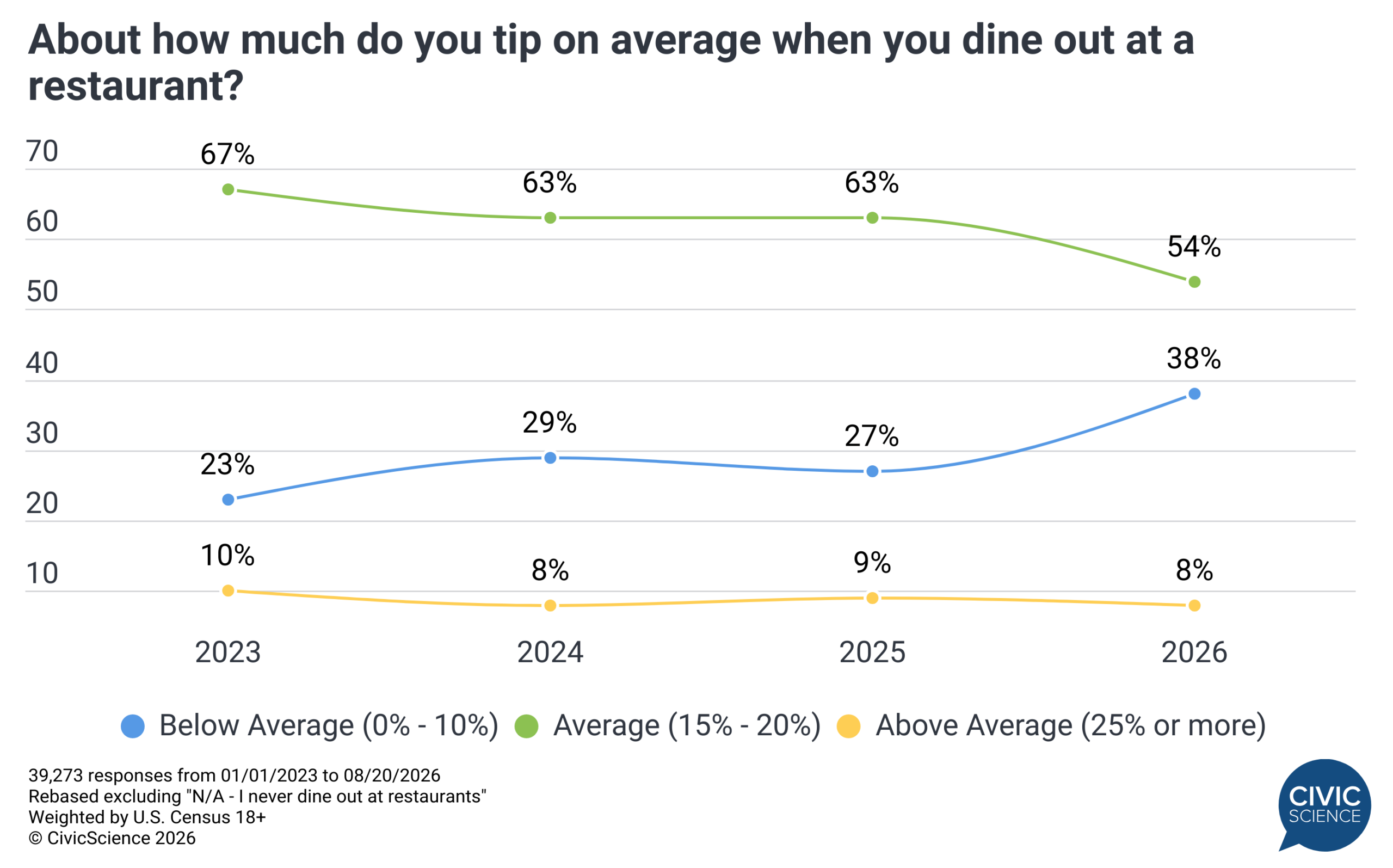
Persistent economic pressures across the board continue to shape consumer behavior, and tipping culture is no exception. New consumer-reported data from CivicScience show that although more than half (54%) of U.S. adults say they tip a standard amount (between 15%–20%) while dining at a restaurant, more than one-third (38%) tip between 0% – 10%. This share of below-average tippers marks an 11-percentage-point increase from last year and represents the highest percentage yet observed since tracking began in 2023. Gen Z and Millennials lead the pack of those who tip 10% or less in 2026, with 62% of those 18-29 and 53% of those 30-44.
Recently, a customer picking up food at Shake Shack found that the self-serve kiosk increased the total cost of the meal when the “no tip” option was selected, sparking an online debate about whether or not tipping has gotten out of hand. The latest polling from CivicScience shows that many Americans often experience “tipping fatigue” or feeling overwhelmed or resistant when prompted to leave a tip – 39% of U.S. adult respondents say they experience tipping fatigue either ‘most of the time’ (17%) or ‘every time’ (22%) they’re prompted to tip.
Take our poll: How do you feel about tipping at a fast food restaurant?
2. Gen Zers are more likely to support companies that use personalized pricing.
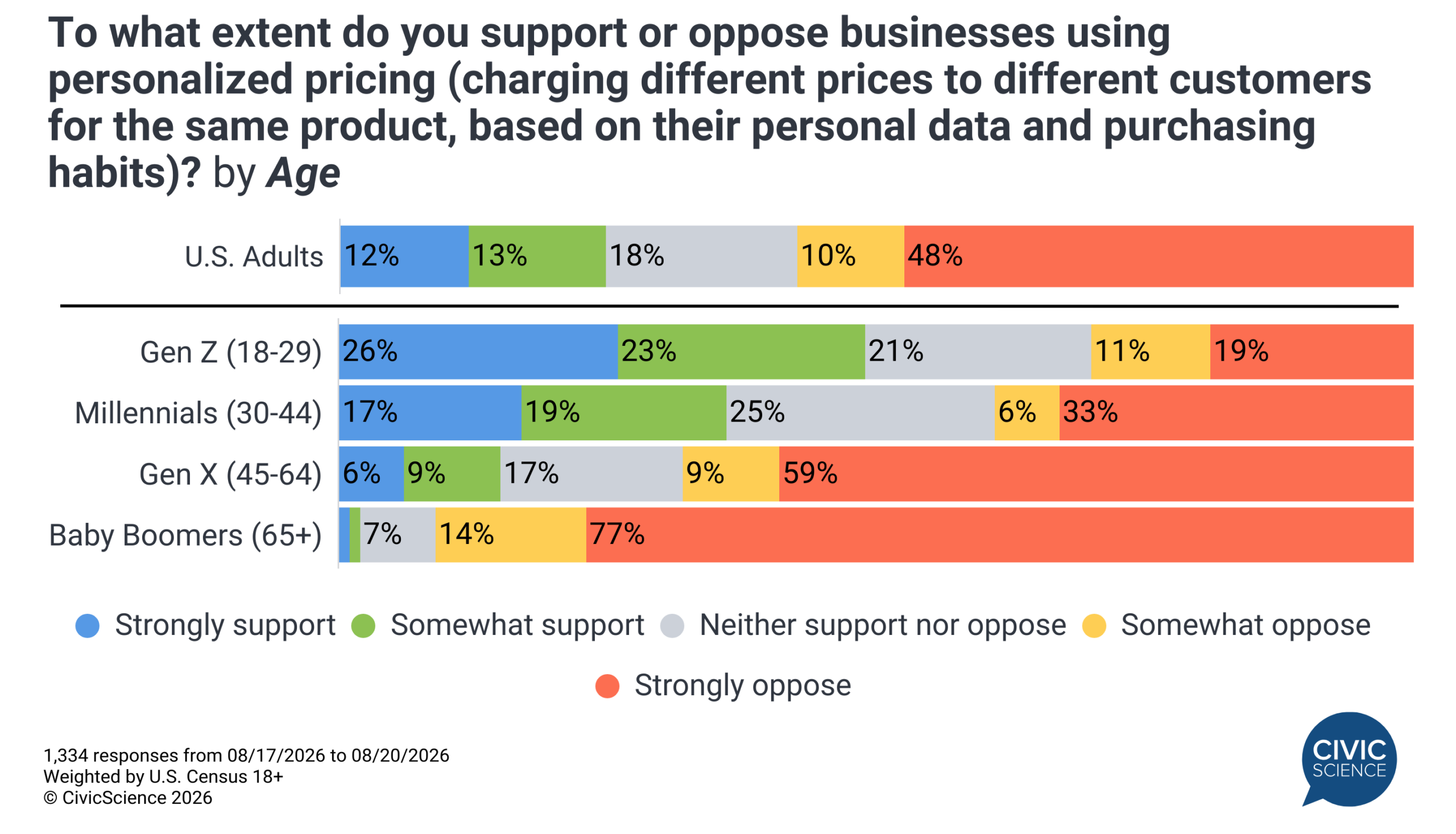
Companies have come under fire this year for what the internet is calling “surveillance pricing” – the practice of charging different users different prices for the same product based on their third-party personal data. Personalized pricing remains a point of friction for consumers, with the majority of U.S. adults (58%) opposing the practice when used by businesses.
Across demographics, opposition is highest among Baby Boomers and Gen X, with nearly 4 in 5 of those 65+ saying they ‘strongly’ oppose. However, nearly half of Gen Z respondents (49%) say they at least ‘somewhat’ support it. Additionally, consumers who prioritized brand over price when shopping were more likely to support personalized pricing than those who viewed brand and price as equally important or prioritized price.
Let Us Know: To what extent do you support or oppose the idea of enacting laws to restrict AI-driven personalized pricing?
3. Even when interested in an online article, most readers lean on at least some skimming to digest content.
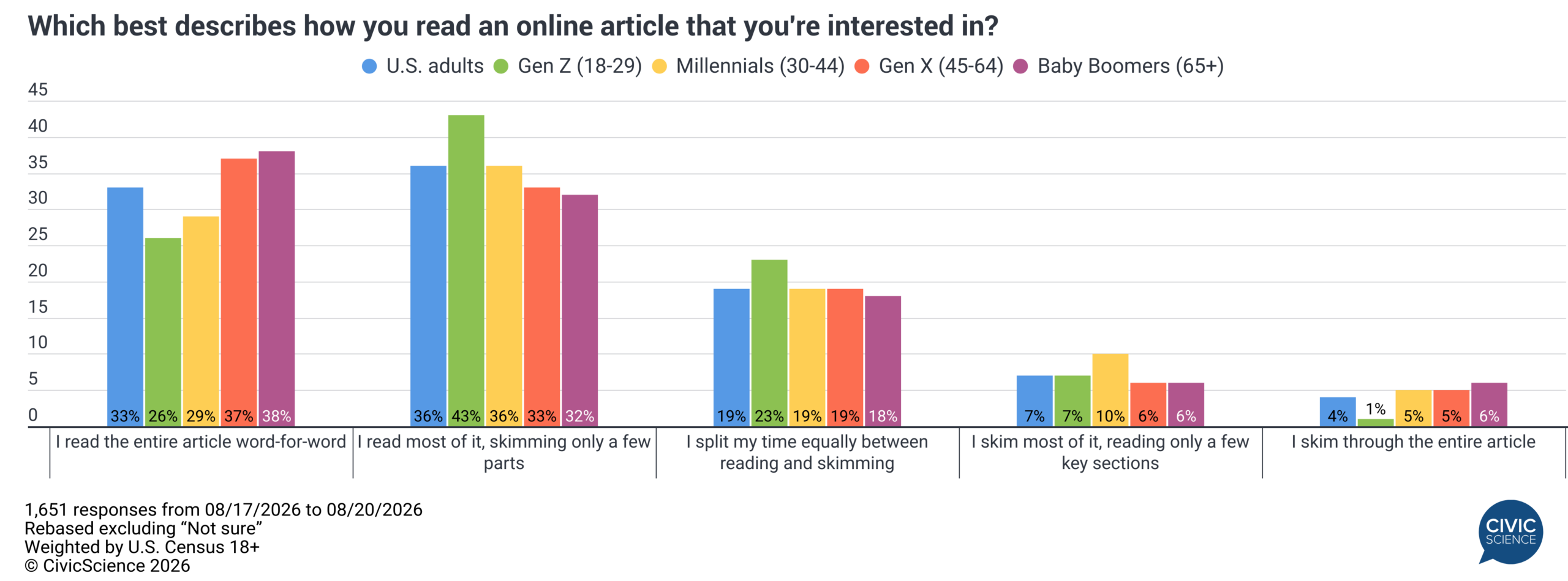
When it comes to digital content consumption, 1 in 3 U.S. adults say they read an online article they are interested in word-for-word. However, behaviors vary significantly across demographics. Almost half of Gen Zers aged 18-29 (43%) prefer to read most of an article, skimming only a few sections. Baby Boomers and Gen X were only a single percentage point apart in who was most likely to read online articles word-for-word. Among those who say they skim most of an article, reading only key sections, Millennials lead, outpacing other generations by 3 to 4 points.