CivicScience clients and partners have access to our millions of daily survey responses, allowing them to generate actionable, forward-looking strategies. See what you’re missing here.
Living paycheck to paycheck is unfortunately far from a new American experience. Even before the most recent uptick in inflation and the implementation of new, sweeping tariffs, living paycheck to paycheck had been the reality for many. So what does this mean for the American consumer and their wallet in 2025?
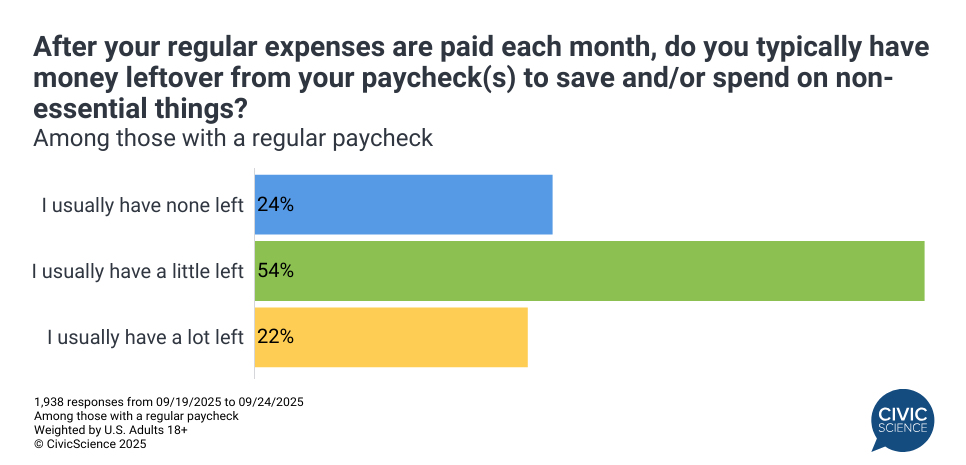
Among those with a regular paycheck, as many as 24% report they have no money left to save and/or spend on non-essential things after paying off their regular monthly expenses — relatively consistent with the past few years. Meanwhile, more than half (54%) say they have only ‘a little’ money left over, leaving just over one in five (22%) reporting that they usually have ‘a lot’ of money left to save and/or spend.
Let Us Know: Are you personally living paycheck to paycheck?
The Impact of Income, Gender, Age, and Occupation
In 2025, the percentage of Americans living paycheck to paycheck is unsurprisingly highest among low-income earners, with nearly one in three (31%) reporting they have nothing left over each month. Women are eight percentage points more likely to be living paycheck to paycheck than men, as are those who are divorced or separated. Living paycheck to paycheck isn’t just an experience for those early in their career. Adults aged 45-54 lead the way in making their dollar stretch each month, as 26% report that they have ‘none’ remaining after regular expenses are paid. This comes as many Americans 55+ expect to have to work past retirement age.
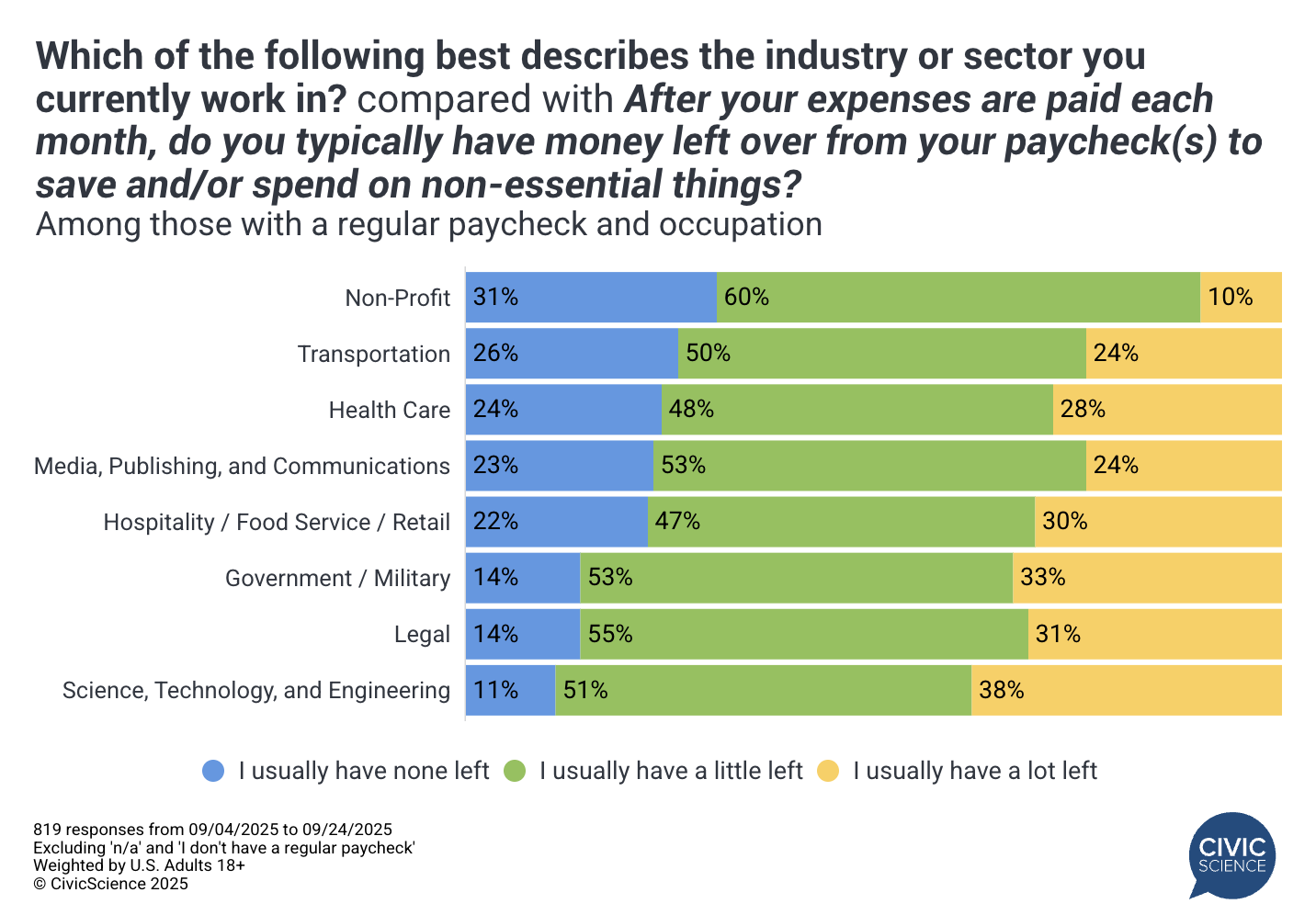
Of course, occupation has a key role to play as well. The non-profit sector leads with the highest percentage of individuals (32%) living paycheck to paycheck. This is followed by the transportation industry (26%); health care (24%); media, publishing, and communications (23%); and hospitality, food services, and retail (22%).
Where Paycheck to Paycheck Shoppers Are Spending
Although the data show unsurprising cutbacks in spending among those living paycheck to paycheck, where these consumers continue to spend reveals key priorities:
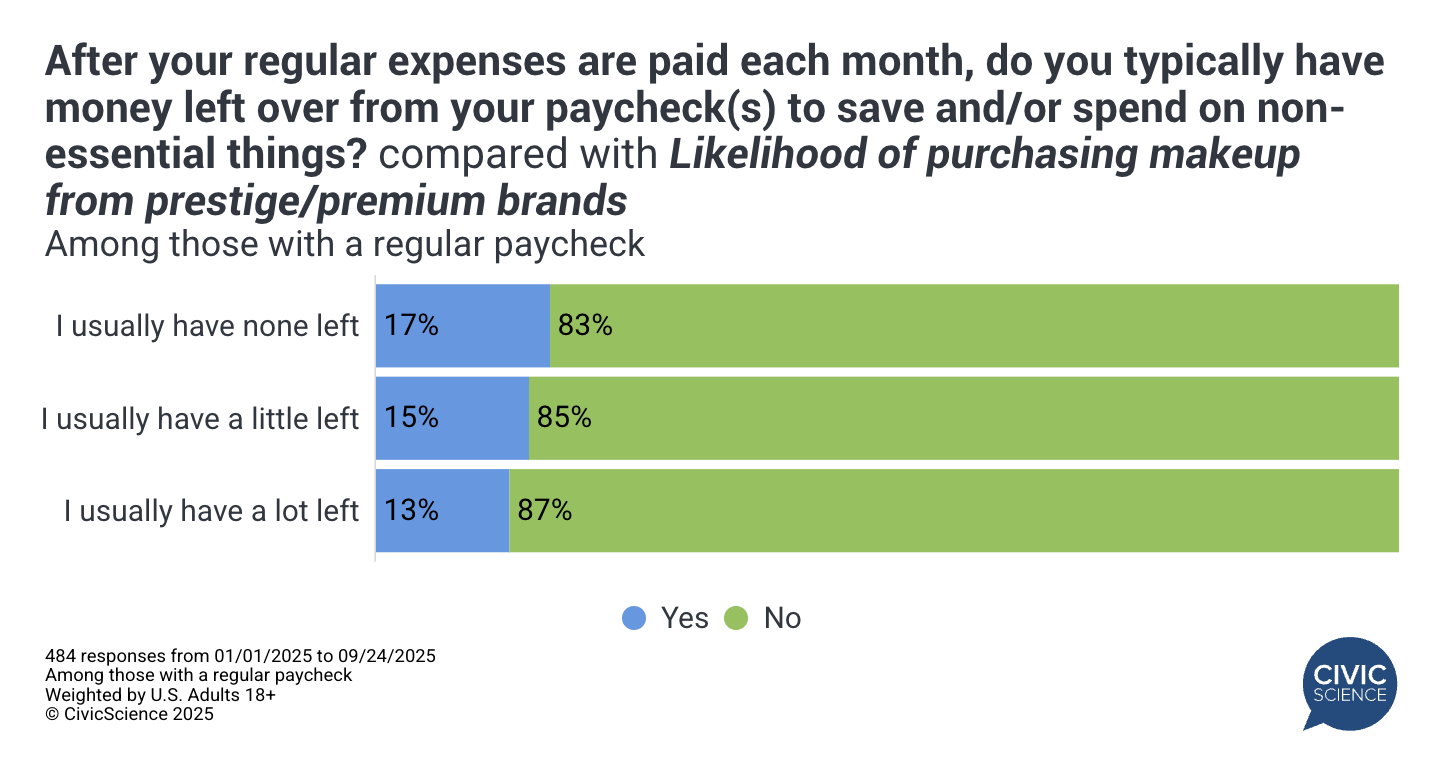
- Those living paycheck to paycheck outpace other consumers in purchasing makeup from premium and prestige brands by four percentage points, aligning with recent data showing that consumers are less likely to cut back on beauty products if tariffs lead to higher prices.
- In terms of holiday spending, children’s toys, clothing, shoes, and accessories lead among those living paycheck to paycheck. For those not living paycheck to paycheck, experiences take the top spot, followed by food/cooking gifts and children’s toys, tied for second place.
- Those living paycheck to paycheck are seven percentage points more likely than those with more of a financial cushion to watch streaming content on Netflix.
- Twenty percent of those living paycheck to paycheck plan to buy a new car in the next six months, compared to five percent of those with ‘a lot’ leftover.
- Those living paycheck to paycheck are 11 percentage points more likely to splurge on clothing than those with a greater financial cushion.
Weigh In: How close are you to living paycheck-to-paycheck?
As it stands, nearly one in four Americans continues to live paycheck to paycheck. Those with the least amount of money left over each month already self-reported as being the most stressed. And given that 33% of Americans are behind on at least one kind of bill, with credit card bills leading, the outlook for those living paycheck to paycheck isn’t exactly promising. That said, understanding where these consumers continue to spend provides retailers and advertisers with actionable opportunities as the holiday season ramps up.