CivicScience has the world’s largest proprietary database of real-time declared intent, allowing brands to activate high-performing advertising that drives up to 80% better performance. See how our partners achieve superior marketing outcomes here.
June is Men’s Mental Health Month, an opportunity to raise awareness, reduce stigma, and encourage conversations around mental well-being. While conversations around mental health have become more common over the past decade, CivicScience data suggest many men continue to struggle quietly with their mental health.
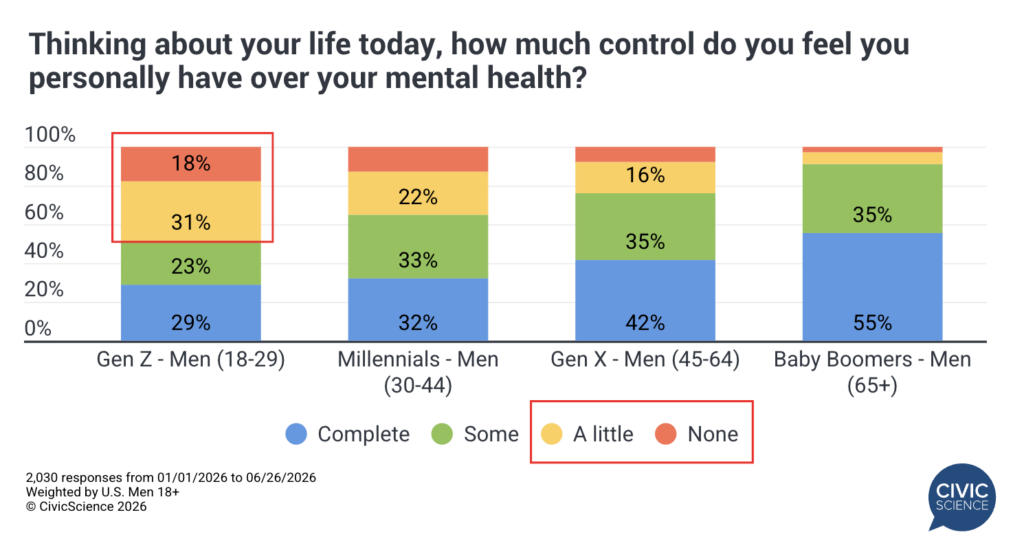
Younger men report feeling the least control over their mental health and well-being.
A sense of personal agency is often linked to overall well-being, and CivicScience data show many men may not feel they have complete control over key areas of their lives. Nearly four in ten U.S. men 18+ say they feel they have ‘complete’ control over their mental health, with the majority having ‘none’ to ‘some’ control. Just one-third say the same about their relationships with friends and family, and even fewer (30%) feel they have complete control over their physical health.
Younger men report a pronounced lack of agency over major areas of their lives compared to older generations. In stark contrast to men 65 and older, who express the highest levels of ‘complete’ control over their mental health, physical health, and relationships/family life, nearly half (49%) of Gen Z men aged 18-29 feel they have little to no control over these areas. These findings suggest younger men may be experiencing a greater sense of uncertainty or vulnerability than older generations.
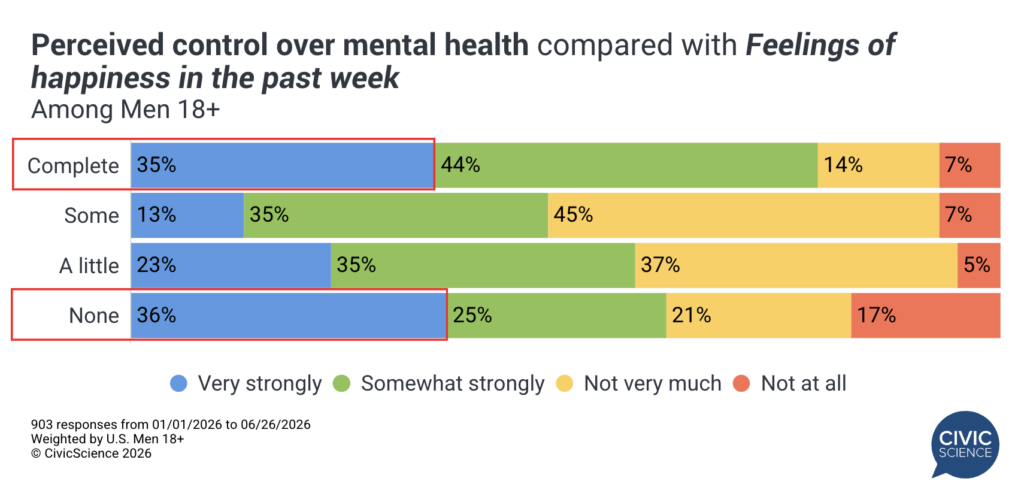
It’s unsurprising that men who feel they have complete control over their mental health are more likely to report stronger positive emotions and fewer negative ones. However, CivicScience data also reveal a more nuanced pattern among men who say they have no control over their mental health. While they are the most likely to report negative emotions, they are also among the most likely to report strong feelings of happiness and excitement.
This seemingly contradictory pattern highlights the complexity of mental health. It suggests that feeling emotionally well at a given moment does not necessarily translate to feeling in control of one’s mental health overall. It may also reflect the lingering stigma surrounding men’s mental health, where positive emotions can coexist with underlying struggles that are less likely to be acknowledged or openly discussed.
More men are seeking professional support and embracing everyday “small wins.”
Despite these challenges, CivicScience data point to encouraging signs of progress. As highlighted in our recent analysis of Americans’ mental health habits, the percentage of men who report currently seeing – or previously having seen – a therapist has reached its highest level observed by CivicScience. While many men continue to struggle in silence, the findings suggest attitudes toward seeking professional support are gradually shifting.
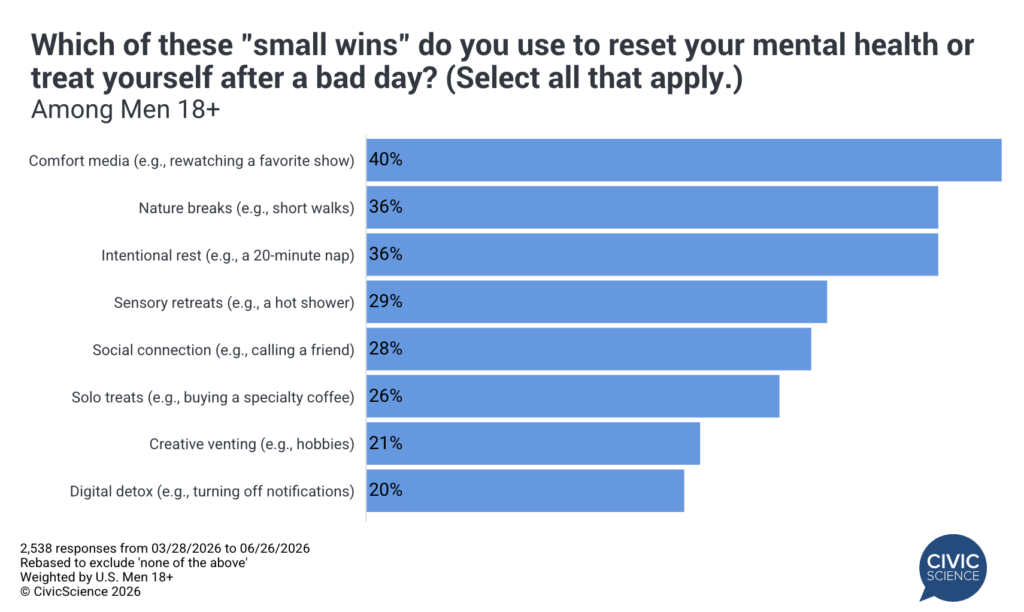
Beyond therapy, nearly 80% of men are also turning to simple, everyday habits to support their mental well-being. Among those who do small things to reset their mental health, the most common responses include consuming comfort media, such as rewatching a favorite show or gaming (40%), taking nature breaks like short walks or gardening (36%), and getting intentional rest (36%). Smaller but still meaningful shares also turn to sensory retreats (29%), social connection (28%), or treating themselves to a favorite snack or coffee (26%).
These findings suggest that supporting mental health isn’t always about major lifestyle changes. Instead, many men are finding value in small, intentional moments of rest, comfort, and self-care as they navigate everyday stress.
Feeling in control of one’s mental health isn’t always straightforward. CivicScience data suggest many men, particularly younger generations, continue to struggle with that sense of agency, even as more men are seeking therapy and building everyday habits that support their well-being. Together, these findings underscore both the complexity of men’s mental health and the progress being made toward addressing it.