Why do bad things happen to good people?
I’ll answer that later.
I remember two things about growing up in a Methodist church. First, my dad – who was a tremendous bass singer – would belt hymns at the top of his lungs, making my sister and I want to crawl under our pew. Only later did I appreciate how cool it was. Second, the services were super boring. My friend Craig and I would play Hangman on the collection envelopes just to pass the time. I went through Confirmation as a teenager, but I can’t say it made me deeply religious.
Whatever piety I did have was roundly beaten out of me as a philosophy major in college. Rationalists like Descartes, Kant, and Spinoza (the inspiration for my senior thesis) disabuse you of any belief in a higher power. Not that anybody really knows.
I never thought about church again for a decade. Tara and I were married on a beach. But after our kids were born, the notion started bouncing around my head. I wanted our girls to be exposed to church, so they could make their own informed decisions later in life. Tara, a cynic about organized religion, negotiated. The deal was two-fold: 1) She got to choose the flavor, and 2) She didn’t have to go.
After weeks of research and failed tryouts, we found our way to Trinity United Church of Christ, a tiny but picturesque chapel twenty-five inconvenient minutes from our house. We knew it was the right place instantly. We’ve been there ever since. And it was one of the best decisions we ever made for our family. Tara even comes occasionally.
Our girls grew up there, from the nursery to Sunday School to confirmation. It was the first place Maddie sang in front of an audience, a group of people who would never judge, who would only love her no matter how she did. I firmly believe it’s what gave her the confidence and fearlessness to do everything she’s done since.
Trinity’s become an extension of our family, particularly Pastor Dave. Five years ago, the night our fifteen-year-old niece died by suicide, we were terrified to tell the girls. It was Tara’s idea to call Pastor Dave. At 10 pm on a Wednesday night, he crawled out of bed, drove 30 minutes to our house, and sat with us while we broke the most tragic news imaginable to two devastated teenagers. It made all the difference.
Trinity is a particularly liberal breed of Christianity, with a rainbow flag flying out front. Some attendees believe in miracles, in divinity, more than others. For some, like me, it’s enough to reflect on stories of a man who lived his life in a way – with charity, empathy, acceptance, and forgiveness – that all of us should emulate. It makes me work on myself.
On Wednesday afternoon, our lovely little church went – literally – up in flames, a devastating fire caused by old, faulty wiring (pictures below). The sanctuary was totaled, priceless relics lost, ironically, a month before the church’s 175th anniversary. Our whole community – not just our congregation – is heartbroken. Thankfully, nobody was hurt.
But if I know anything, I know it will be rebuilt. I know we will be offered temporary homes for Sunday services (already have). I know our friends and neighbors – religious or otherwise – will extend helping hands. I know our church will become stronger because of it.
So, why do bad things happen to good people?
A rationalist would say it’s random sh*tty luck.
I say it’s because they can handle it. Because when good people demonstrate grace, resilience, and community in the face of tragedy, it makes everyone else want to be just a little bit better.
Here’s what we’re seeing:
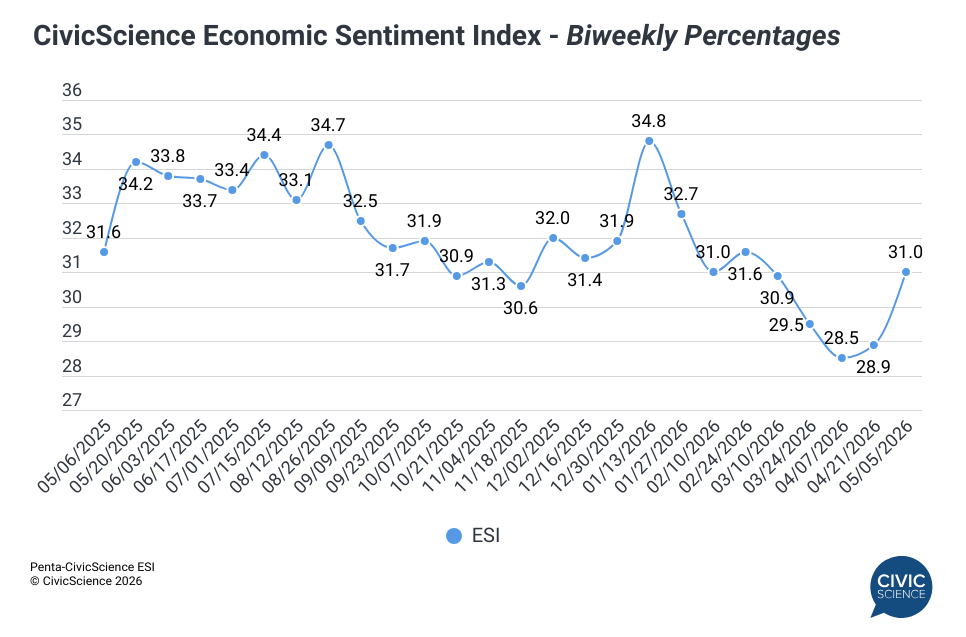
Consumer confidence had a nice little jump this week. Our Economic Sentiment Index had its first major improvement of 2026 in the latest reading, climbing over 2 full points. Likely explained by the cease-fire in Iran and tax refunds arriving in mailboxes, people are feeling much better about their ability to make major purchases and about the overall outlook for the U.S. economy. We’ll see if it sticks in the weeks ahead, but it was nice to have a reprieve after a four-month run of declines.
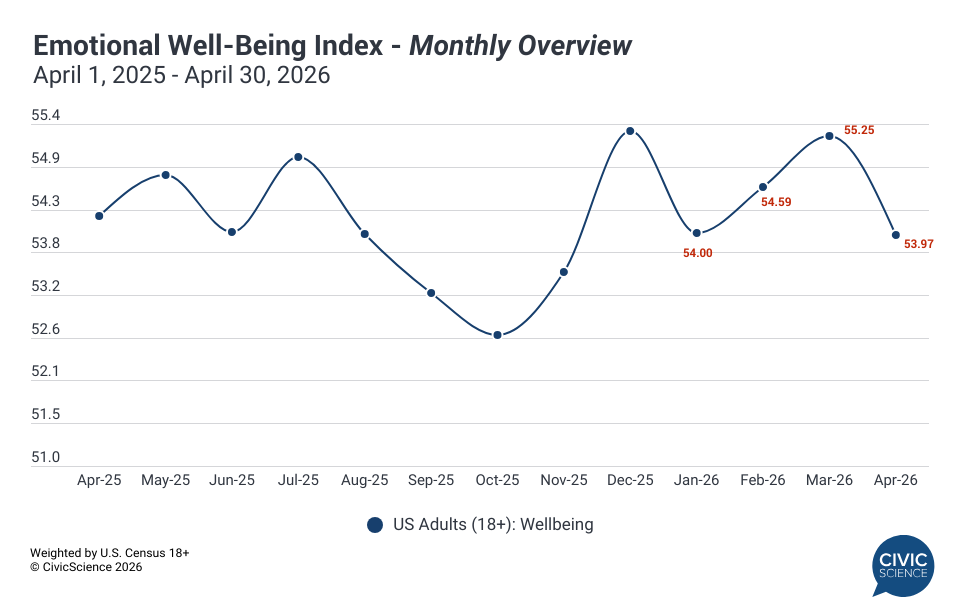
Because we can’t simply have a period of universally positive news, America’s collective emotional well-being fell to a 2026 low point in April. It’s not often that our economic and emotional indicators move in opposite directions (naturally, our emotional state is closely tied to our financial security), but that’s exactly what’s been happening for the past couple of months. In February and March, our Emotional Well-Being Index climbed, even as macroeconomic sentiment was in a freefall. In April, we saw the inverse. Feelings of stress, sadness, and anxiety are on the rise in America, owed more to the geopolitical climate than the economy. Now to watch how these gyrations impact consumer spending. Stay tuned.
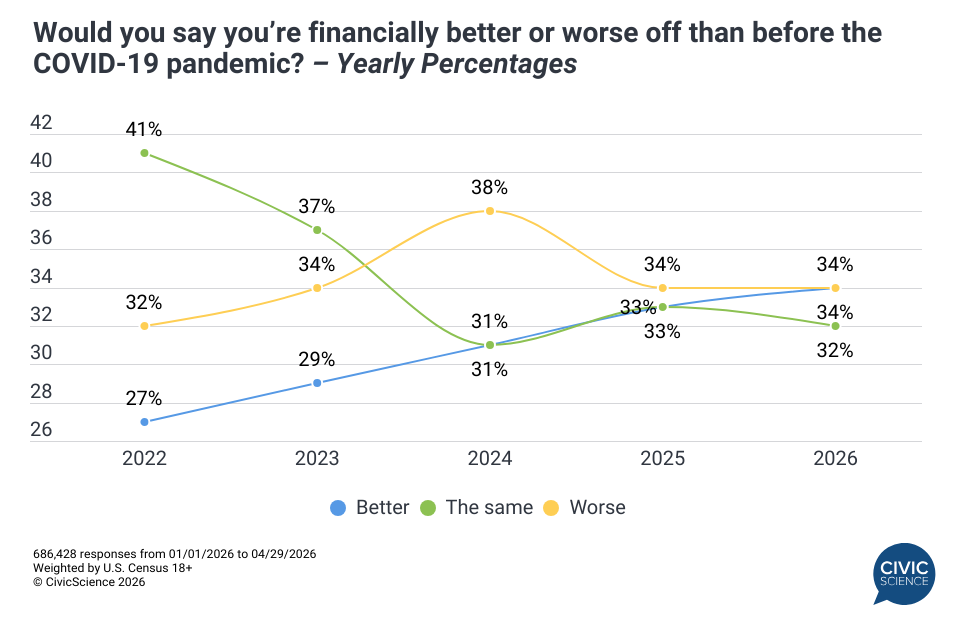
All that being said, the longitudinal picture of American prosperity – on average – is a surprisingly positive one. In our 3 Things to Know this week, we revisited a question we’ve been tracking since the end of the COVID pandemic – gauging whether people believe they’re better or worse off financially than before it started. The chart below is one of the most interesting things you’ll see today, even if it masks a stark divide between the haves and have-nots. We also looked at consumer interest in using delivery apps like Uber Eats to process returns on products they’ve purchased (versus driving to the UPS store yourself to do it). Lastly, we learned that a lot of people go out of their way to “hate-watch” content on TV and online, which explains why so much clickbait caters to it. Sigh.
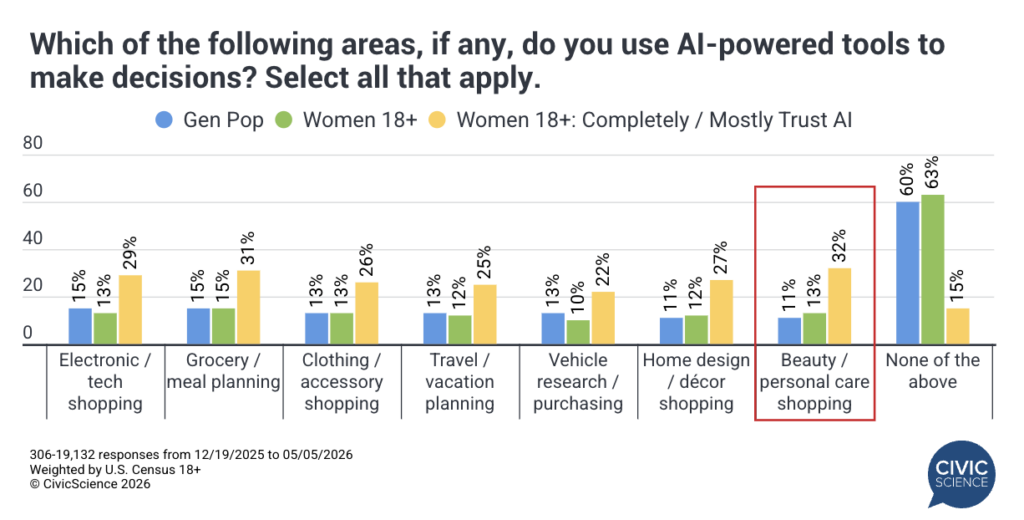
The use of AI in retail is showing up in the beauty category ahead of all others. If you’ve followed our research over the past 6 years, you know that the beauty and cosmetics industry has been a standalone bellwether of numerous sustained trends during that period – from the rise of self-care spending and nostalgia to the power of social influencers. Well, you can now add AI to the list. Pro-AI consumers (particularly women) use AI-powered tools during their beauty shopping journey more than in any other retail category we track. Notably, prestige beauty buyers trust AI the most.
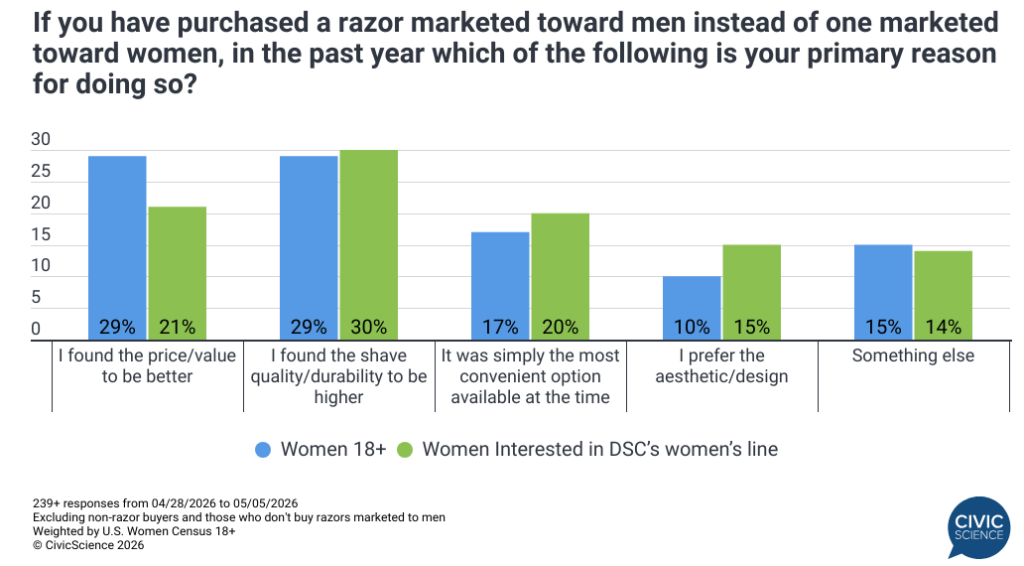
Dollar Shave Club is getting into the women’s game, and it could really work. After disrupting the men’s grooming category with its subscription-based offering, DSC is now making the very logical move into female-branded products. When told about the new product line, nearly 40% of adult U.S. women express at least some interest, with women in the 30-44 age bracket showing the highest level of consideration. The other new thing I learned from this study is that a non-trivial share of female consumers buy male-marketed razors, citing their quality and durability as the top reason. Who knew?
More awesomeness from the InsightStore this week™:
- Just a quick reminder about our quick-turn Upfronts webinar next week, for those of you in the media or marketing trade. Sign up if you haven’t already.
The most popular questions this week:
Do you think club sports are an important part of the college experience?
Have you ever traveled more than an hour to another city specifically to attend a concert?
Do you typically sing along with the national anthem at sporting events?
Do you consider fashion to be a form of art?
Have you ever rescued an animal in distress?
Answer Key: I’m not sure “important” is the word I would use, but they’re certainly a lot of fun; I’ve traveled way more than an hour, many times; Every time; Of course it is; Yep.
Hoping you’re well.
JD
PS- If you’re feeling particularly generous, we’ve set up a GoFundMe page to help our little church rebuild. We would all be honored and grateful.