Our relationships with companies and brands are changing again.
Until the late ’90s, consumerism was relatively simple. Compared to today, few companies had the means to widely manufacture, market, and distribute goods. Our loyalties split between Coke or Pepsi, Ford or Chevy, Camel or Marlboro. We looked down our noses at people who chose otherwise. It was almost tribal, like our politics today, but in better spirits.
The internet and e-commerce changed all that (politics notwithstanding). Not only did the barriers of marketing and distribution dissolve, but it became infinitely easier to find and manage low-cost manufacturing partners overseas. Consumers’ options exploded, brand “discovery” became the game. From the time we started tracking it in 2011, the percentage of Americans who self-identified as “very loyal” to their favorite brands fell, considerably.
Until it didn’t.
The funny thing is we stopped paying attention. “Brand loyalty is dead” was a big part of my stump speech for a few years, which met audible gasps at places like Procter & Gamble. I figured it was never coming back.
Then, by happenstance last summer, I stumbled upon our brand loyalty question, and was stunned by what I saw. In 2021, self-reported loyalty started climbing again and hasn’t stopped. Our team, led by Brian Kurilla, has been tracking and analyzing the data for over a year, culminating with a groundbreaking paper we published on Thursday.
If you work in the vicinity of marketing or any consumer-focused company, you should read it. Warning: It’s 30 pages long, but you can get a lot from the intro. If that’s still too much for you, I’ll share my own personal highlights here.
First, the trend is being driven entirely by young people, which upends about 100 years of brand loyalty truism. It was once gospel that consumers age into loyalty after playing the field. Young people were fickle, unattached. Not anymore.
Second, emotional connection explains the trend almost entirely. It’s not about price, another surprising finding during a period of persistent inflation. It suggests that people – particularly young ones – are filling voids left by broader institutional distrust, isolation, and post-pandemic malaise (hence the timing). That part’s kind of sad.
Third, this new breed of brand-loyalists spends a lot more money than non-loyalists. That might be intuitive, but it’s super-important nonetheless.
It all necessitates a rethinking of marketing strategy. In response to two decades of declining brand loyalty (also a self-fulfilling prophecy), marketers shifted most (85%) of their investments toward so-called “performance” tactics – aimed at garnering clicks, gaming search, etc. Brand advertising represented roughly 15% of Fortune 1000 marketing spend in 2025.
The ratio needs to change, fast.
Soon, agentic shopping will inevitably whittle the effectiveness of performance marketing to nearly nothing, while escalating the importance of brand even further.
But that’s a diatribe for another day.
Here’s what we’re seeing:
Consumer confidence improved ever-so-slightly this week. Our Economic Sentiment Index climbed a modest third of a point in the latest reading, as Americans reported feeling a tad better about their personal finances, jobs, and the housing market leading up to Labor Day. Those gains were offset by a less rosy outlook for the U.S. economy and the conditions for major purchases — perhaps in anticipation of another interest rate bump at the upcoming FOMC meeting. Overall, sentiment remains a full point below this time last year.

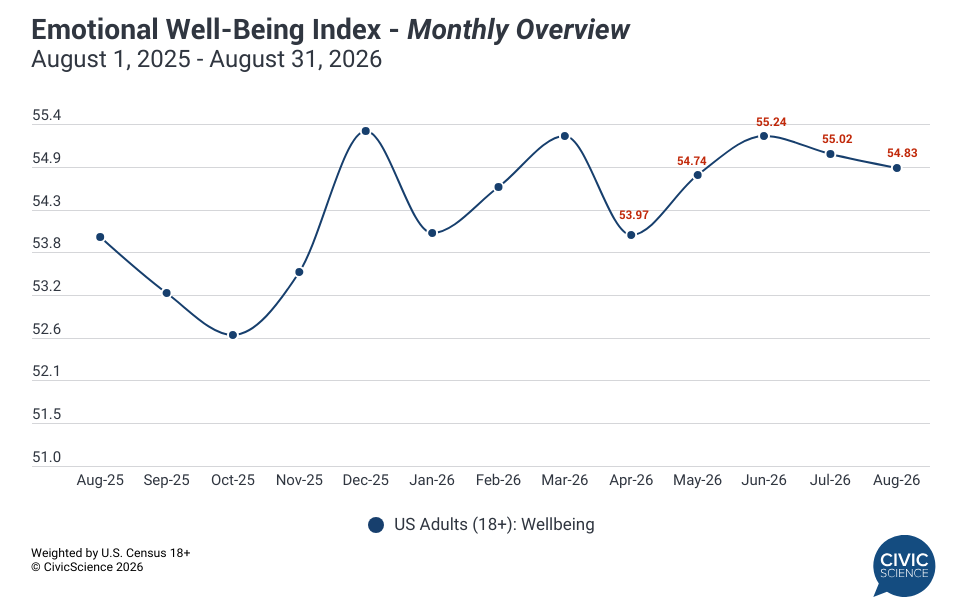
America’s collective happiness, meanwhile, fell in August. Our Emotional Well-Being Index declined for the second consecutive month, as it often does as summer draws to an end, kids return to school, and a political season ramps up. Most notable, however, is that we saw a decline in our “happiness” metric for the first time since March – a stellar run coming to an end. The dip was attributable primarily to Millennials and Gen Xers, while younger and older adults were more positive. But, unlike economic sentiment, our well-being numbers perch considerably higher than they did a year ago.
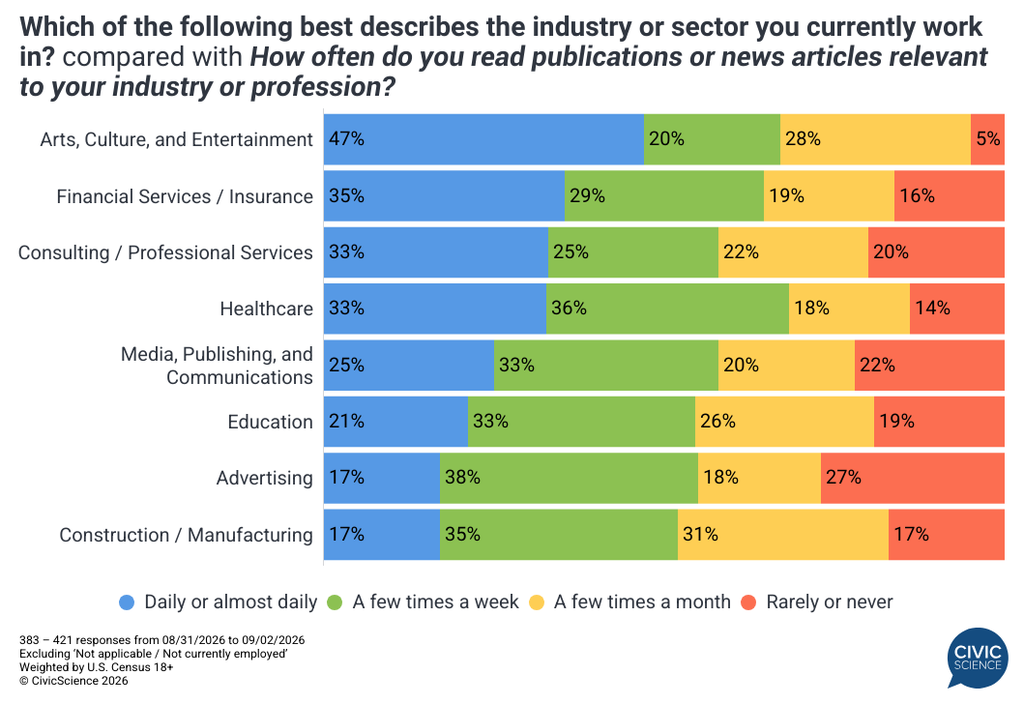
Reading industry newsletters is a strong predictor of job happiness. In our 3 Things to Know this week, we looked at the wide proliferation of B2B newsletters (like this one, I guess), finding that nearly one-third of U.S. workers read one or more daily. People employed in arts, entertainment, or culture fields read them the most, followed by those in financial services and consulting. As the headline above suggests, the happier someone is in their gig, the more newsletters they read. We also reported on the growing strain of tariff policies on consumer spending and the likelihood of social media users migrating to a revived MySpace (if the rumors of its return are true).
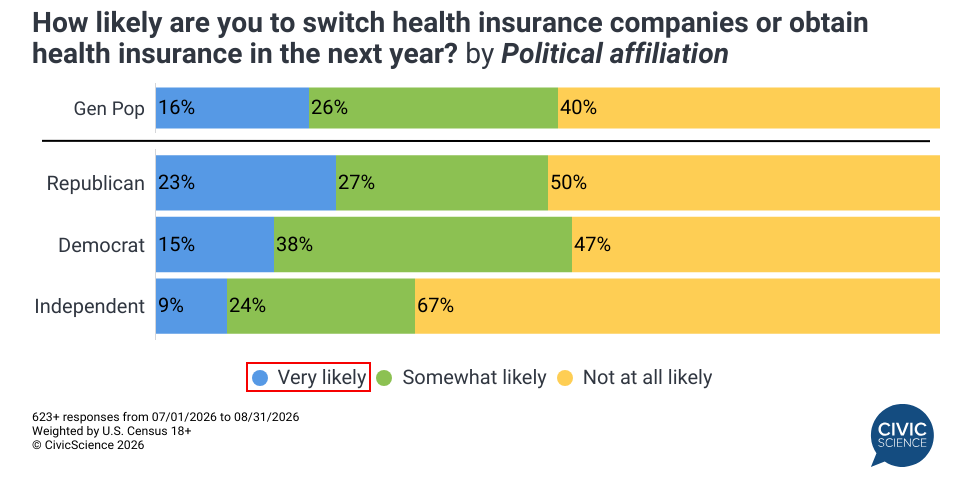
As healthcare open enrollment season approaches, more Americans are looking to switch providers. In the latest look at our health insurance tracking data, we found that a growing share of U.S. adults are considering a big change in the months ahead – 16% of people say they’re “very likely” to switch providers (or sign up for the first time), up from 13% last year. Naturally, most of those switchers currently pay for their insurance themselves and they’re particularly concerned about out-of-pocket spending limits and network coverage. For what it’s worth, they are significantly healthier than the average person and are twice as likely to exercise at a gym at least once a week. They also skew partisan, especially Republican.
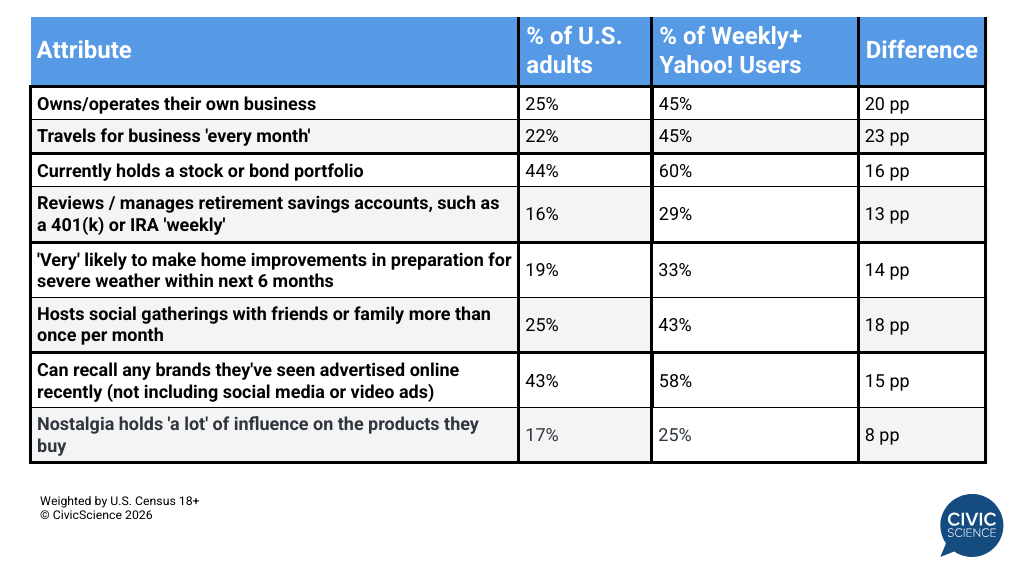
We don’t talk enough about Yahoo! At the risk of offending anyone from the company who might be reading this, I’m going to drop the exclamation point from the name for the rest of this post, because it hurts my brain – but Yahoo is very much deserving of today’s attention. Dismissed by many as a cautionary tale of the early internet bubble, akin to the likes of AOL and Pets.com, Yahoo has more than survived over these many years. Shrewd moves into fantasy sports, betting and prediction markets, and a focus on finance news (not to mention ad tech) have reestablished the company as a major player in digital media. In fact, regular visitors of Yahoo properties have reached a decade-plus high in our data this year. What’s more, it’s a particularly attractive user base – young, male, financially savvy, and engaged.
More awesomeness from the InsightStore™:
- Consumer Financial Health waned in August, as people grew less confident in their investment outlook;
- Last week’s 3 Things to Know: The divide over Automated License Plate Readers (like Flock Safety cameras), other trends in consumer privacy concerns, and how much Millennials and Gen Zs dislike Substack.
The most popular questions this week:
Have you ever seen a fight break out at a sporting event?
Do you think the entertainment industry places too much emphasis on weight loss?
How concerned are you about food safety when it comes to fresh produce?
Do you listen to a lot of music by local or regional artists?
Do you generally feel like you’re at your best when interacting with others?
Answer Key: Many, many times; Most definitely; I definitely wash it before I eat it; No, but I try to see local bands as much as I can; I’d like to think so.
Hoping you’re well.
JD