We can’t even celebrate things anymore.
The war in Gaza ended. Innocent hostages, subjected to unimaginable conditions for over two years, returned to their families. The U.S. was integral, even primarily responsible, for making it happen. And yet, our collective reaction to the event – our sense of pride – was muted, at best.
We all know why.
A big swath of our country will refuse to give credit where it’s due. And, if we’re being honest, some smaller group may have even quietly wished for the peace plan to fall through, lest the credit and inevitable victory lap even ensued.
This is where we are as a nation – tribal, binary, & unyielding.
It’s not to say one successful foreign policy achievement should wipe out – or even polish – countless other indiscretions you may find repugnant or unforgivable. That’s not the point.
Our inability to separate the objective good or bad of something from who gets the credit or blame is the problem. We saw it with Charlie Kirk’s murder. We see it in economic sentiment. It’s happening on both ends of the spectrum.
If you’ve seen me on a stage recently, you’ve probably heard this schtick: I often say that if someone can’t name three things Donald Trump has done they agree with AND three things they don’t agree with, then I won’t discuss politics with them. It’s disqualifying, more often than not.
It’s also intellectually dishonest. Truth is, if we give even an inch, we worry our entire tribal orthodoxy will crumble.
While the long-awaited peace deal took barely 48 hours to fade from the news cycle, the government shutdown stays prominently above the fold. Why? Notwithstanding the real impact it’s having on federal workers and the potential impact it could have beyond, the shutdown is an ideal made-for-media sport. Both sides can point fingers at the other. All can be enraged.
That’s our comfort zone today. Clear and distinct tribes give us a sense of stability and community when our faith in larger institutions is shaken.
You’re probably sick of me writing about it. I certainly am. But we can’t stop.
If we ever accept it as normal, if we ever concede it as fait accompli, all is lost.
Here’s what we’re seeing:
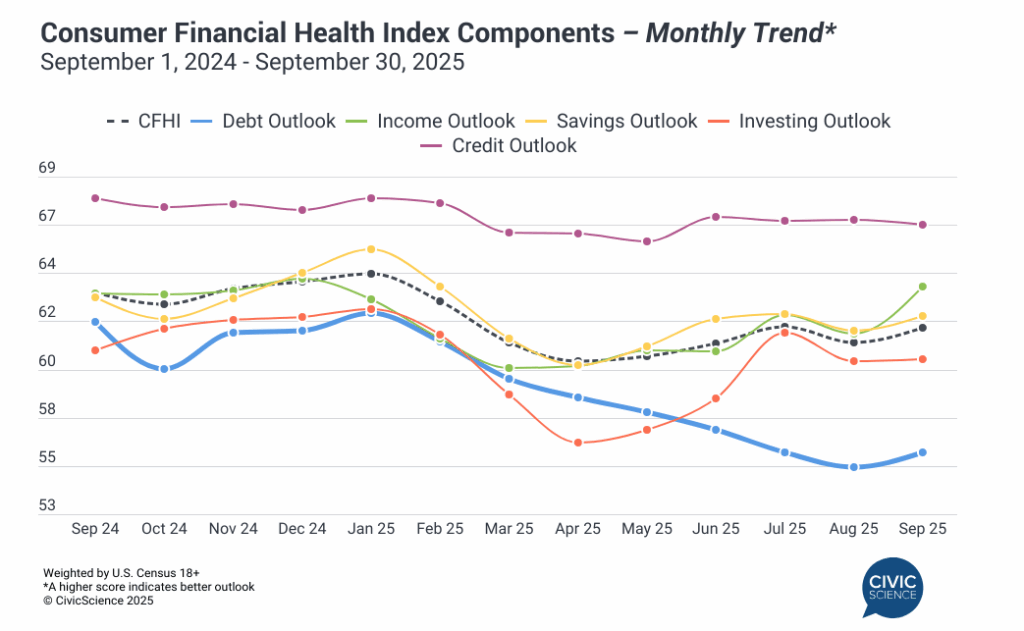
Consumer financial health is steady heading into the thrust of holiday retail season. While our Consumer Financial Health Index (CFHI) and our Economic Sentiment Index (ESI) tend to follow similar long-term patterns, you may have noticed that the latter is typically far more dramatic and volatile than the former. One reason is that the ESI measures longer-term outlook toward things like the job and housing markets, for which there’s no shortage of sentiment-jolting news. The CFHI gets a little closer to home – gauging people’s (more objective) attitudes about their personal income, debt, and investments. Overall, financial health is holding up – as Americans felt generally better about their income and household debt in September. It bodes well for the upcoming winter holidaysChristmas. Q1 of next year might be another story.
Toys and outdoor products drove a surge in impulse-buying during Amazon Prime Big Deal Days. It’s always fascinating to compare our pre-Prime Day intent data to our post-Prime Day reporting. Prior to the event, likely shoppers reported less interest in items like toys, video games, and outdoor gear – yet, those turned out to be some of the biggest YoY growth categories when the dust settled. Explaining the pre/post difference could be the big jump in the percentage of shoppers who said they primarily made unplanned buys, as well as the larger-than-expected group who reported buying holiday gifts. Nearly one in three shoppers participated in the event just “for fun.” No surprise, all these groups skew younger.

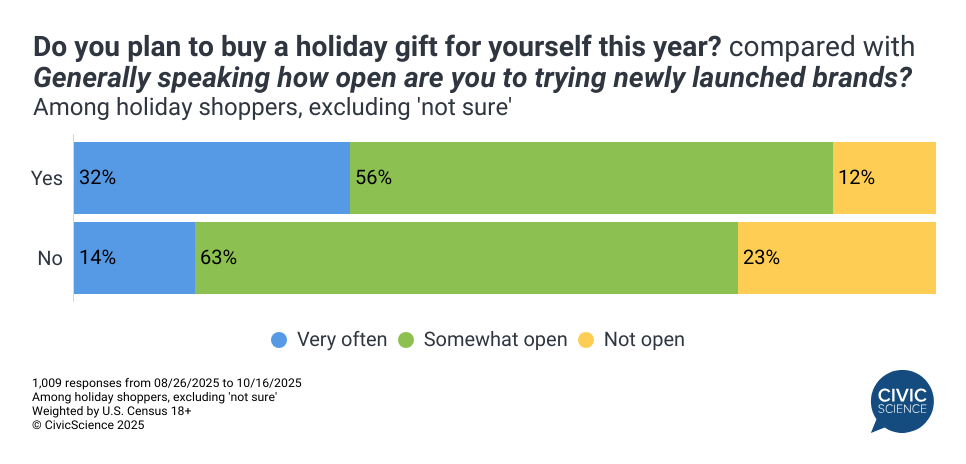
The economic climate isn’t dissuading self-gifting…yet. The post-pandemic ‘treat-yo-self’ trend looks to be alive and well as Christmas-themed commercials start dominating the airwaves. Twenty-eight percent of U.S. adults plan to purchase at least one holiday gift for themselves this season. While that’s down two percentage points from this time last year, another 1-in-4 are undecided about it, representing a big potential swing. Notable for advertisers, these self-gifters represent a distinct breed of shopper. They’re more partial toward brands that prioritize corporate social responsibility, more likely to buy from department and specialty stores, big fans of emerging brands, and particularly keen on buying clothes or accessories this year.
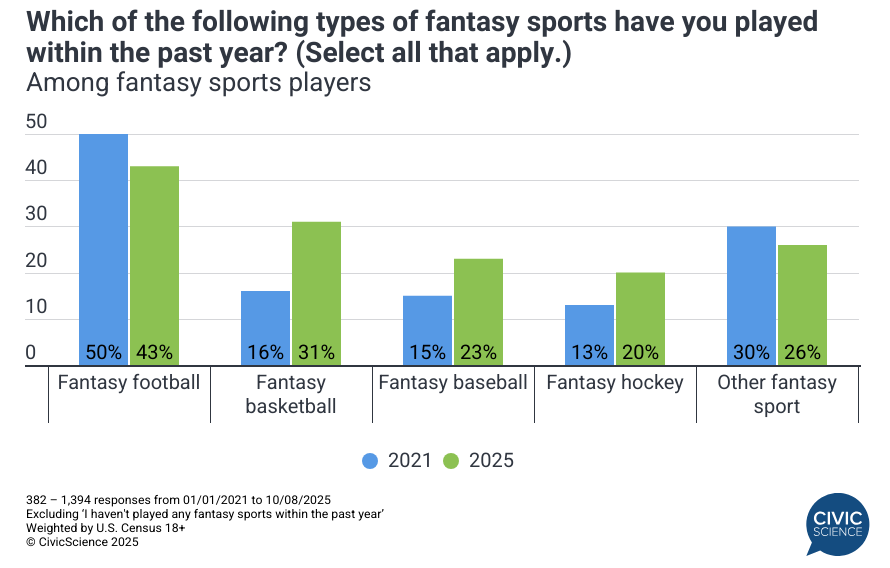
More Americans are looking to move out of state, especially Republicans. In our 3 Things to Know this week, we continued our analysis of the pent-up demand among U.S. adults to move from their current domicile to another one. This time we examined sub-groups who hope to move in-state versus out-of-state. Among the most notable findings: Political conservatives are far more likely to move out of state. Florida, probably. We also looked at the changing dynamics of fantasy sports, where participation in fantasy football is declining, while other sports, like basketball, are growing considerably. Lastly, we highlighted the extraordinary fan interest in Banana Ball. If you know, you know.
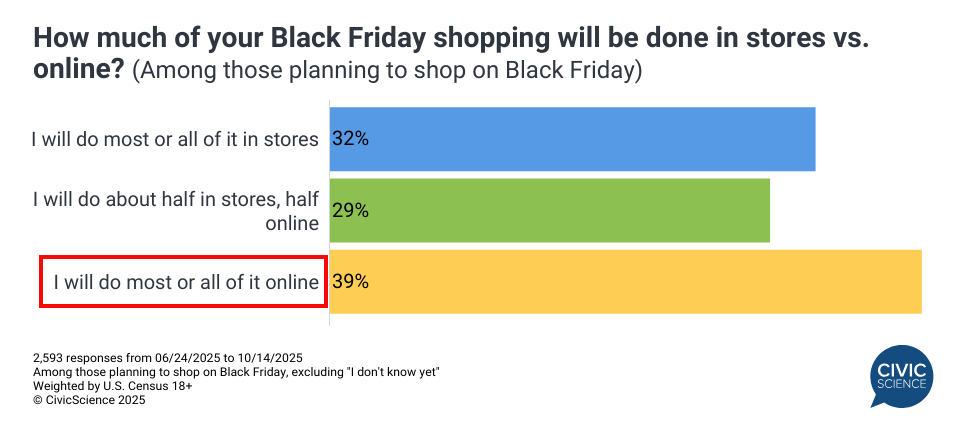
The share of online Black Friday shoppers seems to have reached equilibrium. In our 6-week-early look at shoppers for next month’s Black Friday weekend, it appears a (slightly) increasing share plans to shop primarily in-store than they did last year. It’s the first time we haven’t seen the ratio of online-only shoppers grow in years. Nonetheless, over two-thirds of Americans who are planning to participate in Black Friday will do at least half of their buying on a screen. For those of you hoping to reach these online BF shoppers, we provided a handy roadmap for you. They’re especially keen on apparel this year – with a focus on the brands to which they’re most loyal. Naturally, they’re also big deal-seekers and prone to doing a lot of research before they buy.
More awesomeness this week:
- For the research wonks out there, I was a guest on the Market Research Institute International (MRII) podcast this week, where we talked about the ever-growing problems with paid survey panels and, of course, the impact of AI on our industry. Give it a listen (it’s short).
The most popular questions this week:
How much do you typically spend on Halloween essentials?
Do you think the stigma around mental health is starting to diminish?
What do you think of roundabouts as a traffic solution?
Do you plan on going hunting this season?
How often do you visit local coffee shops?
Answer Key: Hardly anything – we don’t even get trick-or-treaters at our house; Yes, thankfully; I’m not really sure what problem they solve; Every year like clockwork; Anytime it’s an option.
Hoping you’re well.
JD
Want to be on the list to receive this email directly in your inbox? Subscribe here. Our solutions are helping our clients navigate this era of uncertainty and market disruption. You should be one.
In case you’re wondering, I write this informal email to CivicScience clients, friends, and other VIPs every Saturday morning. If you’re getting this, you’re either one of those people or were referred to me by one of them. I always love your comments and feedback.